






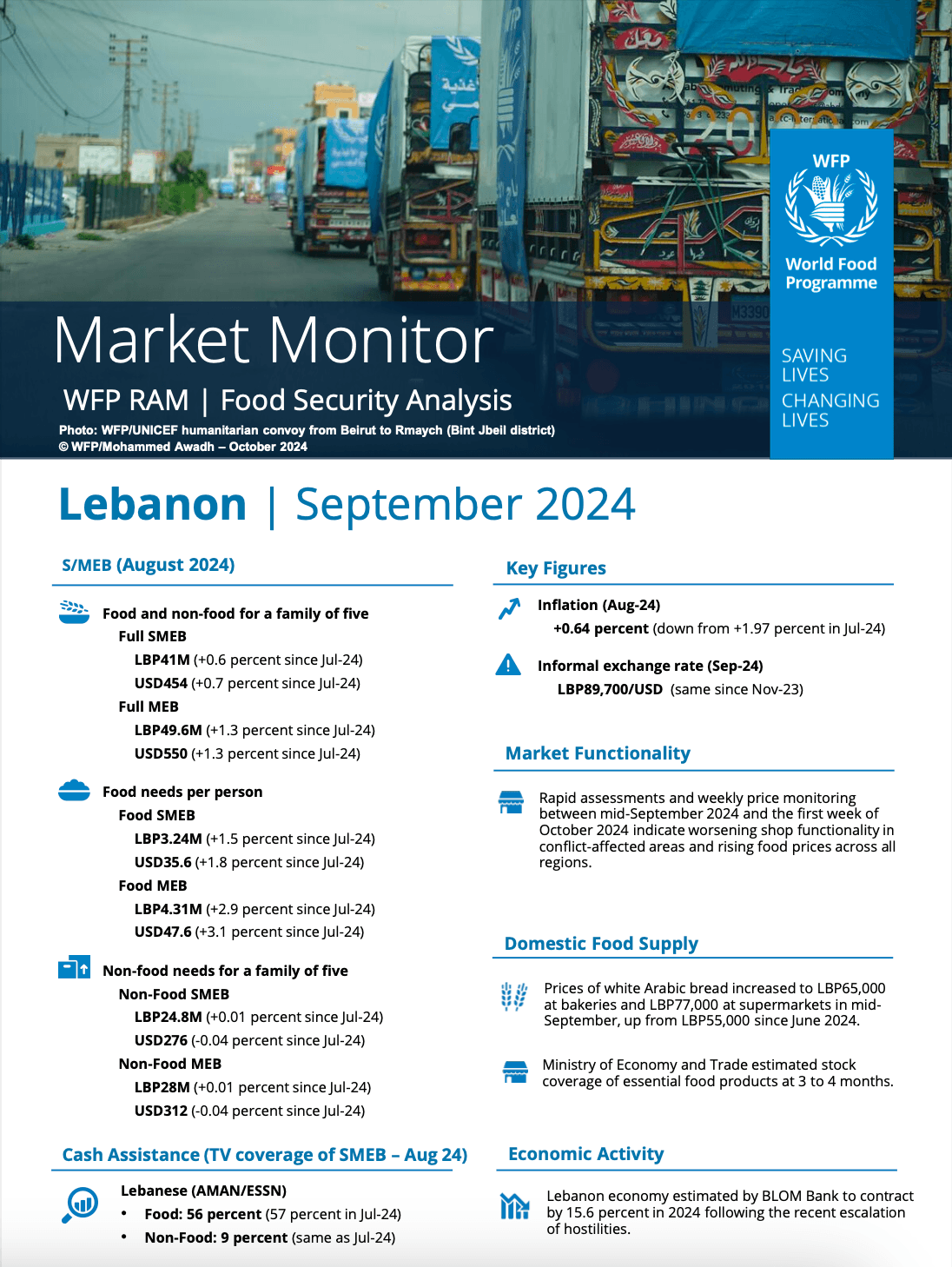

The WFP Lebanon Market Monitor (September 2024) highlights key economic challenges, inflationary pressures, and market disruptions affecting households. Household expenditure and inflation continue to rise, with the Survival Minimum Expenditure Basket (SMEB) reaching LBP41 million (USD454) and the Minimum Expenditure Basket (MEB) increasing to LBP49.6 million (USD550). Food inflation grew by 2% in August 2024 and 21% year-on-year, despite the stability of the informal exchange rate. Energy costs showed a deflationary trend but remain volatile.
Market functionality and food prices are deteriorating, with rising costs for essentials like bread, poultry, vegetables, and cereals. The price of white Arabic bread increased by 18% following the end of wheat subsidies, while rapid assessments indicate worsening shop functionality in conflict-affected regions. Cash assistance and purchasing power remain insufficient, covering only 56% of food needs for Lebanese beneficiaries and 42% for Syrian refugees, with non-food assistance critically low.
Economic activity and growth have been severely impacted, with the BLOM Bank PMI dropping to a 33-month low and GDP expected to contract by 15.6% in 2024. Tourism has suffered a major decline, with hotel occupancy rates falling to 10% and airport arrivals decreasing by 38% year-on-year. Domestic food supply remains uncertain, with wheat stock covering three to four months, while Iraq has pledged 200,000 tonnes of wheat flour in assistance.
Energy and electricity supply remain inconsistent, with the national electricity provider delivering an average of 13 hours per day. The cost of a 5-amp generator subscription for 12 hours daily has risen by 16% year-on-year, while diesel prices have dropped 5% monthly. Exchange rate stability and banking measures have been maintained, with the informal exchange rate holding at LBP89,700/USD despite rising hostilities. The central bank has temporarily allowed tripled cash withdrawals, injecting USD180 million into the economy.
The report underscores worsening economic conditions, rising food insecurity, and market instability. Inflation continues to strain vulnerable households, while conflict-related disruptions exacerbate economic challenges. Urgent interventions are needed to address food price increases, gaps in cash assistance, and supply chain vulnerabilities.