


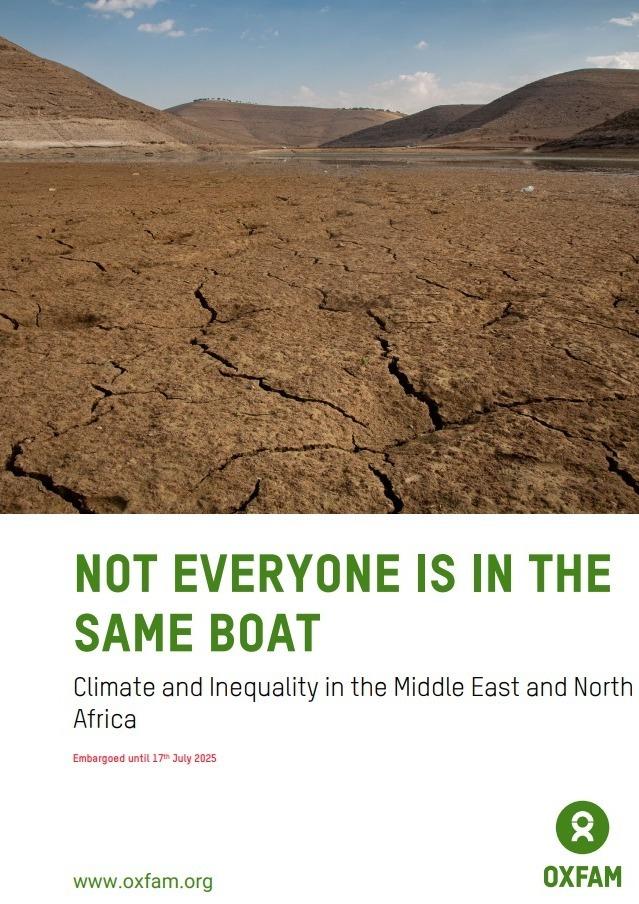

Oxfam’s report outlines how climate change and inequality are tightly intertwined in the Middle East and North Africa (MENA). As the region experiences worsening environmental impacts, a small elite drives emissions while the poorest endure the consequences with minimal protection or resources. Using carbon emissions and income data, the report projects inequality-driven vulnerabilities and policy needs through 2040.
Key Themes
Extreme Climate Exposure: MENA is heating faster than the global average, with 83% of the population under severe water stress and rising risks of drought, food insecurity, and displacement.
Emission Inequality: The richest 10% in MENA are responsible for 60% of emissions; the top 0.1% emit nearly 500x more than the bottom 50%.
Austerity Impact: Decades of IMF-backed austerity have weakened public services, undermining MENA countries’ ability to invest in climate adaptation and resilience.
Wealth Concentration: GCC countries and billionaires benefit from fossil-fuel-driven wealth, while low-income populations—especially women and migrants—are left highly exposed to climate shocks.
Insufficient Climate Finance: Only 6% of MENA’s $570B climate adaptation and mitigation needs are met. Fragile states like Yemen and Sudan receive the least funding.
Call for Redistribution: The report advocates taxing the top 1%, ending fossil fuel subsidies, and reinvesting in public services and green infrastructure.
South-South Solidarity: GCC countries should shift from polluting investments to leading regional adaptation, tech transfer, and contributions to the Loss & Damage Fund.