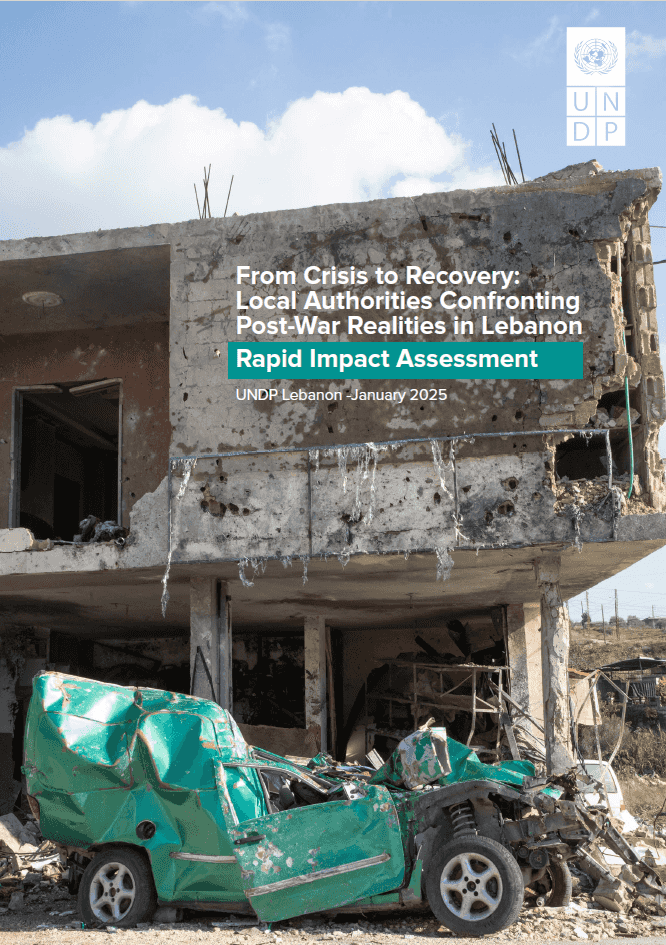





Post-war recovery in Lebanon demands more than just rebuilding homes—it requires a structured framework to prevent random reconstruction and to create resilient, inclusive, and sustainable communities alongside physical rebuilding efforts.
This guidebook offers a four-phased approach that integrates sustainable land use principles, cultural preservation, and ecological restoration. Following the steps mentioned in the guidebook ensures coordinated recovery, long-term resilience, and equitable development for affected communities.
Key Insights from the Guidebook
Four-Phase Framework
Organized into sequential phases:
Phase 1: Emergency Actions & Preparation — addresses immediate needs using temporary land use solutions like water harvesting sites and debris sorting.
Phase 2: Short-Term Recovery — focuses on restoring ecosystems, reinstating sustainable land management, and integrating Land Degradation Neutrality (LDN) into plans.
Phase 3: Medium-Term Reconstruction — revises or drafts local masterplans, guides spatial reorganization, and prioritizes infrastructure using resilient planning principles.
Phase 4: Long-Term Sustainable Development — secures investments, restores degraded landscapes, and enhances institutional and regulatory frameworks.
Integrated, Flexible Guidance
Each phase includes outlined objectives, sector-specific actions (across housing, environment, land sectors), institutional responsibilities, and recommended tools/data sources.
The guidebook is intentionally designed as a flexible model, adaptable by municipalities and technical planners to fit local contexts.
Context and Principles
Roots the planning framework in recognizing limited land resources, the impact of widespread displacement (especially in border regions such as Bekaa), and the long-lasting damage from bombardment and infrastructure loss.
Offers guidance on limiting fragmentation of interventions by encouraging early coordination among stakeholders.
Tactical and Technical Tools
Includes practical tools such as land surveying, damage mapping, digital archiving, masterplan methodologies, urban growth boundary logic, land-use zoning parameters, and growth strategy techniques.
Emphasizes the role of structural plans that identify road networks and decentralized growth, as well as community area enhancements integrating cultural preservation into spatial planning.