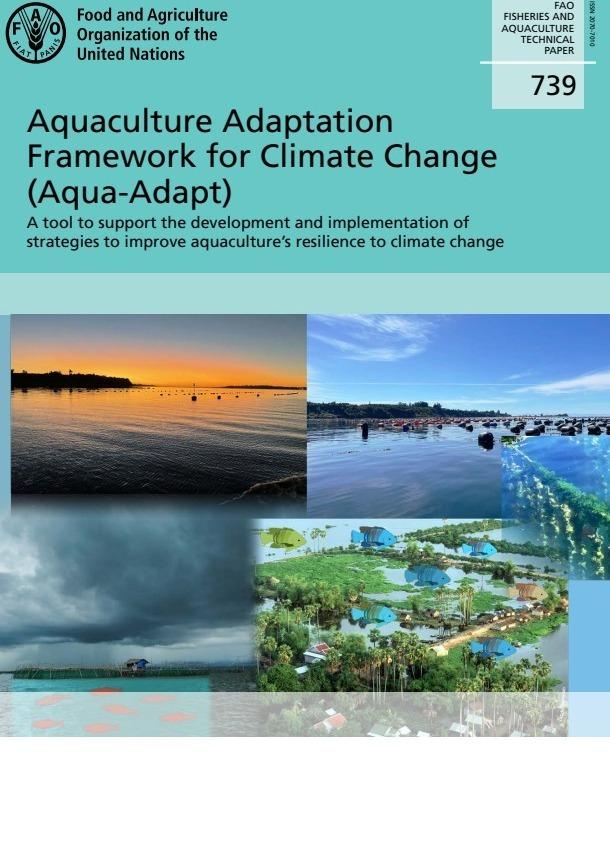

The Aquaculture Adaptation Framework for Climate Change (Aqua-Adapt) report (released in 2025 by the Food and Agriculture Organization of the United Nations - FAO) is a technical paper outlining a structured, step-by-step methodology to help countries, policymakers, and stakeholders develop and implement effective strategies to enhance the resilience of aquaculture to climate change impacts.
Key Insights
Purpose: Aqua-Adapt provides a seven-step process to systematically identify climate change hazards, assess the specific risks these hazards pose to different aquaculture systems (marine, freshwater, brackish), and prioritize appropriate adaptation actions.
Risk Framework: The framework emphasizes assessing risk based on three components: Exposure (to climate hazards like extreme temperatures), Sensitivity (how much the system is affected), and Adaptive Capacity (the ability to adjust).
Adaptation Actions: The report categorizes actions into three main strategic goals: Reduce Exposure (e.g., relocating farms), Reduce Sensitivity (e.g., genetic selection for heat tolerance), and Increase Adaptive Capacity (e.g., improving early warning systems and insurance).
Action Timelines: Adaptation measures are further broken down into Short-to-Mid-Term (1–5 years, often low-regret actions like improving farm management) and Long-Term (6–10+ years, involving higher costs and policy changes, like investing in climate-resilient infrastructure).
Dual Call to Action: The report advocates for systematic planning and investment: Integrate Climate Risk into policy and investment planning, and Foster Multi-Stakeholder Collaboration (government, farmers, private sector).