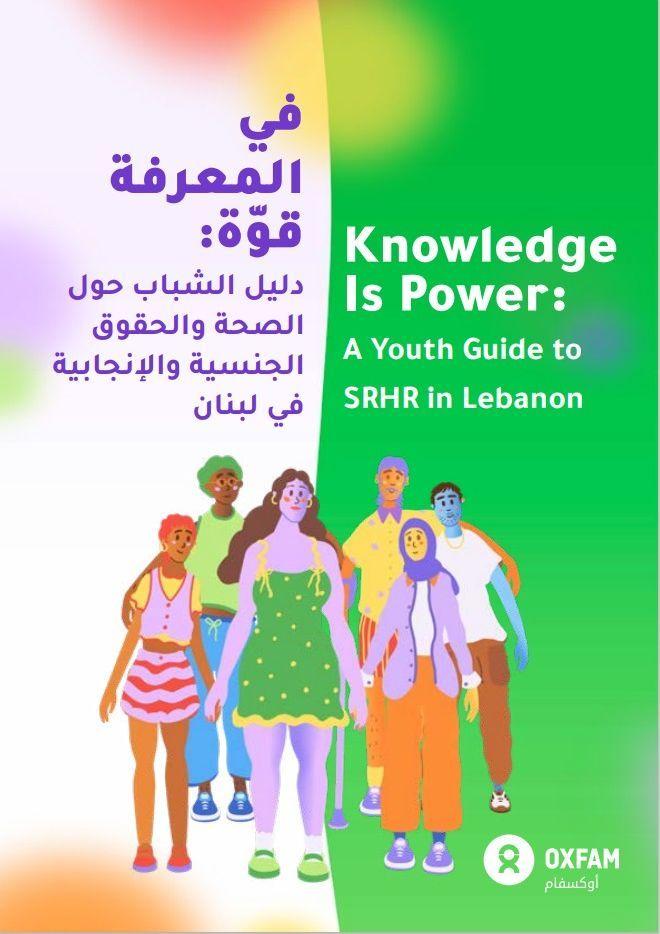

Oxfam’s guide aims to help young people in Lebanon understand sexual and reproductive health and rights (SRHR), challenge misinformation and harmful norms, and make informed decisions about their bodies and relationships. It provides scientifically accurate, rights-based definitions and explanations, while situating SRHR within the broader framework of gender justice and the Lebanese socio-legal context. The guide combines anatomy, reproductive health, relationships, consent, violence, and legal considerations, and connects readers to local services and support resources.
Key Insights:
What is SRHR?
SRHR is presented as the right to access accurate information and quality services related to sexuality, reproduction, bodily autonomy, and overall well-being. It is framed as a core component of gender justice, emphasizing equal rights and opportunities regardless of sex or gender, and highlighting how patriarchal norms restrict autonomy and access to care.
Anatomy & reproductive health literacy
The glossary explains male and female reproductive organs, menstruation, pregnancy, and common reproductive health conditions in accessible language. It aims to normalize discussions about bodies and reduce stigma by grounding explanations in scientific evidence.
Contraception & family planning
Different contraceptive methods are outlined, including hormonal, physical (e.g., condoms), surgical, and natural methods. The guide discusses effectiveness, risks, and benefits, stressing that contraceptive choice is personal and should be informed by accurate information.
Healthy relationships & consent
The document defines healthy versus unhealthy relationships, focusing on mutual respect, trust, communication, balanced power dynamics, and consent. It addresses how controlling or abusive dynamics can escalate into emotional, physical, or sexual violence.
Violence & harmful practices
A dedicated section addresses different forms of violence (physical, emotional, sexual) and harmful social norms. It includes supportive messaging for survivors and directs readers to services and hotlines, acknowledging that violence is never the victim’s fault.
Resources, services & youth engagement
The guide provides links to Lebanese SRHR organizations and international health resources. Notably, it was co-created with youth through participatory workshops and storytelling methods, grounding the content in lived experience and making it responsive to young people’s realities.