






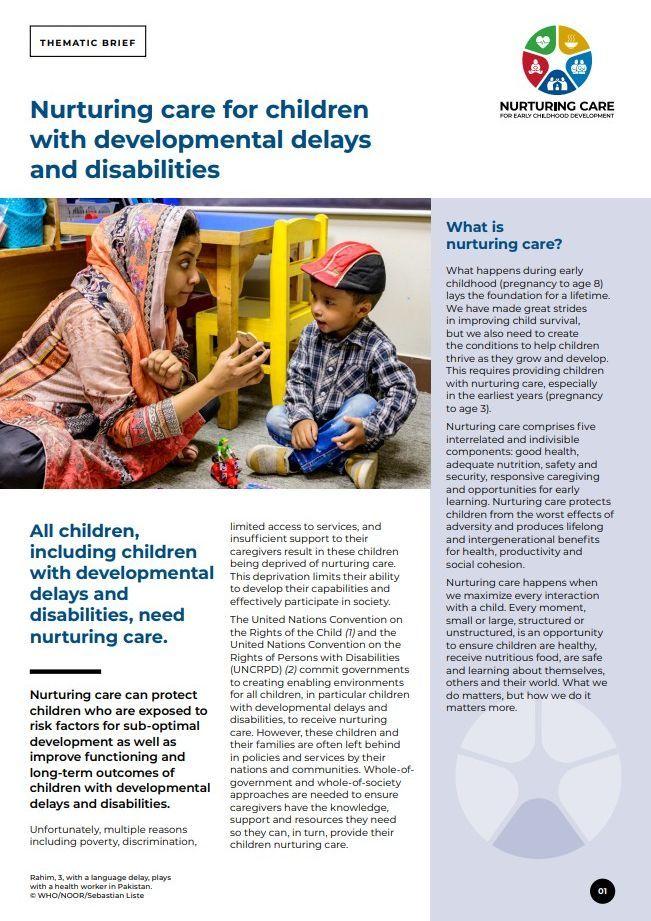

This brief highlights the right of every child, including those with developmental delays and disabilities, to receive nurturing care—encompassing health, nutrition, safety, responsive caregiving, and early learning opportunities. It emphasizes that inclusive and supportive systems are essential to help children reach their full potential and prevent developmental risks.
Key Insights
Barriers to Inclusion: Many children with developmental delays and disabilities face exclusion due to poverty, stigma, discrimination, inaccessible services, and limited caregiver support.
Principles of Inclusive Care: Effective support requires individualized care tailored to each child, family-centered approaches that support caregivers, and coordinated services across health, education, and social sectors.
Strengthening Policies: National policies should include children with developmental delays and disabilities, ensuring legal protection, financial and social support, and stronger collaboration between governments, families, and civil society.
Inclusive Services and Early Detection: Expanding accessible early childhood services, integrating developmental monitoring into routine health screenings, and increasing access to assistive technologies and caregiver training are key priorities.
Community Awareness and Caregiver Support: Efforts should focus on reducing stigma, promoting inclusive community spaces, empowering families through advocacy, and providing caregivers with financial, educational, and mental health support.
