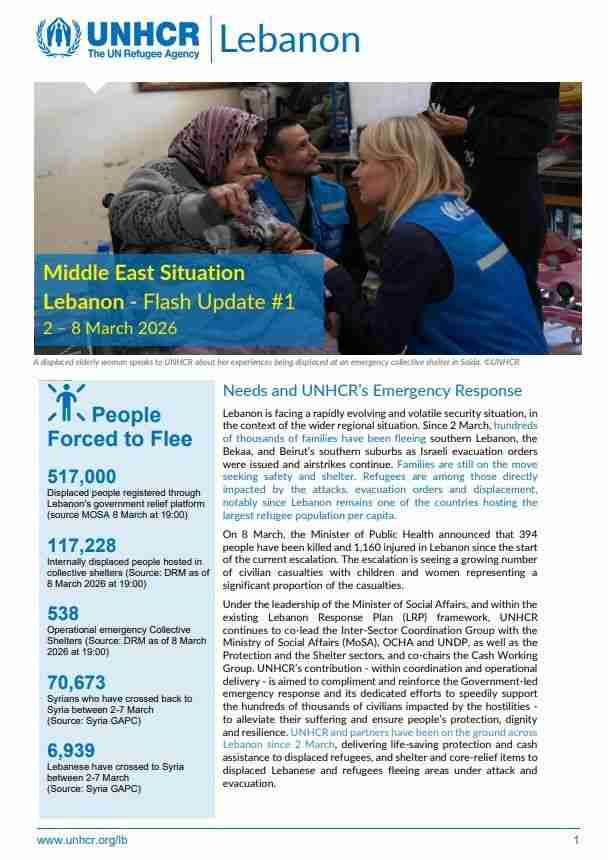





The Middle East Escalation of Conflict Situation Report No.1 was published on 11 March 2026 by the World Health Organization (WHO) Eastern Mediterranean Region. The report provides an overview of the regional public health impact of escalating conflict across multiple countries, including Lebanon, Iran, Gaza, Iraq, and Syria. It aims to guide coordinated health emergency response and identify critical gaps in healthcare systems under strain.
Key insights:
Over 800,000 people have been displaced in Lebanon and more than 100,000 in Iran, with many sheltering in overcrowded conditions that increase public health risks.
Health systems are under severe pressure, with 48 primary healthcare centres and 5 hospitals closed in Lebanon, alongside verified attacks on healthcare facilities causing deaths and injuries.
Shortages of essential medicines, trauma supplies, and medical personnel are widespread, limiting the ability to respond to mass casualty events and ongoing health needs.
Displacement, disrupted immunization, and poor water and sanitation conditions are increasing the risk of disease outbreaks such as measles, respiratory infections, and acute watery diarrhea.
Environmental and public health risks are rising due to attacks on oil infrastructure, raising concerns about air pollution and potential chemical or radiological hazards.
WHO requires US$633 million for health emergency response across the region in 2026, with current funding levels remaining about 70% underfunded