Beirut, Lebanon (Enmaeya News)— Prime Minister Nawaf Salam on Tuesday launched a $1 billion emergency project to help Lebanon recover from the destruction caused by recent Israeli attacks, saying the country is at a "critical crossroads" between deepening crisis and hopeful recovery.
The roundtable, held at the Grand Serail, brought together key government officials, including Deputy Prime Minister Tarek Mitri, Finance Minister Yassine Jaber, and Public Works and Transport Minister Fayez Rassamni. Ambassadors and representatives from more than 20 countries, including the U.S., France, Saudi Arabia, Qatar, and Egypt, also attended, alongside officials from the United Nations, World Bank, and International Monetary Fund.
Rebuilding After Massive Loss
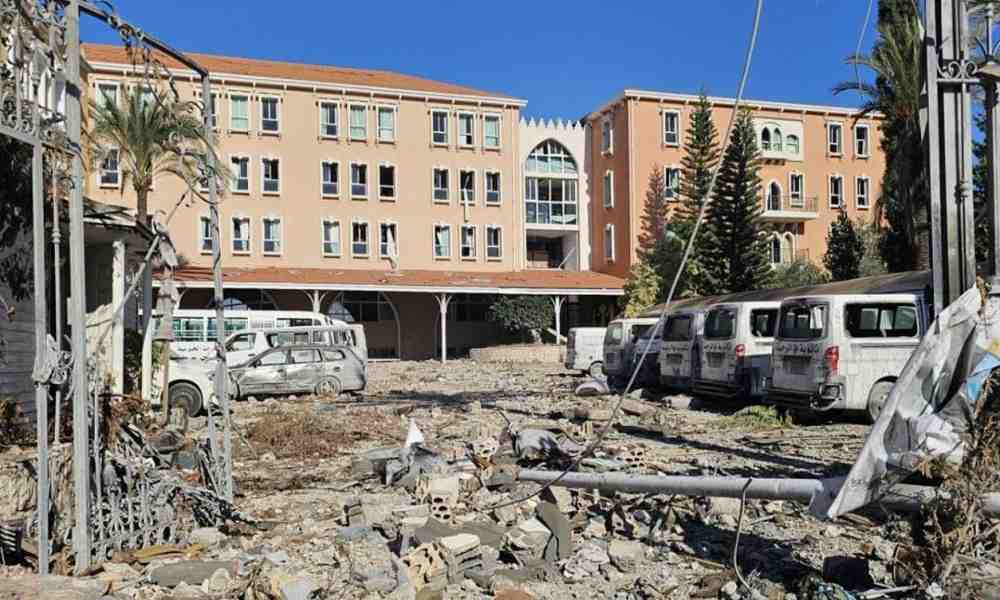
In his opening remarks, Salam said Lebanon is facing massive damage that requires more than sympathy, it needs fast and united action. He announced the launch of the Lebanon Emergency Assistance Project (LEAP), which is backed by an initial $1 billion funding plan to repair essential services and rebuild damaged infrastructure.
The government estimates that full reconstruction will cost around $12 billion. Since 2020, Lebanon’s economy has shrunk by nearly 40%, including a 7.1% decline in 2024 alone.
“We are doing things differently,” Salam said. “We’ll measure progress in weeks, not years.”
He called on international partners to join a transparent, Lebanese-led platform to coordinate recovery efforts, calling the meeting “a first step toward real partnership.”
Finance Minister Outlines Reform Plan
Finance Minister Jaber detailed the financial reforms the government is pursuing to regain public and international trust. He said Lebanon is emerging from one of the deadliest conflicts in its history, which left over 10,000 people dead and displaced 1.2 million.
The government, he said, is working on cutting off-budget spending, strengthening digital tools at the Finance Ministry, reforming the tax system, and passing key financial legislation. He also noted positive momentum in negotiations with the World Bank and IMF to support major infrastructure projects.
Recovery in Three Phases
Mohammad Kabbani, head of the Council for Development and Reconstruction, presented the structure of the LEAP plan, which includes three main phases: immediate response, service restoration, and long-term reconstruction. He said the World Bank will provide $250 million in loans for the first stage.
Kabbani emphasized the need to reduce bureaucracy and increase public oversight, promising digital tools that allow citizens and partners to track project spending and progress in real time.
World Bank Expresses Strong Support
World Bank Regional Director Jean-Christophe Carret described LEAP as one of the most ambitious government-led recovery plans in the region. He said the program will be carried out in two stages, starting with key infrastructure and service repairs, supported by the $250 million loan.
Carret also welcomed the reform steps taken by the Lebanese government, calling them essential for ensuring transparency and speeding up project delivery.
A New Chapter for Lebanon?
Lebanon hopes the project will mark a turning point in its long crisis, setting the stage for economic growth and stability, with strong support from international donors and public-private cooperation.