






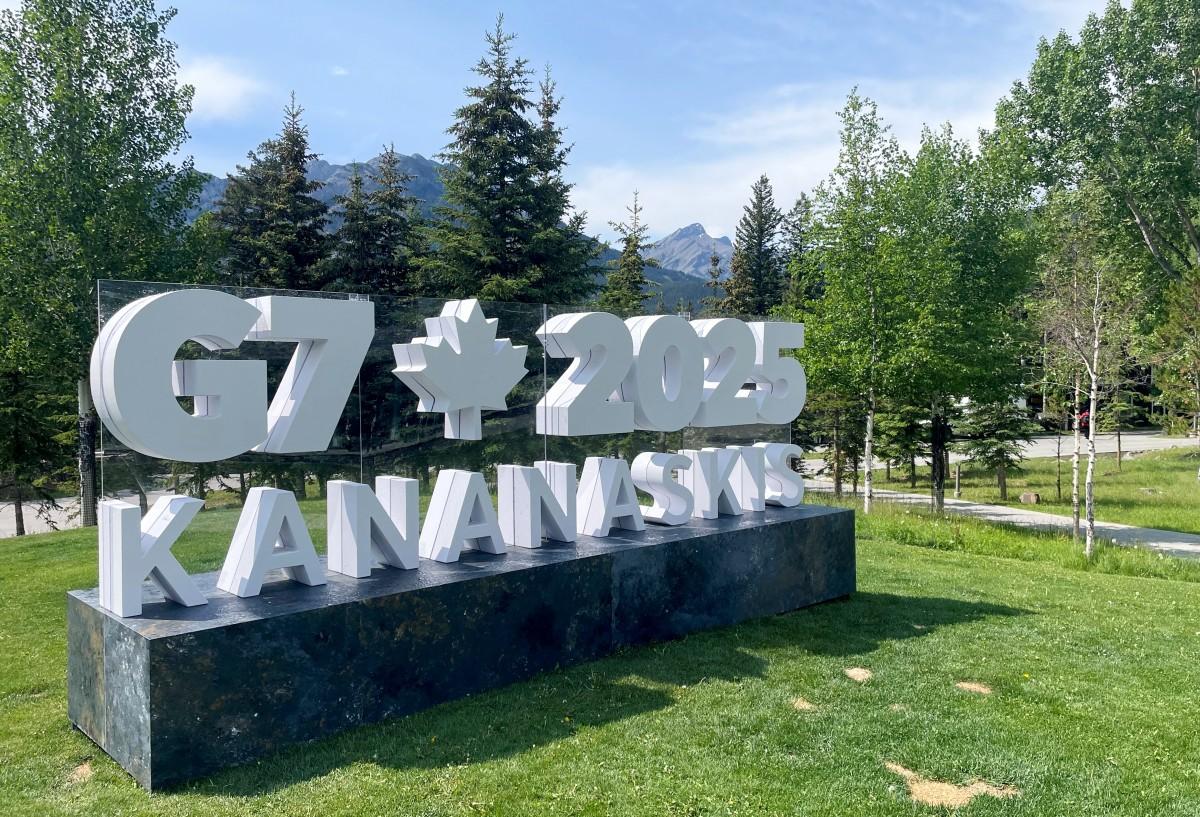
Kananaskis, Alberta, Canada (Enmaeya News) — Leaders of the Group of Seven wrapped their 51st summit Tuesday in Canada’s Rocky Mountains after two days of tense diplomacy marked by sharp political divisions, rising geopolitical threats and urgent calls for global cooperation on security, trade and technology.
Hosted by Canadian Prime Minister Mark Carney in the remote alpine resort of Kananaskis, the summit brought together heads of state from the United States, Canada, the United Kingdom, France, Germany, Italy and Japan. It also included leaders from invited countries and institutions such as Ukraine, India, the European Union, and the United Nations.
Technology and environment take center stage
In one of the summit’s key outcomes, leaders adopted six joint declarations on cross-border challenges: securing critical minerals, regulating artificial intelligence, accelerating quantum computing cooperation, cracking down on human smuggling networks, preventing transnational repression, and enhancing wildfire resilience.
Carney framed the tech agenda as a vital part of G7 strategy to maintain democratic resilience and energy security in a rapidly shifting global economy. Canada led the call to establish a G7 digital security task force and expand investment in clean energy tech.
Zelenskyy’s urgent plea falls short
Ukrainian President Volodymyr Zelenskyy addressed the summit on June 17 to appeal for additional military aid and stronger sanctions against Russia as fighting escalates in eastern Ukraine. Canada responded with a pledge of 2 billion Canadian dollars ($1.47 billion) in military assistance and a new package of economic sanctions targeting Russian defense firms and financial institutions.
However, Zelenskyy failed to secure a meeting with U.S. President Donald Trump, who left the summit early and refused to back additional American arms deliveries. The Ukrainian leader, visibly frustrated, described the lack of U.S. engagement as a “diplomatic crisis,” highlighting growing concerns among European allies over Washington’s shifting stance on the war.
The summit concluded without the usual joint statement, mainly because the United States opposed including strong language condemning Russia. Instead, the Canadian presidency issued a chair’s statement, reaffirming support for Ukraine’s sovereignty and vowing continued pressure on Moscow, including potential new sanctions coordinated with the EU and U.K.
Tensions on trade: Japan, U.S. reach impasse
Trade tensions surfaced between Japan and the United States over automobile tariffs. Japanese Prime Minister Shigeru Ishiba confirmed that a 25% U.S. tariff on Japanese car imports remains unresolved. Talks stalled over U.S. demands for increased American manufacturing presence in Japan. Ishiba warned that the impasse could cost him political capital at home.
Despite the setback, a long-awaited trade agreement between the U.S. and U.K. was finalized on the sidelines, easing tariffs on steel and digital services and opening the door to deeper economic integration between the two allies.
Global South outreach and Modi’s warning
Leaders from the Global South, including Brazil, India, South Africa, Mexico, Australia and South Korea, attended outreach sessions. Indian Prime Minister Narendra Modi gave a forceful speech warning of “double standards” in the global response to terrorism. He urged G7 nations to adopt consistent counterterrorism strategies and avoid overlooking threats based on geopolitical interests.
The summit also included working sessions on debt sustainability and food security in the Global South, with the G7 pledging support for an African Development Bank-led initiative on climate-resilient agriculture.
Trump exits early amid Iran-Israel war
Trump’s early departure on Monday night came in response to escalating military conflict between Israel and Iran. The U.S. president called for the “full evacuation of Tehran” and warned Iran to “surrender unconditionally,” as Israeli airstrikes hit Iranian nuclear facilities in retaliation for a drone attack on Tel Aviv.
Trump left after a dinner with leaders, skipping most of the second day. His absence left a leadership void during critical talks on Middle East security and drew criticism from European allies, who accused the U.S. of unilateralism at a time of growing instability.
In addition, Trump raised eyebrows during a press session before leaving, calling the 2014 expulsion of Russia from the G8 “a mistake” and arguing that Moscow should be “brought back to the table.”
European calls for action on Russia and Iran
European Commission President Ursula von der Leyen called for stronger measures against Russia, citing continued attacks on Ukrainian infrastructure. She also advocated for coordinated diplomacy to de-escalate the Iran-Israel conflict and stabilize global energy markets.
French President Emmanuel Macron echoed the need for unity and announced that France would host the next G7 summit in Évian-les-Bains from June 14 to 16, 2026.
The 2025 G7 summit in Kananaskis revealed deep divisions among Western allies, especially on issues like Ukraine, Iran and Russia. Canada played a unifying role, helping secure important deals on technology and global development. But Trump’s early departure, Zelenskyy’s unfulfilled requests, and the absence of a joint statement showed how hard it is for the G7 to stay united in a time of growing global tensions.
