







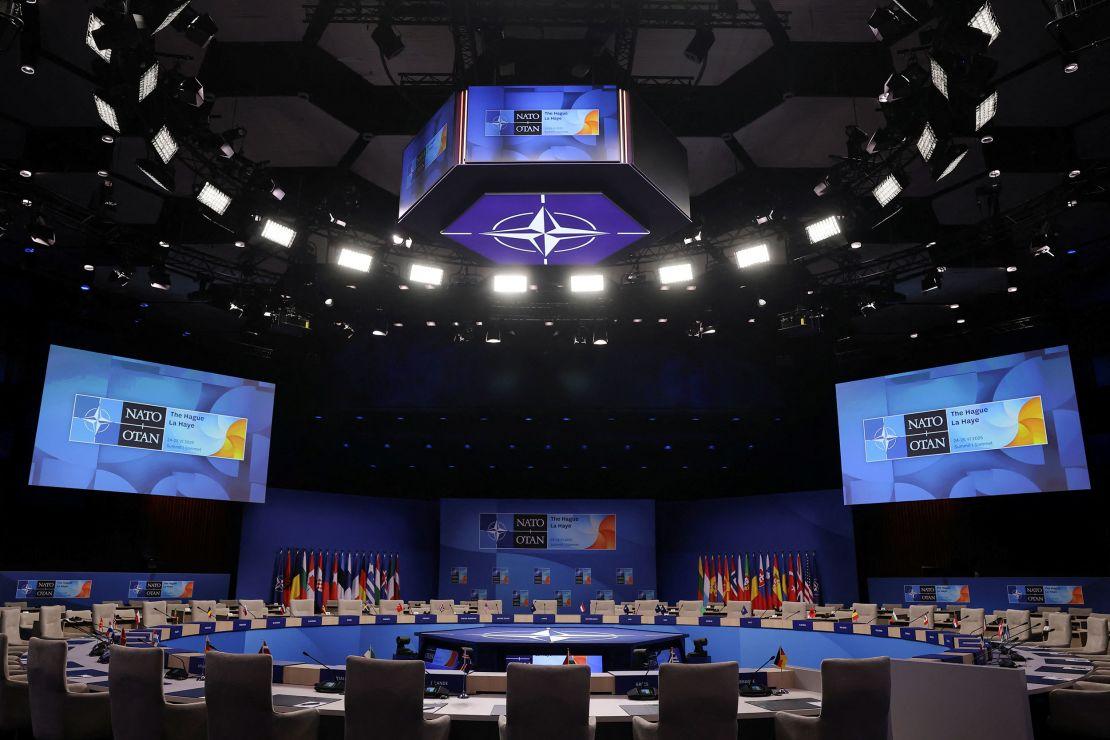
The Hague, Netherlands (Enmaeya News) — On the final day of the NATO Summit in The Hague, leaders from the 32-member alliance reached a historic agreement to increase defense spending to 5% of GDP by 2035, with 3.5% allocated for core military capabilities and 1.5% for related investments such as cyber defense and infrastructure.
While the majority of the 32-member alliance embraced the new benchmarks, countries including Spain, Belgium, and Slovakia voiced concerns about their ability to meet the targets amid economic pressures. NATO's Secretary General Mark Rutte stressed the pact’s necessity to counter evolving threats from Russia, China, North Korea, and Iran, emphasizing NATO’s “shared responsibility” to strengthen deterrence.
U.S. President Donald Trump, who played a pivotal role in securing the agreement, reaffirmed the United States’ unwavering commitment to Article 5, NATO’s mutual defense clause, signaling a firm U.S. presence on the world stage after previous doubts. “This is a big win for the alliance,” Trump said during bilateral talks with fellow leaders.
French President Emmanuel Macron underscored Europe’s responsibility to bolster its own defense capabilities in light of rising global instability, particularly due to Russia’s aggression. Macron reaffirmed France’s role as a “loyal and faithful ally” within NATO and, alongside German Chancellor Friedrich Merz, called for strengthened NATO-EU cooperation and a more unified European defense pillar.
The leaders also pledged increased support for Ukraine, including military aid and investments in the defense sector.
Ukrainian President Volodymyr Zelenskyy, who remained off the main summit stage, held a private meeting with Trump and select NATO leaders. The discussions focused on continued military and humanitarian aid amid the ongoing conflict with Russia.
The U.K. pledged 350 air-defense missiles, funded through seized Russian assets, while the Netherlands committed to supplying surveillance drones and advanced radar systems to bolster Ukraine’s defenses.
The summit also addressed wider security challenges, including countering cyber threats, hybrid warfare tactics, and instability in NATO’s southern flank.
Looking ahead, NATO will deepen cooperation with Indo-Pacific partners and intensify efforts to modernize forces against emerging global threats.