



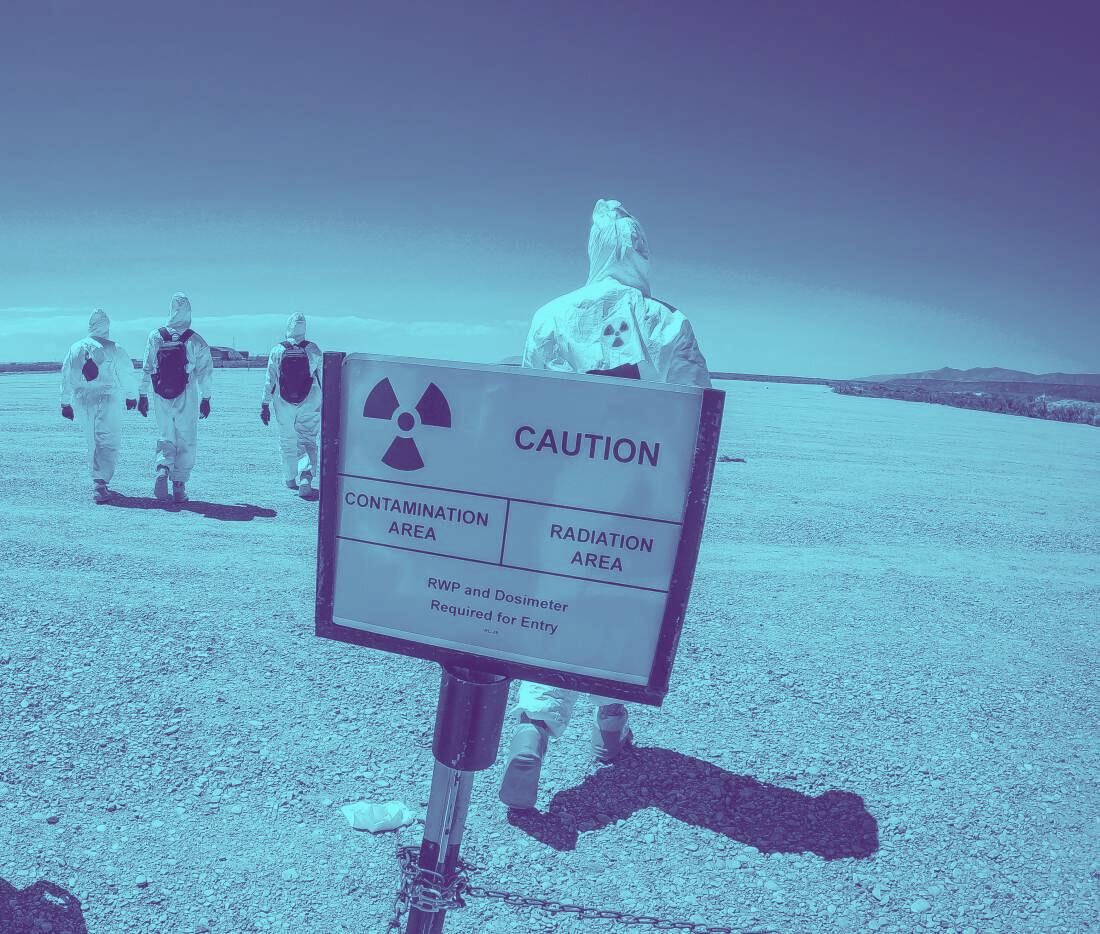
Beirut, Lebanon (Enmaeya news) — Lebanon has quietly prepared for one of the most unlikely but devastating scenarios: a nuclear accident affecting its skies and land. Central to this preparation is a detailed emergency plan focused on the Israeli "Dimona" nuclear reactor, a facility less than 350 kilometers away and considered Lebanon’s greatest nuclear risk.
Following recent attacks in the region, including Iran’s strike on the Al Udeid Air Base in Qatar, concerns have grown over possible nuclear fallout impacting Lebanon. Prime Minister Nawaf Salam emphasized the need to avoid nuclear weapons in the Middle East during a joint conference with Qatar’s deputy prime minister.
The Lebanese Atomic Energy Commission revealed it has a “national emergency plan” created in 2012 that simulates an explosion at the Dimona reactor, which lies about 250 to 350 kilometers from Lebanon. This plan involves ministries of defense, health, environment, and security forces, with clear roles and actions from detection to cleanup.
The commission head, Bilal Nsouli, said that fallout from Iran’s nuclear sites would take five days to reach Lebanon, while contamination from Dimona would arrive within a day, making it far more dangerous. Unlike Iran’s underground uranium facilities, Dimona’s contents remain secret, and Israel has not allowed international inspections, raising fears of hidden risks.
Since 2013, Lebanon has operated a network of 20 radiation-monitoring stations scattered across the country. So far, background radiation levels remain normal. Yet, the system is set to sound alarms if levels double, triggering immediate emergency responses. Full evacuations would only be ordered if radiation reached catastrophic levels millions of times above normal.
Nsouli notes that even in a worst-case scenario, radiation levels expected in Lebanon would likely be low and manageable, similar to past nuclear incidents like Chernobyl or Fukushima — far from catastrophic.
The Lebanese government holds daily coordination with regional bodies such as the Arab Atomic Energy Agency and the International Atomic Energy Agency to stay prepared.
Although ceasefire agreements between Iran, Israel, and the U.S. reduce war risks, officials warn nuclear accidents could still happen. For Lebanon, still haunted by the deadly 2020 Beirut port blast, the nuclear emergency plan is more than precaution — it’s a lifeline. It represents a rare example of foresight and coordination in a region often caught off guard by crisis.
This national readiness highlights Lebanon’s awareness of complex regional threats and its commitment to managing nuclear risks with clear strategies, equipment, and collaboration across ministries and agencies.