


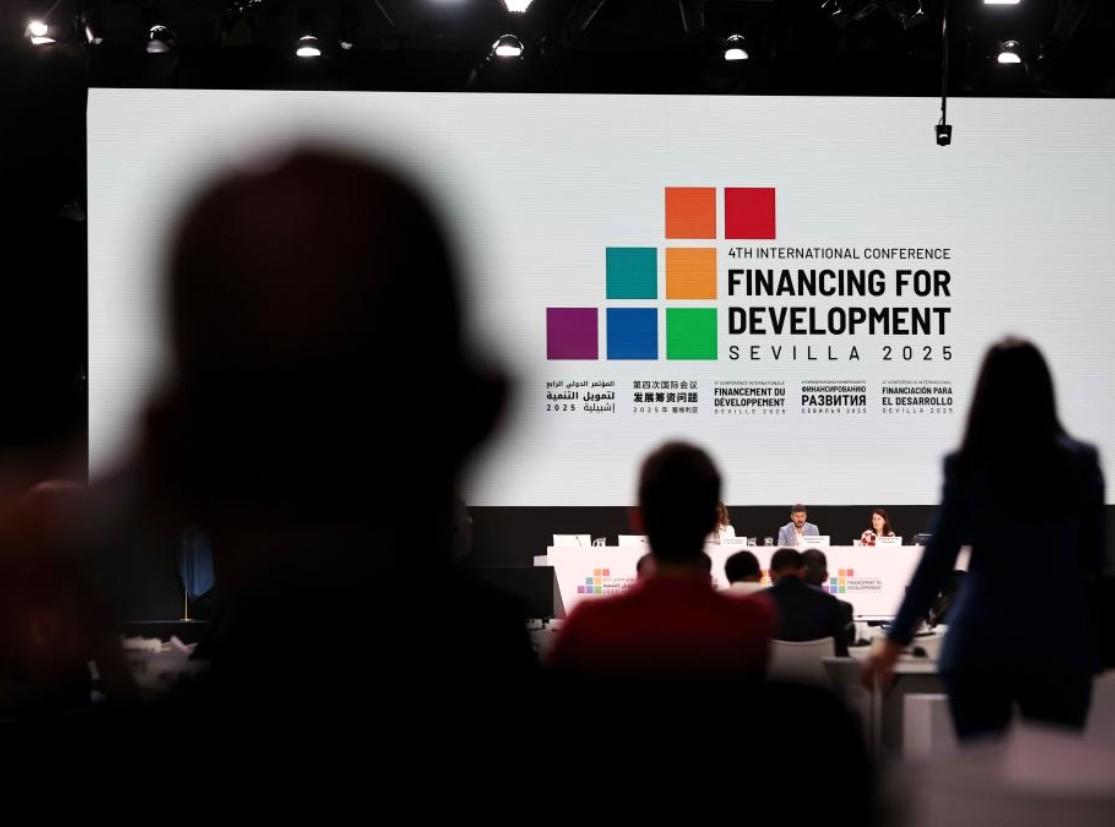
Seville, Spain (Enmaeya News) — World leaders, international organizations and civil society groups gathered this week in Seville for the Fourth U.N. Conference on Financing for Development, aiming to address one of the world's most pressing challenges: how to fund solutions to poverty, inequality and climate change.
The four-day summit, which ended Thursday, concluded with cautious optimism. Delegates welcomed a new reform roadmap but expressed concerns about political will and the absence of key global players.
The Seville Commitment
The conference ended with the approval of a 42-page paper called the “Seville Commitment.” This agreement was supported by over 170 countries. The United States did not participate.
The commitment outlines a strategy to reform the global financial system and close an estimated $4 trillion annual funding gap needed to meet the Sustainable Development Goals by 2030.
Key proposals include:
Stronger international cooperation on tax matters to limit tax evasion and avoidance.
Expanded debt relief options, including debt-swap programs and crisis-triggered debt pauses.
Promotion of progressive taxes, including climate-related charges on luxury goods such as private jets.
Encouragement for countries to raise domestic revenue collection to at least 15% of gross domestic product.
Reforms to triple the lending capacity of multilateral development banks.
A new multi-stakeholder monitoring body, the Seville Platform for Action, was also launched to coordinate more than 130 initiatives commitments during the summit.
Financial Commitments and Political Divides
Several nations made fresh financial commitments. Spain, the host country, committed €145 million to the Global Fund and vowed to raise its official development assistance to 0.7% of GDP by 2030.
Some governments supported creating a U.N.-led global tax body, but many wealthy countries still oppose it. Suggestions from African and Caribbean countries for a Global South debt program were mentioned but were not part of the final agreement.
The absence of the United States left a noticeable gap in high-level discussions. French President Emmanuel Macron was the only G7 leader to attend the summit in person.
Civil Society and Climate Finance
Activists from the Global South voiced frustration over limited representation and questioned the strength of the commitments.
“There were a lot of promises, but we need action — not just plans,” said Mariam Kaba, a West African development advocate.
Climate finance remained a central issue. Delegates debated how to reform fossil fuel subsidies, mobilize private capital and utilize International Monetary Fund Special Drawing Rights to fund green investments.
The role of the private sector drew mixed reactions. While proposals to de-risk investments and expand blended finance were welcomed, critics warned against over-reliance on profit-driven models.
What Comes Next
U.N. Deputy Secretary-General Amina Mohammed called the summit a “turning point,” while former World Bank chief economist Joseph Stiglitz described the agreement as “hopeful but unfinished.”
The next challenge lies in implementation. The Seville Platform for Action will monitor progress, promote transparency and coordinate follow-up efforts.
The U.N. will provide annual updates, with a follow-up summit scheduled for 2027.
The Seville conference renewed momentum behind efforts to create a more equitable global financial system. But leaders acknowledged that without political will, inclusive governance and real funding, global development goals will remain elusive.
“We cannot fund tomorrow’s future with yesterday’s tools,” said U.N. Secretary-General António Guterres. “The financial system must serve people and the planet — not just profit.”