


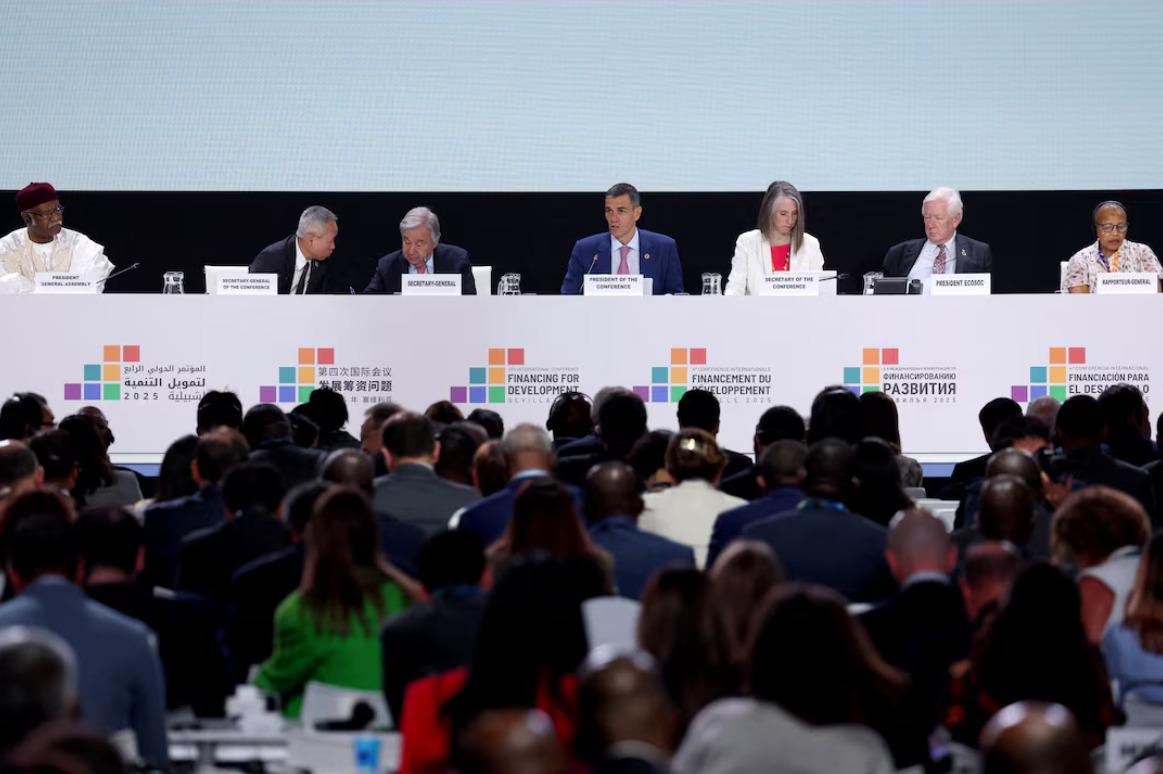
Seville, Spain (Enmaeya News) — At the UN Finance Summit in Seville, Spain promised nearly $2 billion to help poor countries. Instead of giving new loans or aid, Spain will use money it already has with the International Monetary Fund’s (IMF) Poverty Reduction and Growth Trust. It will also start new programs to help poor countries change their debt into money for healthcare, schools, and climate projects.
Spain’s plan is different. It wants countries to change how they pay back debts owed to Spain. Instead of sending money out of the country, the payments will stay inside to improve things like schools, forests, clean water, and health services.
Spain will use $1.9 billion of its IMF Special Drawing Rights (SDRs) for this. SDRs are usually saved for emergencies, but Spain wants to use them now to help without raising taxes or borrowing more money.
The debt swap means countries can make new deals to pay Spain. The money will stay in their own country to help with important projects. The World Bank supports this plan, and Spain gave €3 million to start the program and invite others to join.
Spain’s idea is like old “nature swaps,” but bigger and clearer, with results tied to climate, health, and education.
While Spain acted, the United States did not join the summit or make promises. UN leaders worry that without the U.S., big changes might be hard.
In Europe, some countries are careful. Germany has not promised much, France supports reform but did not match Spain, and smaller countries like Belgium and Ireland are watching.
Spain’s plan is risky but could change how rich countries help poor ones. It shows development can be more about using current money better, not just giving new aid.
This idea will not change the whole system but may help change how debt is seen — not just a problem, but something that can be fixed. If it works, it could change global development. If not, Spain still shows that even smaller countries can try new ideas when others wait.