







Beirut, Lebanon (Enmaeya News) — As global shipping routes shift and regional ports expand, Lebanon faces growing pressure to define its place in the evolving trade map of the Eastern Mediterranean.
Major investments are reshaping maritime infrastructure across the region. Egypt is expanding the Port of Port Said with more than $2 billion in upgrades. Port of Haifa now handles over 1.5 million containers annually. Morocco’s Tangier Med has become one of the largest ports in the Mediterranean. Jordan and Syria are also working to strengthen their positions despite political and economic challenges.
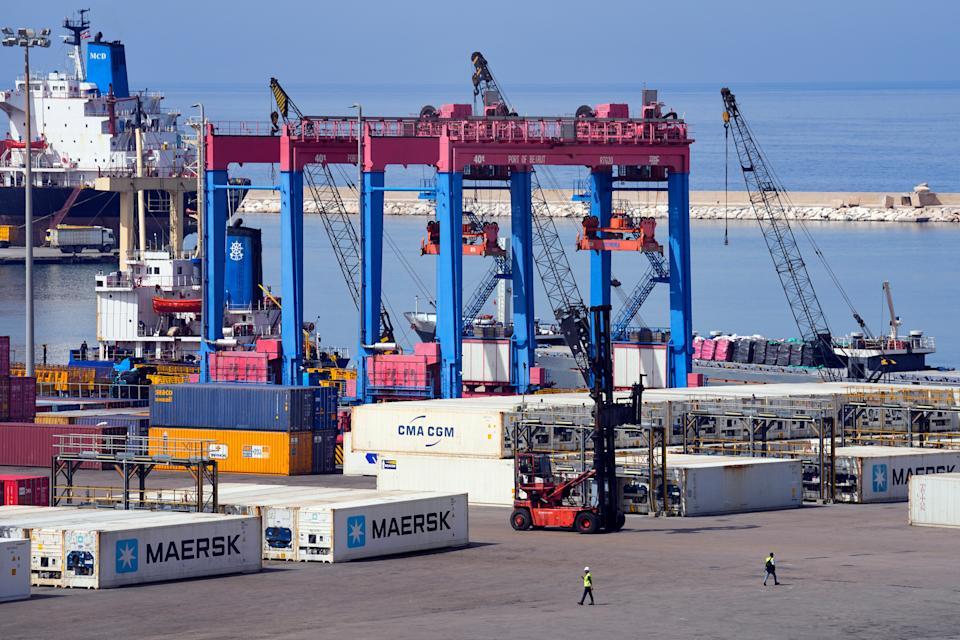
Lebanon, once a key trading hub, has struggled to keep pace. The Port of Beirut, heavily damaged in the August 4, 2020 explosion, is still recovering. Recent data shows cargo activity has returned to about 88.5% of pre-blast levels. Container traffic in early 2025 reached its highest point since 2019, but the number of ships arriving has declined. Without a long-term investment strategy, experts warn the recovery may not hold.
The country also ranks low in global logistics competitiveness. In the 2024 Logistics Performance Index, Lebanon placed 117th out of 139 countries, with poor ratings in customs procedures and infrastructure. Weak governance remains a major obstacle to turning Lebanon into a regional logistics hub.
Meanwhile, demand is growing for alternative shipping routes in the Eastern Mediterranean due to geopolitical instability elsewhere. This opens the door for ports in the region to play a larger role in global trade — but only if they are efficient, connected, and trusted.
Lebanon has the geographic advantage to compete. However, experts say it needs a new model built on transparency, international partnerships, and depoliticized port management. Investment in port digitization, including tracking systems and AI-driven logistics, could improve efficiency by as much as 30%, provided international environmental and governance standards are met.
Regional connectivity is also key. Transport links between ports, industrial zones, and border crossings will be critical as infrastructure projects continue across the Levant, the Gulf, and Turkey. Without them, Lebanon’s ports may remain isolated from regional trade flows.
A potential path forward could involve partnerships with global operators. DP World, the Dubai-based port company, has been cited as a model. A collaboration of this kind could bring expertise, capital, and credibility to Beirut’s port operations.
Lebanon’s future in maritime trade now depends on political will and strategic planning. Without action, the country risks being left behind as new trade routes and supply chains take shape across the Eastern Mediterranean.