


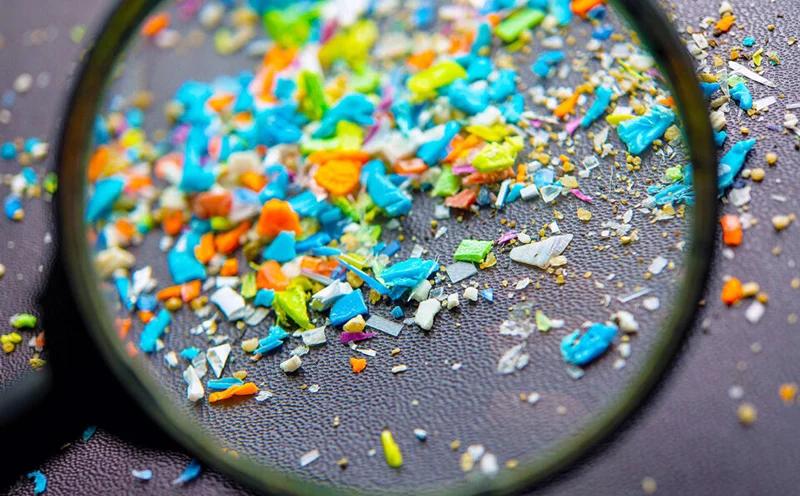
California, United States (Enmaeya News) — A recent study has uncovered significant levels of microplastics in indoor air, raising concerns about potential health risks associated with prolonged exposure.
The research, led by Nadiia Yakovenko and colleagues, looked at microplastics small enough to be inhaled—between 1 and 10 micrometers—in homes and car cabins. Using a technique called Raman spectroscopy, the team found a median of 528 particles per cubic meter in homes and 2,238 in cars. More than 90% of these particles were tiny enough to reach deep into the lungs.
The types of plastics varied depending on the environment. In homes, polyethylene was the most common, while polyamide dominated in cars. Most of the particles—97%—were fragments, and 94% were smaller than 10 micrometers. The researchers also noticed that smaller fragments were far more numerous than larger ones.
Using these measurements, the team estimated that the average adult inhales roughly 68,000 microplastic particles from indoor air each day, with nearly all of them in the 1–10 micrometer range. This is about 100 times higher than previous estimates that focused on larger particles.
While the long-term health effects remain uncertain, inhaling these tiny plastics could cause lung inflammation and other respiratory problems. Larger particles, meanwhile, may be trapped in the lungs and eventually swallowed, adding to microplastic exposure in the digestive system.
The study highlights the importance of awareness and preventive measures to reduce exposure, particularly given how much time people spend indoors and in confined spaces like cars.
For more detailed information, you can access the full study here: Human exposure to PM10 microplastics in indoor air.