



Sinai Peninsula, Egypt (Enmaeya News) — The Jebeleya tribe, traditional Bedouin, faces upheaval as a major tourism development transforms their homeland. Homes and eco-camps have been demolished with little or no compensation, and graves cleared to make way for a car park.
“The project isn’t what the Jebeleya asked for, it’s imposed top-down to serve outsiders’ interests,” said British travel writer Ben Hoffler. “A new urban world is being built around a nomadic tribe, altering their place in their homeland forever.” Locals, about 4,000, are reluctant to speak publicly.
Dispute With Greece
Greece criticized an Egyptian court ruling declaring the monastery sits on state land, limiting the monastery to land use rights. Archbishops called it an existential threat and “a grave blow… and a disgrace.”
The Greek Orthodox Patriarchate of Jerusalem stressed the monastery’s unique Christian-Muslim heritage and historical protections.
Diplomatic efforts led to a joint Egypt-Greece declaration safeguarding the monastery’s Greek Orthodox identity and heritage.
The Great Transfiguration Project
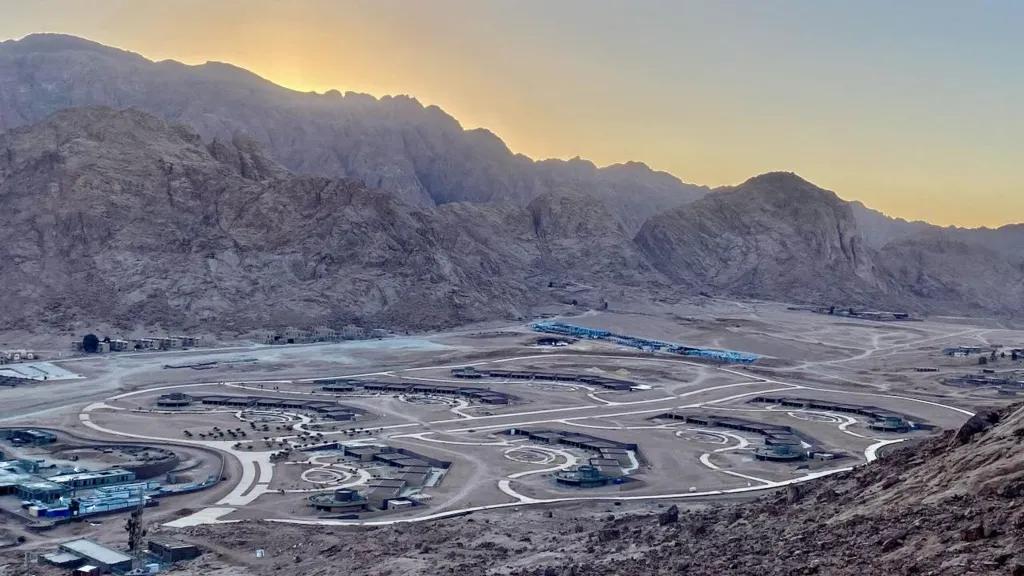
Launched in 2021, the state-backed project includes hotels, eco-lodges, a visitor center, an expanded airport, and a cable car to Mount Moses. Authorities describe it as “Egypt’s gift to the world,” promising tourism services, area development, and preservation of heritage.
Construction in the Plain of el-Raha, visible from the monastery, is ongoing. Critics warn it threatens the site’s natural beauty, a key element of its UNESCO-recognized universal value.
UNESCO and World Heritage Watch have called for development pauses and conservation plans, but progress has stalled.
Historical Context and Bedouin Impact
Sinai’s Bedouin communities have long faced marginalization. Since Sinai’s return to Egypt after the 1979 peace treaty, industrial tourism displaced local communities, as seen in Red Sea resorts. Journalists note the Bedouin were pushed out of traditional roles and lands.
The new development is expected to bring in workers from other regions, though authorities say Bedouin areas are also being upgraded. While the monastery remains, the centuries-old ways of life around it face irreversible change.