


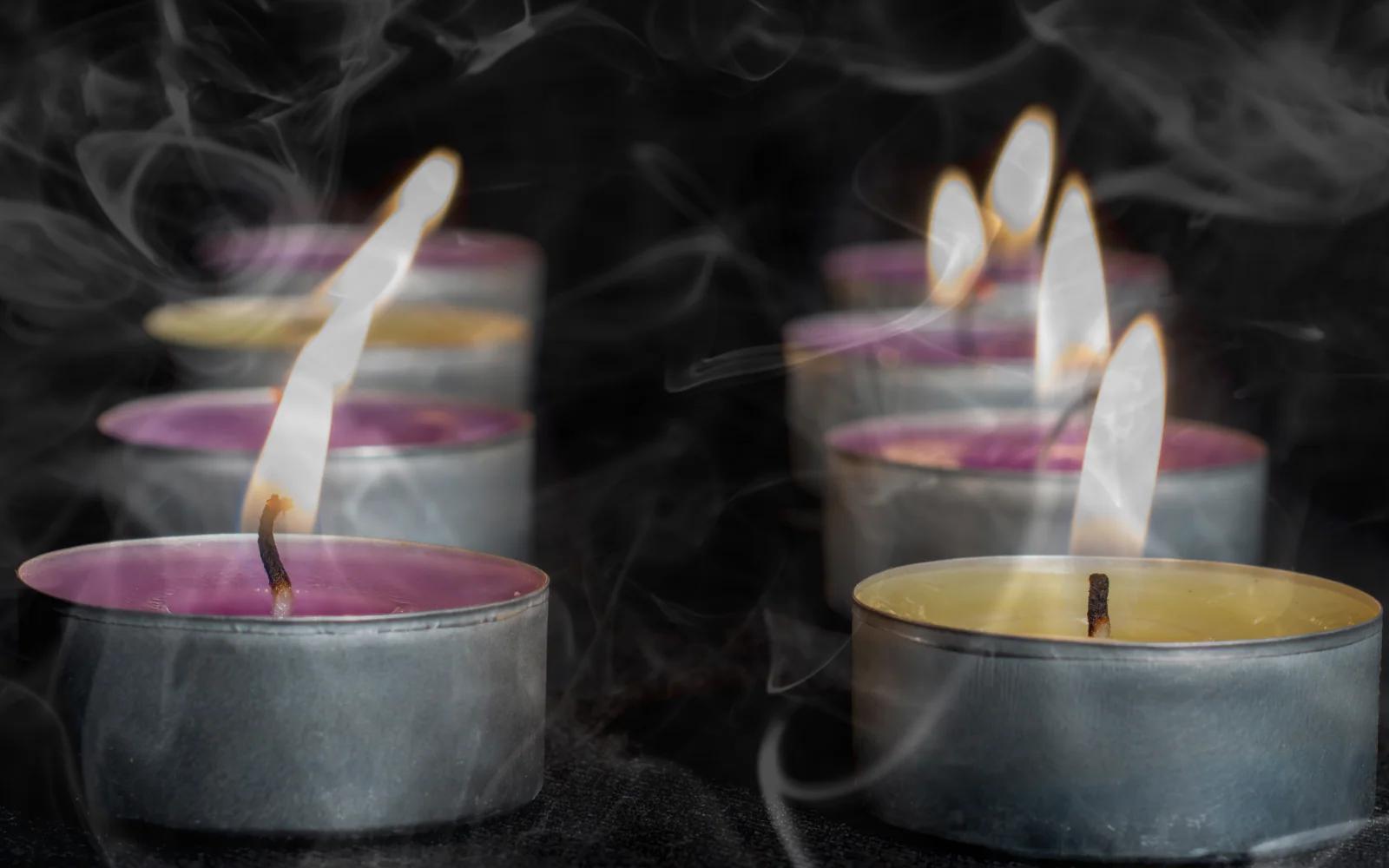
Beirut, Lebanon (Enmaeya News) — Common scented candles, long used to create a relaxing ambiance at home, are emerging as a hidden source of indoor air pollution, according to recent studies.
Most mass-produced candles are made from paraffin wax, a petroleum byproduct. When burned, they release volatile organic compounds, or VOCs, including benzene and toluene — chemicals also found in diesel exhaust. Researchers say these pollutants can linger in enclosed spaces for hours, reducing indoor air quality.
A U.S. Environmental Protection Agency study found that candle soot, particularly from paraffin wax, produces ultrafine particles similar in size and composition to diesel emissions. These particles can penetrate deep into the lungs and bloodstream, raising concerns about respiratory and cardiovascular health.
Synthetic fragrances and metal-core wicks in many candles can release additional VOCs and trace heavy metals into the air, further contributing to indoor pollution.
Experts say alternatives such as soy and beeswax candles burn cleaner and produce significantly less soot. Other safer options include essential oil diffusers, simmering spices, or natural potpourri to freshen indoor spaces.
With indoor air pollution increasingly recognized as an environmental health challenge, scientists stress the importance of consumer awareness and choosing sustainable alternatives. Cleaner air, they note, may simply mean less — not more — fragrance.