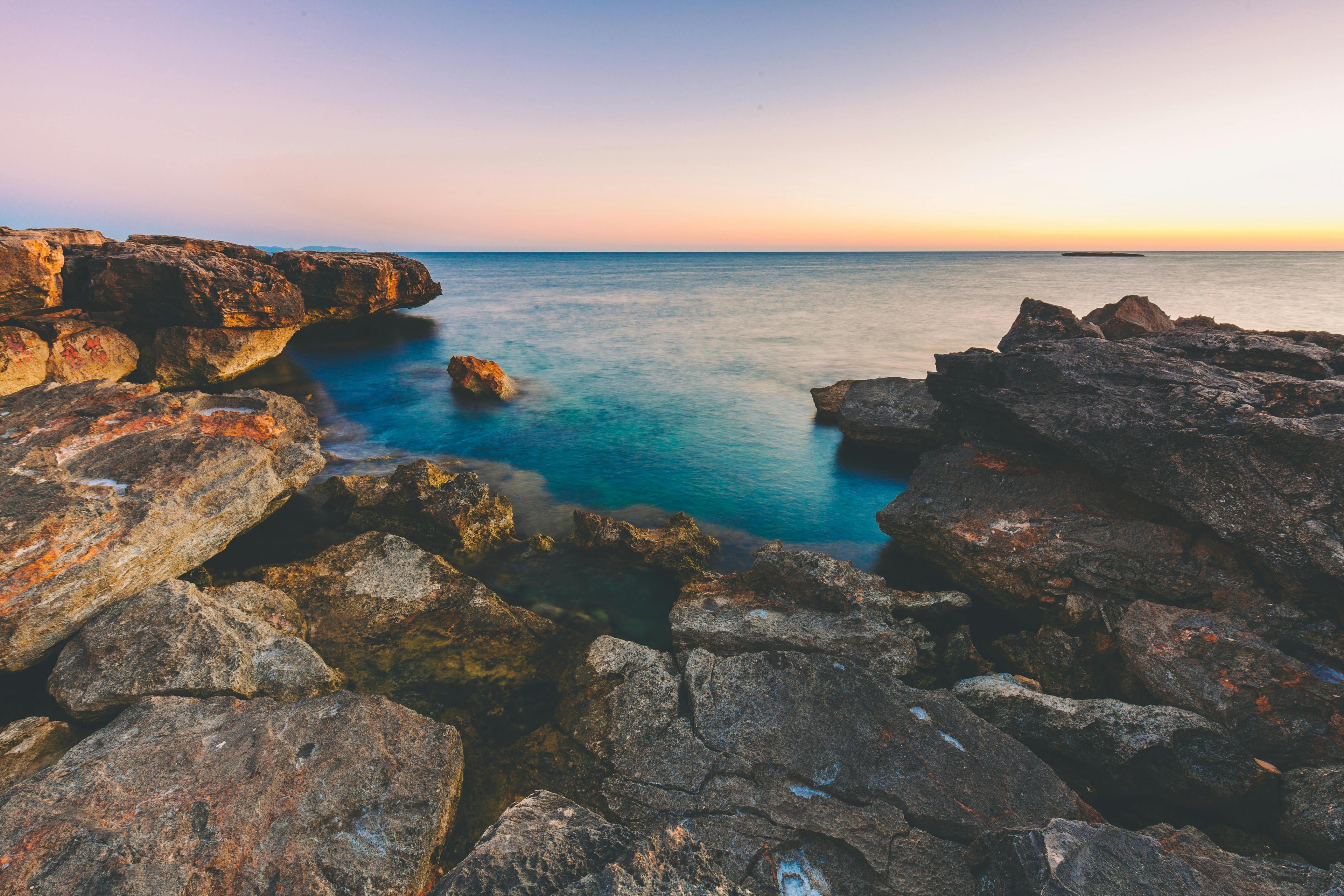
Beirut, Lebanon (Enmaeya News) — The Mediterranean Sea is experiencing unprecedented warming, with July 2025 recording an average temperature of 26.9°C—the highest since measurements began, according to the European Copernicus Climate Change Service.
In hotspots such as Greece, Italy, and Spain, temperatures exceeded 28°C, transforming the sea from a refreshing getaway into a “hot basin” and putting marine biodiversity at risk.
Scientists warn that the Mediterranean is heating faster than open oceans due to its semi-enclosed nature and limited connection to the Atlantic through the Strait of Gibraltar.
A joint study by the University of Kiel in the UK and the University of Angers in France, published in Nature, analyzed 131 scientific papers on climate impacts in the region. Researchers developed a Mediterranean-specific risk assessment chart based on the Intergovernmental Panel on Climate Change (IPCC) tool, illustrating how even small temperature increases can threaten marine and coastal ecosystems.
The study examined two key IPCC emission scenarios. Under a moderate scenario, assuming stabilized emissions through climate policies, the Mediterranean is expected to warm by 0.6–1.3°C by 2050 and 2100. A high-emission scenario, with no limits on emissions, predicts a rise of 2.7–3.8°C in the same period.
In both scenarios, ecosystems face growing risks. Seagrass meadows could disappear entirely by 2100 with an additional 0.8°C rise, native algae are expected to decline, and invasive species that thrive in warmer waters will spread.
Fish stocks may drop 30–40%, with species migrating northward and invasive fish, like lionfish, appearing. Coral reefs face medium to high risks once temperatures exceed 3.1°C.
Plankton and microorganisms are also vulnerable, potentially shifting marine communities and increasing harmful events like red tides and toxic algae blooms.
Rising temperatures and sea levels threaten beaches and sand dunes, jeopardizing over 60% of turtle nesting sites. Coastal wetlands, lakes, and deltas may see widespread vegetation changes, while groundwater is at risk of salinization and freshwater shortages.
Scientists describe the Mediterranean as a “climate hotspot and natural laboratory,” showing warming effects faster than open oceans and serving as an early warning for other regions.
They stress that political decisions will determine whether ecosystems collapse or survive, noting that even a tenth of a degree increase can have a critical impact. The current heatwave is part of a pattern of extraordinary marine temperature anomalies observed globally in 2025.
Researchers emphasize the need for expanded scientific cooperation and monitoring networks, warning that climate change is no longer a future threat—it is already dangerously affecting Mediterranean ecosystems.