




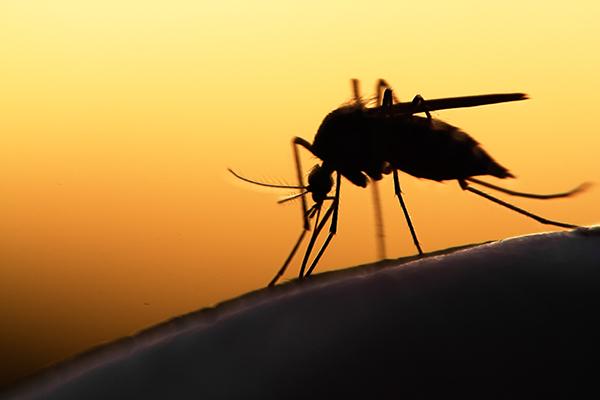
Beirut, Lebanon (Enmaeya News) — Mosquitoes have long been a source of irritation and concern, not just for their itchy bites but also for their role in transmitting diseases such as malaria, dengue and Zika. One question that has intrigued researchers and the public alike is whether mosquitoes prefer certain human blood types over others.
While anecdotal evidence suggests that some individuals seem to attract more mosquito bites, the scientific community remains divided on the issue.
Several studies have examined the relationship between human blood types and mosquito attraction. A 2004 study found that mosquitoes landed on people with Type O blood nearly twice as often as those with Type A blood, according to hartfordhealthcare.org.
Similarly, a 2019 study published in the American Journal of Entomology observed that mosquitoes preferred to feed on Type O blood over other types.
However, these findings are not universally accepted. A 2023 article by China CDC stated that there is currently no evidence suggesting that blood type influences mosquito attraction, according to en.chinacdc.cn.
While blood type may play a role, other factors are also significant. Mosquitoes are attracted to carbon dioxide, body heat and certain body odors. A 2022 study found that elevated levels of carboxylic acids on the skin, which are products of sebum metabolized by skin bacteria, can make individuals more attractive to mosquitoes.
Lifestyle choices can also influence mosquito attraction. A 2025 study reported that individuals who consumed beer were 1.35 times more attractive to mosquitoes than those who had not.
The relationship between blood type and mosquito attraction is complex and not fully understood. While some studies suggest a preference for Type O blood, other factors such as body odor, carbon dioxide emission and lifestyle choices play significant roles. Researchers say further study is needed to unravel the intricate dynamics of mosquito attraction.