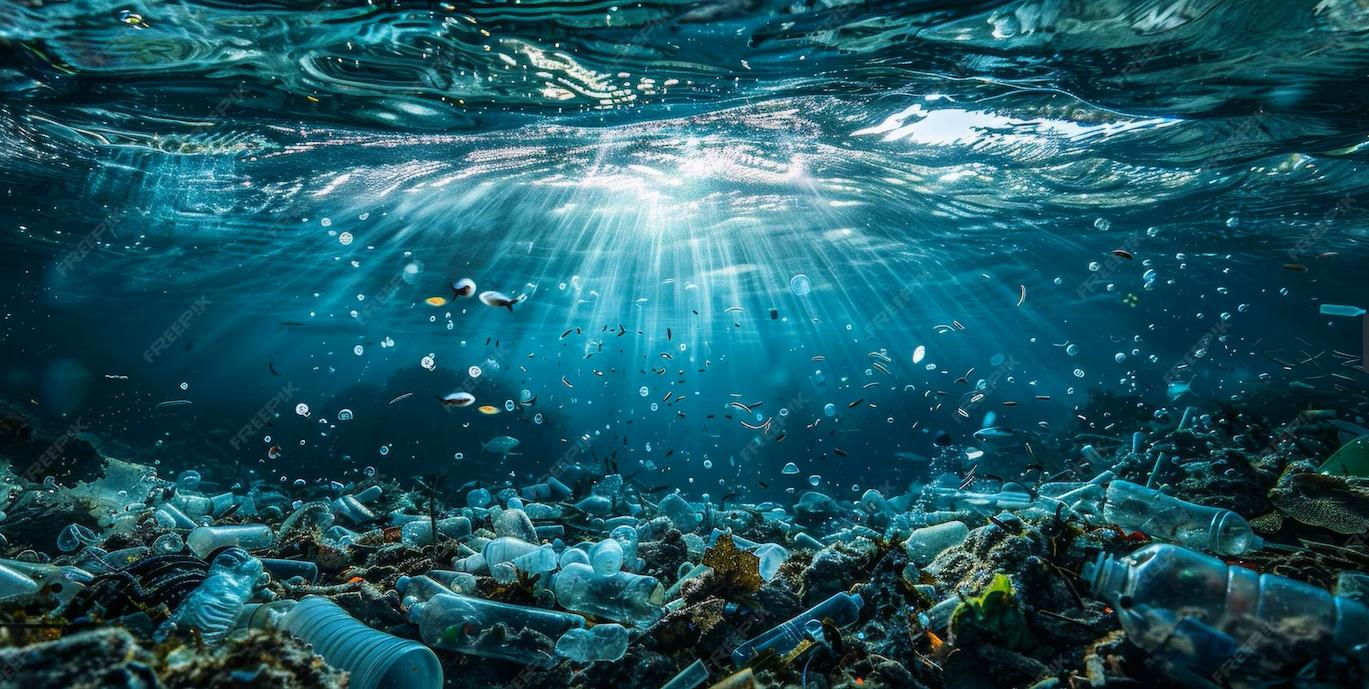
Southeastern Mediterranean (Enmaeya News) — The seabed of the southeastern Mediterranean has become a massive dump for plastic waste, particularly bags and packaging materials, a recent study shows. Rising water temperatures in the region are compounding threats to the fragile marine ecosystem.
The eastern Mediterranean, known as the Levant Basin and stretching off the coasts of Gaza, the occupied territories, Egypt, and Turkey, ranks among the most polluted deep-sea areas globally. Surveys and net trawls found that 92% of debris on the seabed consists of plastic bags and packaging materials.
Lightweight plastics have reached depths exceeding one kilometer. Researchers analyzed the size, shape, color, material, and surface-attached substances such as tar or microscopic marine organisms.
Most of the plastic pieces were polyethylene, which typically floats, but sank due to added calcium carbonate that increased their weight. The basin acts as a natural trap, where pressure and fine sediments keep the plastics in place.
Pollution sources are not limited to local shores; land-based activities in Egypt, the occupied territories, Turkey, and maritime shipping contribute significantly. Fishing was not identified as a major source.
Experts warn that deep-sea plastics can persist for centuries, threatening ecosystems and contaminating marine food chains with toxins and microplastics. Estimates suggest that 94% of floating plastic fragments eventually settle in seabed sediments, 5% accumulate in coastal areas, and only 1% remain on the surface. Globally, deep-ocean plastic accumulation is estimated between 3 and 11 million metric tons.
Plastic pollution has become pervasive due to the widespread use of cheap, convenient consumer products. It harms wildlife, killing millions of marine creatures that ingest microplastics. The study calls for urgent regional coordination to monitor, clean, and prevent plastic waste, cautioning that ignoring deep-sea pollution underestimates its true impact.
According to the World Bank, the Middle East and North Africa have the highest per capita plastic footprint, with each person polluting oceans with over six kilograms of plastic annually. The Mediterranean, described as a climate-change hotspot, is seeing unprecedented sea temperatures, further stressing the ecosystem.