WORLD (Enmaeya News) - October 15, 2025
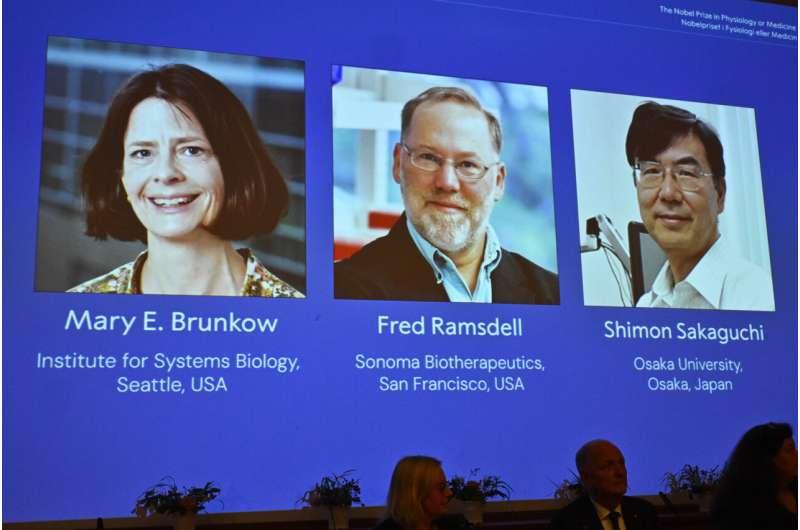
The Nobel Prize in Physiology or Medicine was awarded to Mary E. Brunkow, Fred Ramsdell, and Shimon Sakaguchi for their groundbreaking discoveries on how the immune system prevents itself from attacking the body.
The Nobel Assembly at the Karolinska Institutet said the trio’s work “revolutionized our understanding of immune regulation and tolerance,” providing key insights into autoimmune diseases, cancer, and organ transplantation.
Sakaguchi, a Japanese immunologist, was the first to identify a special class of immune cells called regulatory T cells (Tregs), which act as the body’s immune “brakes,” suppressing overactive immune responses.
Brunkow and Ramsdell later discovered that a gene known as FOXP3 controls the development of these cells. Mutations in FOXP3 cause severe autoimmune disorders, linking their findings directly to human disease.
Together, their discoveries revealed how the immune system maintains balance attacking foreign pathogens while avoiding damage to its own tissues.
According to the Nobel Committee, their findings paved the way for new treatment strategies for conditions such as type 1 diabetes, multiple sclerosis, and lupus, and could improve organ transplant success rates by reducing the need for immunosuppressive drugs.
Researchers are also exploring how targeting regulatory T cells may enhance cancer immunotherapy.
Brunkow is affiliated with the Institute for Systems Biology in Seattle, Ramsdell is an alumnus of UC San Diego and UCLA, and Sakaguchi is based at Osaka University in Japan.
In a statement following the announcement, Sakaguchi said the discovery highlights “the beauty of balance - how the immune system knows when to fight, and when to hold back.”
As research continues to build on their discoveries, the promise of more effective therapies for autoimmune conditions, cancer, and improved outcomes for transplant patients grows ever closer.