




BEIRUT (Enmaeya Features) - October 29, 2025
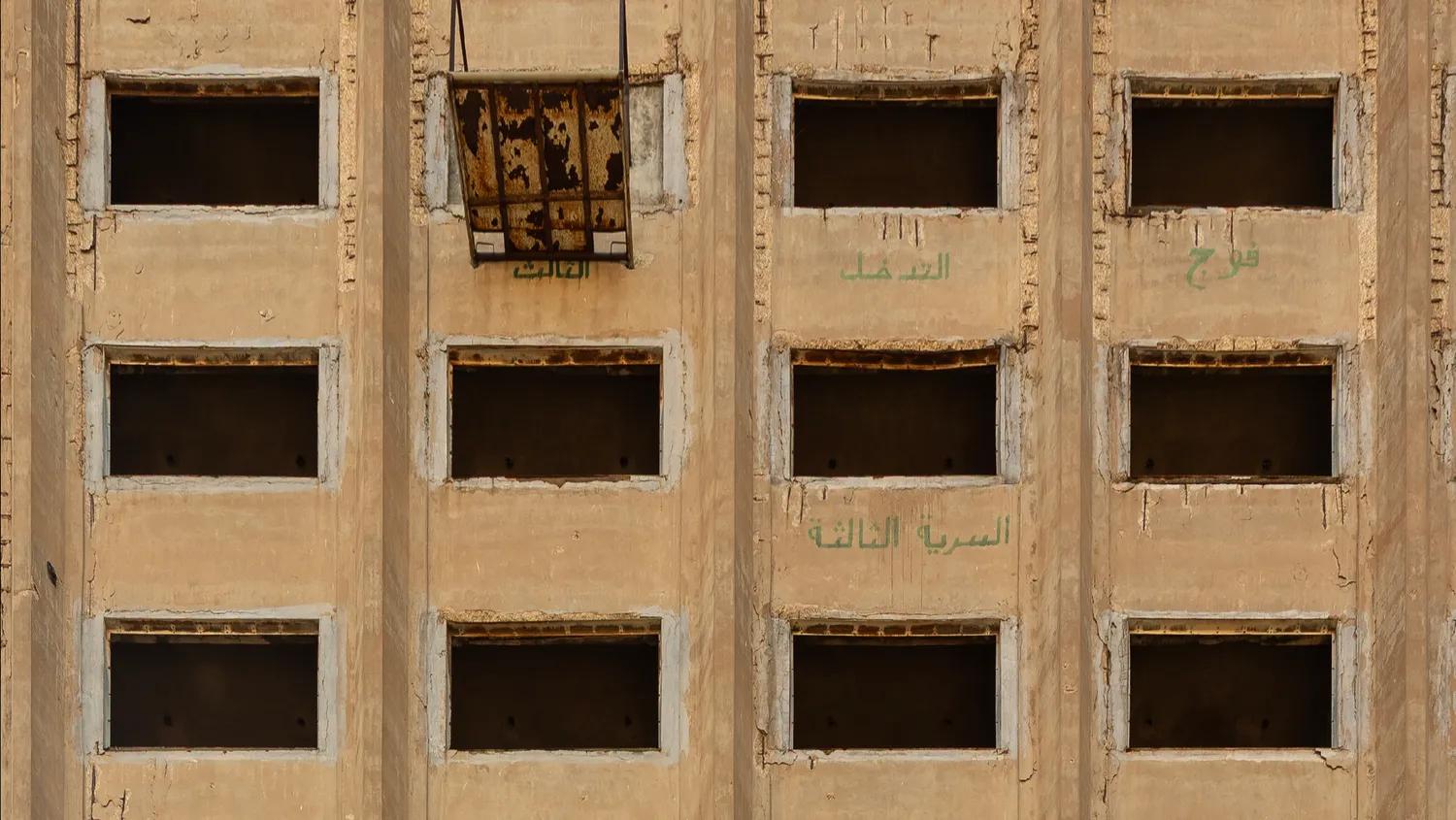
Burj El Murr, the unfinished skyscraper overlooking Beirut, was originally intended to be the city’s tallest building of its time. Construction was halted in April 1975, at the outset of the 15-year Lebanese Civil War. Positioned above the “Green Line” that once divided West and East Beirut, the building became both a vantage point and a relic of the war.
This October, Burj El Murr hosted the “Design ‘In’ Conflict” Student Exhibition, organized by We Design Beirut and managed by Archifeed. The exhibition was curated by Youssef Bassil, Teymour Khoury, Yasmina Mahmoud, and Tarek Mahmoud, with support from architectural curators Angela Chiesa and Nicoletta Zakynthinou Xanthi.
Showcasing Creativity
“Design ‘In’ Conflict” is a youth-led exhibition that presented around 50 projects by students from nine Lebanese universities, including the American University of Beirut (AUB), the Lebanese American University (LAU), and Saint Joseph University (USJ).
“A year ago, We Design Beirut asked us to prepare a student showcase to highlight projects in the fields of design and architecture,” Youssef Bassil, a Lebanese designer and one of the exhibition’s curators, told Enmaeya.
We Design Beirut held its second edition from October 22 to 26, 2025, featuring a five-day program of exhibitions, installations, and design events hosted at historic Lebanese sites, including Burj El Murr, Villa Audi, and the Roman Baths.
“We shortlisted a few options, but Burj El Murr had still been an army barracks until last year,” Bassil explained. “Once the army left, we were allowed to open it to the public. We didn’t think we could secure a location of such significance.”
The event seeks to champion sustainability while inspiring collaboration among designers, students, and architects, showcasing Lebanon as a vibrant hub for world-class design and creative innovation.
When War Shapes Design
The theme of “Design ‘In’ Conflict” prompted students to engage with the concept of conflict as a design challenge.
According to Bassil, the idea emerged in the wake of Lebanon’s latest war.“While we were planning the exhibition last year, the war in Lebanon began,” he explained. “We decided to adopt this theme, share it with universities, and see how each institution would interpret it through design.”
Organizers aimed to encourage a fresh perspective on war, inviting students to explore how conflict shapes spaces, communities, and human experiences. By framing war as a design challenge, the exhibition moved beyond conventional narratives.
“We wanted universities to approach the theme differently from the way we usually perceive war,” Bassil added. “Typically, conflict is addressed through the lens of reconstruction, resilience, and trauma. In our brief, we provided instructions to encourage a shift away from these conventional interpretations.”
The curators also encouraged open dialogue about the sensitive topic of conflict and its influence on design thinking.
“We initially wanted to generate a conversation,” Bassil said. “Usually, universities avoid topics like the war because professors are often from the generation that lived through the civil war, and as teachers, many of them don’t want to address it anymore. But it is important for this generation to also speak about it.”
The Next Generation of Designers
The exhibition highlighted the pivotal role of young designers in shaping the future of Beirut, through architecture, product design, and visual installations.
“The students we worked with were very willing to work rationally, to put aside emotions and understand that this is a reality they have a say in,” Bassil noted.
“As designers and architects, we cannot be superheroes or diplomats,” he said. “But we feel the students we selected were able to have an impact, both theoretically and narratively through their projects.”
It also examined the evolving perspectives of a generation that lived through last year’s war.
“It was important for us to understand how these students, who experienced this war, the first they may fully remember, perceive conflict through architecture and design,” Bassil said. “We wanted to see how they could respond to it in thoughtful and rational ways.”
Designing Hope
By combining creativity with critical reflection, "Design ‘In’ Conflict" demonstrated how young designers are actively shaping Beirut’s cultural and physical landscape. The exhibition underscored the power of architecture and design not only to respond to conflict but also to inspire dialogue, foster community, and envision a resilient future for the city.
Through their projects, the next generation of Lebanese designers proved that even in the shadow of war, innovation, expression, and hope can thrive.