



LEBANON (Enmaeya News) - November 10, 2025
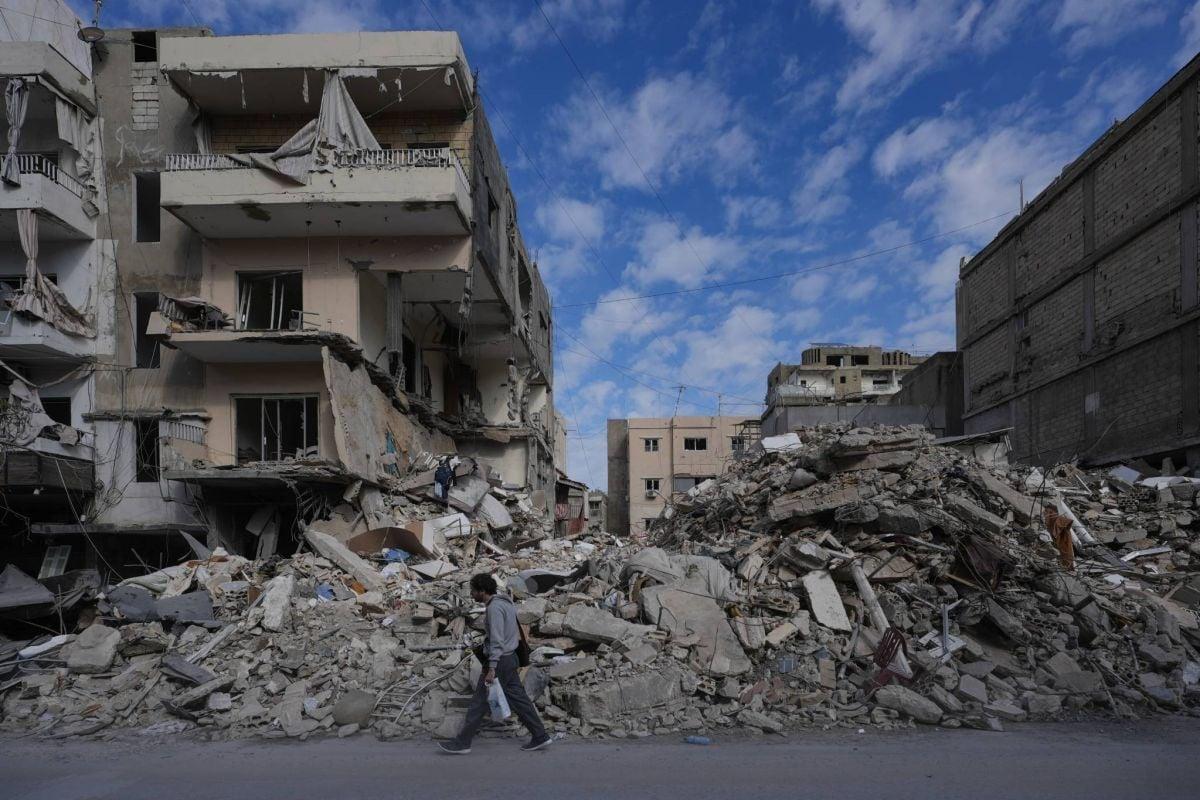
The World Bank has pledged support for the rehabilitation of a key water station in Sour, southern Lebanon, destroyed during recent Israeli airstrikes, underscoring the broader economic consequences of infrastructure damage in the region.
The water facility, which supplied approximately 14,000 cubic meters daily, now operates at a fraction of its capacity through emergency tanker distributions, serving roughly 5,000 cubic meters.
According to L'Orient Today, municipal officials warn that the disruption has not only strained local households but also impacted businesses, agriculture, and essential services, highlighting the cascading economic effects of war-related infrastructure loss.
During a visit to the city on Sunday, a World Bank delegation, including Middle East Division Director Jean‑Christophe Carret, Lebanon Office Director Enrique Armas, and Middle East Representative Abdelaziz al‑Mulla, met with local authorities to assess damage and outline recovery plans.
The Bank confirmed its commitment to funding immediate rehabilitation and supporting a broader reconstruction strategy across southern Lebanon.
The World Bank estimates that recent conflicts in Lebanon have caused damages equal to roughly USD 14 billion, with infrastructure and public utilities among the hardest-hit sectors.
The rehabilitation project in Sour is expected to be among the first in a series of water infrastructure repairs planned for southern Lebanon, with the goal of restoring service capacity and mitigating economic losses.
However, officials caution that temporary measures, such as water trucking, remain insufficient and unsustainable in the long term.
Reconstruction efforts in Sour are being closely monitored by international agencies, with an emphasis on rapid restoration to limit economic fallout and support local recovery in a region heavily dependent on stable utilities for commerce and livelihoods.