



LEBANON (Enmaeya Features) - November 14, 2025
On November 11, 2025, Lebanese Minister of Information Paul Morcos announced the completion of the draft media law, calling it a “long-awaited historic day.”
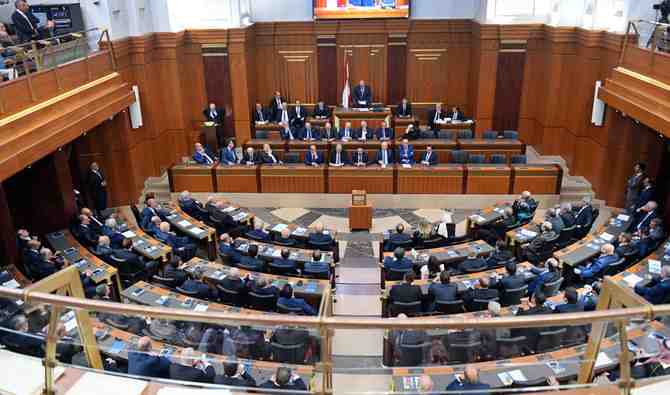
George Adwan, head of the Administration and Justice Committee, confirmed that the committee had finalized the draft and that it would soon be sent to the general assembly for discussion and approval.
A Long Journey to Reform
The debate over updating Lebanon’s media law first emerged in November 2010, when a draft proposal co-developed by the Maharat Foundation and MP Ghassan Moukheiber was registered in Parliament as Bill 441/2010, according to the Maharat Foundation.
In January 2023, a parliamentary subcommittee was formed to review and amend the draft. A final version was submitted to the Administration and Justice Committee on May 27, 2025. The draft introduced key protections for freedom of expression, including abolishing pretrial detention and prison sentences for speech-related offenses and repealing criminal defamation and insult provisions.
The committee began formal discussions on July 29, 2025, holding three meetings so far. These discussions remain confidential under parliamentary rules.
On August 31, MPs received proposed amendments initially attributed to the Information Minister, who denied authorship. These amendments would have reintroduced pretrial detention in certain cases, including “under aggravated circumstances, such as infringing on individuals’ dignity or private lives.”
Freedom of Expression at Stake
Since 2010, the draft media law has sparked debate between supporters, who argue the reforms could modernize Lebanon’s media framework, and critics, who fear potential drawbacks.
One proposal involves abolishing the Publications Court and replacing it with a regular civil court where journalists and media professionals would face trial. “This would eliminate the specialized court for publication-related cases, which could be seen as a positive step toward streamlining the judicial process,” Joseph El-Kosseifi, Head of the Lebanese Editors Syndicate, told Enmaeya.
Concerns over the draft have extended beyond journalists. On September 16, 2025, 14 Lebanese and international rights organizations issued a statement warning that such changes could weaken protections for freedom of expression.
They urged parliament to lift the secrecy surrounding discussions on the draft and oppose measures that might compromise media independence, including reintroducing pretrial detention or penalizing insult and defamation.
On November 8, El-Kosseifi criticized the draft, highlighting significant flaws and calling on the Parliamentary Media and Communications Committee to freeze the law and reconsider it. He also urged the Minister of Information to avoid rushing a flawed law that could undermine efforts to improve media regulation.
“As syndicates, we weren’t involved in discussions on the law as a whole, and we haven’t seen the full text. With the media law under discussion, one truth remains: protecting journalists and media freedom is non-negotiable,” El-Kosseifi told Enmaeya.
An Outdated Framework
Lebanon’s media framework has long been criticized as outdated, operating under the 1962 Press Law and the 1994 Audiovisual Media Law.
“The current media law hasn’t been updated since before the internet, and it contains ambiguous phrases that have shaped how media operates in the country,” Jad Chahrour, spokesperson at the Samir Kassir Foundation, told Enmaeya.
Article 384 of Lebanon’s Penal Code allows for six months to two years in prison for insulting the president, the national flag, or the country’s emblem. Similarly, Article 157 of the Military Code of Justice criminalizes insulting the flag or the army, with penalties ranging from three months to three years.
Human Rights Watch notes that these laws contradict Lebanon’s international obligations to protect freedom of expression.
Journalists at the Crossroads of Change
Despite ongoing controversy, the draft media law is being seen by some as a rare opportunity for progress, offering hope for a more modern and fair media landscape.
“Using another country as a benchmark won’t work, because no country today has a perfect record on freedom of speech,” Shahrour explained. “Each context is different, and even in the U.S., journalists face limits, for instance, when reporting on political violence in the case of Jimmy Kimmel.”
He emphasized that the voices of journalists and civil society experts must be central to shaping media reforms.
“Their input has been sought in the past, but it’s still unclear whether their recommendations were ever fully reflected in the draft law,” Shahrour added, highlighting the need for inclusive, informed decision-making.
For Lebanese journalists, civil society, and citizens alike, the passage of this law could mark a turning point, one that defines the boundaries of press freedom and shapes the country’s media landscape for years to come.