



BEIRUT (Enmaeya Features) - November 17, 2025
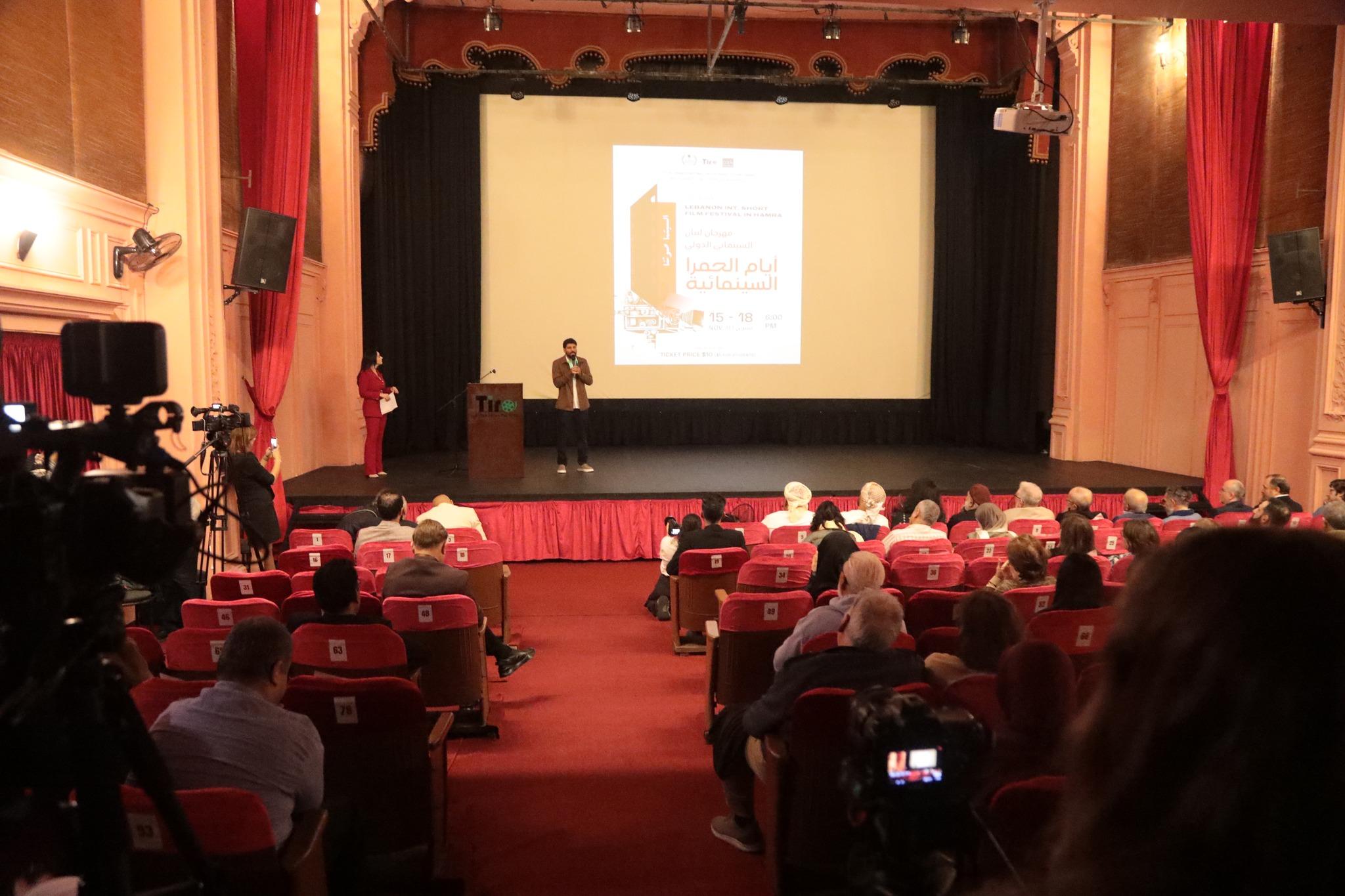
As the theatre darkened and the curtain drew open, the Lebanese National Theatre reopened its doors, marking a new chapter for Beirut’s arts scene.
On November 15, filmmakers, directors, actors, students, and cinema enthusiasts gathered at the historic venue for the Lebanese International Short-Film Festival.
“Cinema is Our Voice”
Scheduled from November 15 to 18, the festival takes place at the Lebanese National Theatre, also known as "Le Colisée Cinema", in Hamra.
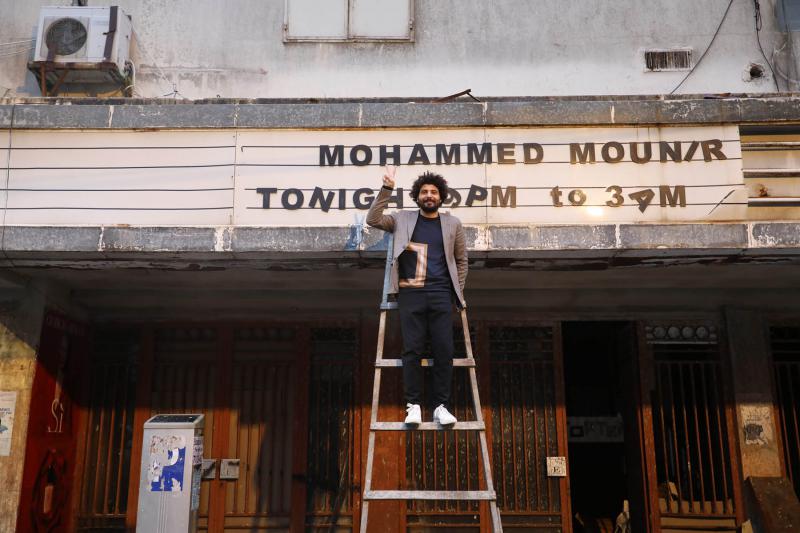
Kassem Istanbouli stands in front of the iconic Le Colisée cinema in Beirut’s Hamra district. (Source: Social media)
The festival, held under the banner “Hamra Film Days,” is organized by the Tiro Association for Arts in partnership with Istanbouli Theater.
The opening ceremony drew a crowd including representatives from the embassies of Mexico, Argentina, and Turkey, members of the Lebanese Actors Syndicate, and a lively audience of students and residents.
“This year’s theme is ‘Cinema is Our Voice,’ celebrating Lebanese independent cinema and featuring 37 films from 18 countries,” Kassem Istanbouli, actor, director, and founder of Istanbouli Theatre, told Enmaeya.
For Istanbouli, what makes this festival special is that it unites filmmakers from across the globe, showcasing Beirut as a vibrant cultural hub.
This year’s edition also honors iconic figures in Lebanese cinema, paying tribute to Lebanese actors Mounir Maasry and the late Nabih Abu Al-Hassan.
After six decades, actor Mounir Maasry returned to the historic Cinema Le Colisée, describing the honor as a moment of immense cultural significance for Lebanon.
Maasry told the National News Agency that the reopening allowed him to witness the fulfillment of a long-held dream shared by actors across the country: the establishment of the Lebanese National Theatre in Beirut, following similar initiatives in Tyre and Tripoli.
Films at the festival compete for awards including Best Narrative, Best Documentary, Best Animation, Best Actor, Best Actress, and Best Cinematography. The jury includes director Shadi Zaidan, actor Omar Miqati, writer Salah Atoui, and Dr. Qassem Qassem.
Making Cinema Accessible
The festival also advances the mission of making cinema accessible to all by featuring an audio-described film for the visually impaired.
“This is one of the missions of the Theatre and Tiro Arts Association,” Istanbouli said. “We want to make arts and cinema accessible to everyone, which is why our cinema is equipped to welcome people with special needs.”
Championing Independent Cinema and Lebanese Talent
Besides reviving Beirut’s cinema scene, the festival aims to support young filmmakers.
“We dedicate screenings to graduates from Lebanese universities and global institutions like the Sharjah Academy,” Istanbouli told Enmaeya. “A core mission of the festival is to support graduating students and showcase their work.”
“From the very first edition in Tyre, this has been a priority for us: to highlight student films and ensure they have a platform to participate in the festival,” Istanbouli added.
The festival also brings renewed attention to Lebanon’s independent filmmaking scene. Production remains one of the biggest challenges for independent cinema in Lebanon, where filmmakers often work with limited funding and resources.
“That’s why festivals like this matter; they give emerging directors a platform to showcase their work and keep Lebanon’s cinematic voice alive despite the obstacles,” Istanbouli said.
Reviving Lebanon’s Cinematic Heritage
Over the past years, the Tiro Association for Arts has taken on the task of restoring Lebanon’s historic cinemas.
“We are working on restoring Lebanon’s old cinema theaters; we’ve already revived five across the country. Our goal is to preserve Lebanon’s cinematic collective memory, from the archives to the historic buildings themselves,” Istanbouli said.
These restored spaces, once closed or repurposed, have been transformed into community theaters and cultural hubs.
By reopening them to the public, the association hopes to safeguard the country’s artistic heritage while creating inclusive spaces for new generations of filmmakers, students, and audiences.
Through restored theaters, emerging voices, and a commitment to accessibility, the festival is reclaiming cinema as a shared space, one where communities gather, stories endure, and Lebanon’s cultural heartbeat continues.