



LEBANON (Enmaeya Features) - November 26, 2025
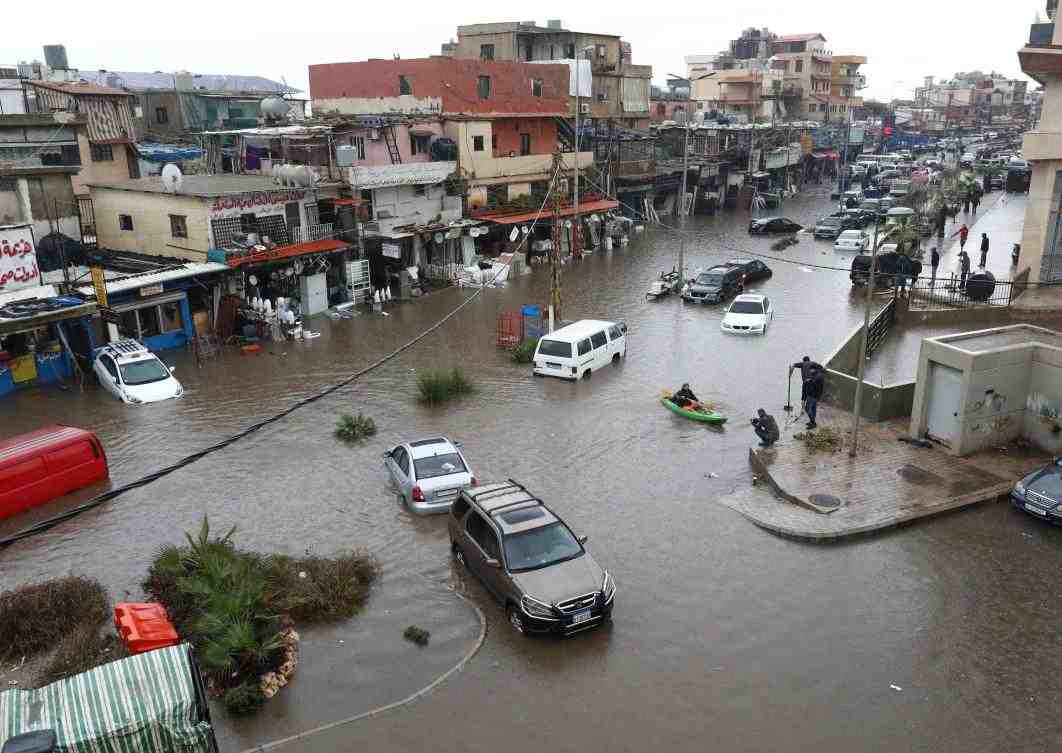
Endless traffic, flooded roads, blocked sidewalks, and chaotic parking have turned Lebanon’s cities into daily obstacles rather than spaces for people. For residents, commuting has become a drain on time, money, and patience, while also taking a serious toll on health and the environment.
The transport sector now accounts for nearly one-third of Lebanon’s greenhouse gas emissions (32.5% in 2022, or 6,662 Gg CO2eq). But the crisis goes beyond emissions: mobility shapes economic productivity, social inclusion, public safety, and the very design of cities.
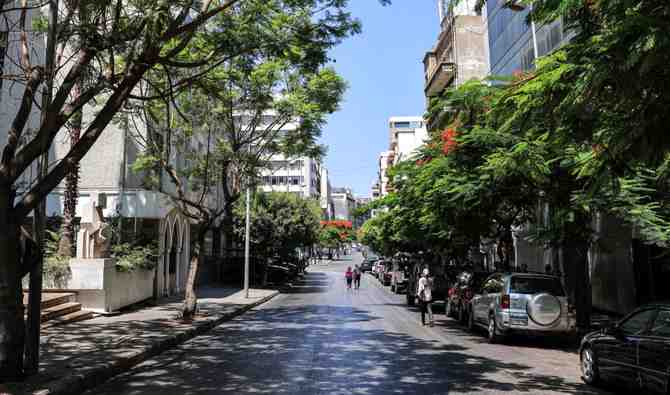
Streets dominated by cars leave little room for pedestrians, cyclists, or people with disabilities, turning public space into a burden rather than a shared resource.
Today, on World Sustainable Transport Day, observed annually by the United Nations to highlight the vital role of accessible, safe, and low-emission mobility, Lebanon’s transportation system tells a different story.
With compounded economic, political, and infrastructural crises, the need for sustainable, equitable, and modern transport solutions cannot be overlooked. This is not just about cleaner cars, it’s about reimagining how people move, how cities function, and how Lebanon meets its climate commitments for the future.
What Sustainable Transport Means for Lebanon
Sustainable transport goes far beyond the shift to electric vehicles; it requires designing a mobility system that serves people, protects the environment, and supports economic resilience. Nabil Mneimneh, Project Manager for Sustainable Transport at UNDP Lebanon, frames it around the three E’s: economically efficient, socially equitable, and environmentally friendly.
“In Lebanon, we cannot continue with business as usual; the model we have today cannot be sustained. Changing how we think about mobility is about the quality of life and affordability, and creating cities that work for everyone,” Nabil told Enmaeya.
This translates into expanding public transport options, making walking and cycling genuinely safe and accessible, and integrating cleaner vehicle technologies.
Most importantly, it requires reimagining streets and public spaces that are currently dominated by cars. Sustainable mobility means reclaiming cities for people, designing environments that are safe, inclusive, and comfortable for pedestrians, parents with strollers, and people with disabilities.
The High Cost of Transport Emissions
Transport has become one of Lebanon’s largest sources of greenhouse gas emissions. According to the First Biennial Transparency Report, the sector’s share rose to 32.5% in 2022, up from 24% in previous years.
Nabil notes that reductions in emissions from the energy sector, driven by the widespread adoption of solar PV systems, have shifted the overall balance, making transport’s contribution appear even more prominent
Lebanon consumes about 38.9 thousand barrels of gasoline per day, with per-capita use around 421 litres per person per year, nearly double the global average. This high dependence on gasoline-based transport also highlights why the sector contributes so heavily to national emissions.
To address this, Lebanon has introduced regulatory incentives for electric and hybrid vehicles. Electric vehicles have been exempted from customs taxes for the past five years, and hybrids now receive an 80% reduction. These measures aim to gradually green the national fleet, which remains dominated by older vehicles, with over half registered before 2001.
Recently, the government launched services along 10 bus lines with approximately 90 buses, a first step toward reducing private car dependence.
Yet decarbonization requires a systems-level approach. Reliable public transport relies on infrastructure, including dedicated bus lanes, integrated ticketing, frequent and predictable schedules, well-designed bus stops, and safe park-and-ride options.
“Decarbonization is not just about technology,” Nabil emphasizes. “We need the right conditions for people to shift from cars to public transport, and that includes urban planning, enforcement, and behavioral change.”
Rethinking Public Transport in Lebanon
Sustainable transport in Lebanon depends on the interplay of policy, technology, and cultural change. Civil society, NGOs, and international partners are supporting this shift by raising awareness, piloting low-carbon initiatives, and promoting more sustainable mobility options.
UNDP is leading several transformative projects. This includes developing Lebanon’s first National E-Mobility Strategy, which outlines a comprehensive roadmap for the country’s transition to electric mobility, including the necessary regulatory reforms, infrastructure requirements, and institutional arrangements.
It also defines government responsibilities, outlining fleet electrification plans, and mapping the development of EV charging infrastructure.
In parallel, green public transport is being promoted through voluntary certification programs that assess environmental performance, safety, and service quality.
Two operators have already been certified, but dedicated public outreach campaigns are needed to build trust in these services and increase public awareness of their benefits..
Cultural change is just as critical. Decades of car-focused policies have made private vehicle ownership the default, but this culture doesn’t change on its own. As Nabil explains, people shift their travel habits when the overall experience of public transport, including its convenience, its cost, and how safe it feels, becomes more attractive than driving. When that combined experience outweighs what a car offers, the cultural shift will naturally follow.
Pilot programs supported by UNDP and the Global Environment Facility, such as the upcoming electric bus service on the Jbeil–Beirut corridor and the development of digital tools and certification schemes, demonstrate the potential for change. Scaling these solutions, however, requires sustained investment and collaboration across civil society, government, and the private sector.
“In most developed countries, public transport is subsidized because it’s an essential public service. Profitability is not the main measure; access and reliability are,” Nabil explains. “We need to adopt that mindset in Lebanon.”
Opportunities for a Sustainable Transport Future
Despite the challenges, Lebanon has a chance to rethink its transport system. Pilot initiatives, like solar-powered electric buses and digital tools for planning and operations, highlight the potential for lower costs, cleaner air, and smoother mobility, especially in crowded urban areas.
Scaling these solutions, however, requires addressing persistent obstacles. Lebanon needs dedicated bus and taxi lanes, traffic law is largely unenforced, heavy congestion is the norm, parking chaos dominates many streets, and overall traffic remains unpredictable and unsafe. Stronger enforcement, updated fines, and urban regulation are essential to make sustainable transport a practical reality.
Community engagement is equally important. Lebanon’s informal public transport network fills gaps where government services fall short, and, as Nabil emphasizes, “We need to build on the opportunities we already have and support operators through certification and training rather than competing with them.” Integrating and formalizing these services can strengthen the overall system while maintaining accessibility for all.
Mobility improvements must also prioritize inclusivity. Sidewalks and public spaces should accommodate people with disabilities, parents with strollers, and pedestrians, ensuring that every trip begins and ends safely.
Nabil highlights that combining these elements, innovation, regulation, and community participation, offers Lebanon a real chance to create a system that is efficient, sustainable, and equitable.
Finally, a comprehensive national sustainable transport strategy covering land, air, and maritime transport is crucial. Such a strategy would align Lebanon’s transport sector with climate commitments, improve public safety, reduce congestion, and create a modern, people-centered system.
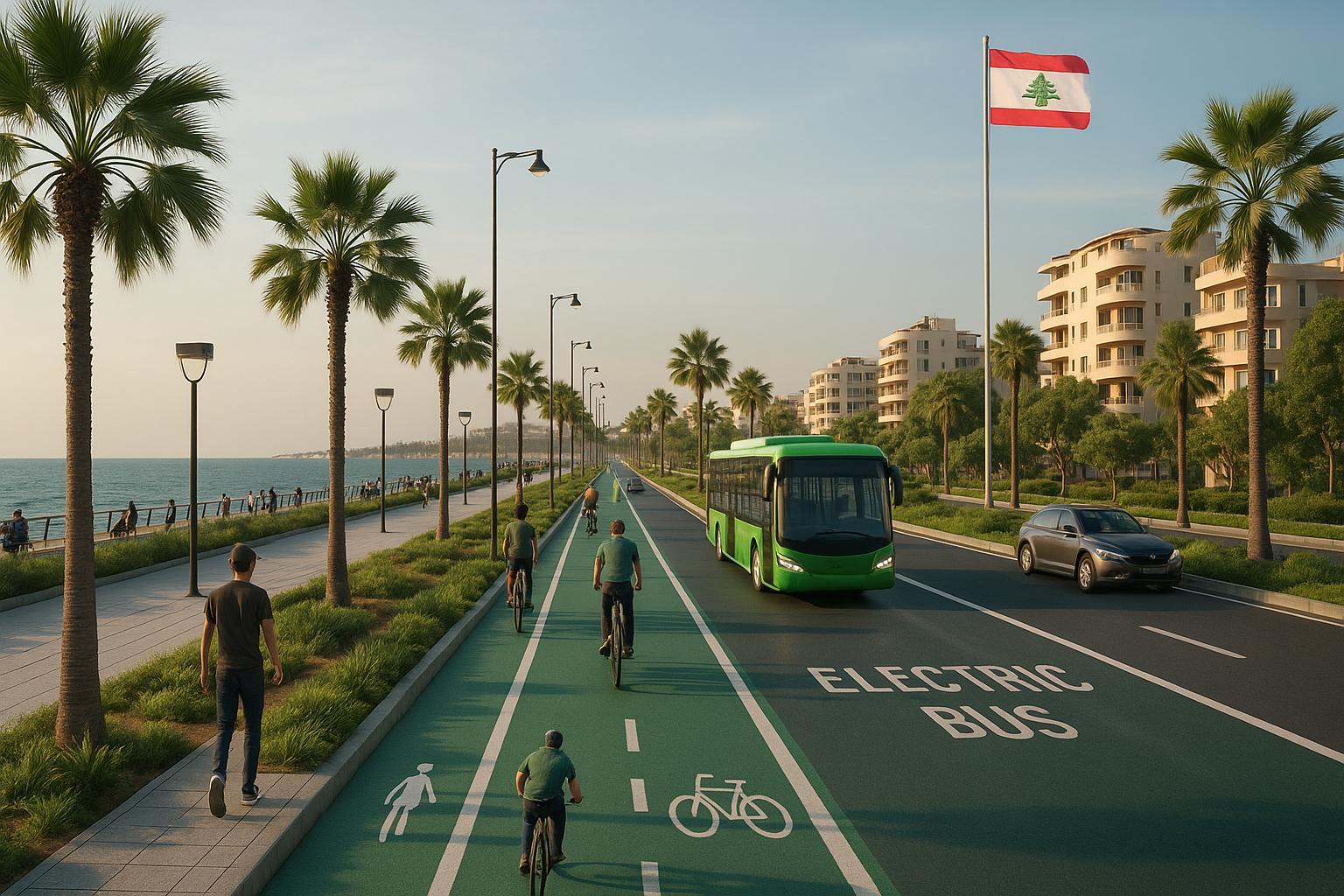
With vision, planning, and collaboration, Lebanon’s streets can once again become spaces for people, not cars, and sustainable transport can enhance the quality of life for generations to come.