


EUROPE (Enmaeya News) - December 15, 2025
The United Nations Development Programme (UNDP) has warned that international support for refugees and the communities hosting them is declining, even as global displacement reaches record levels.
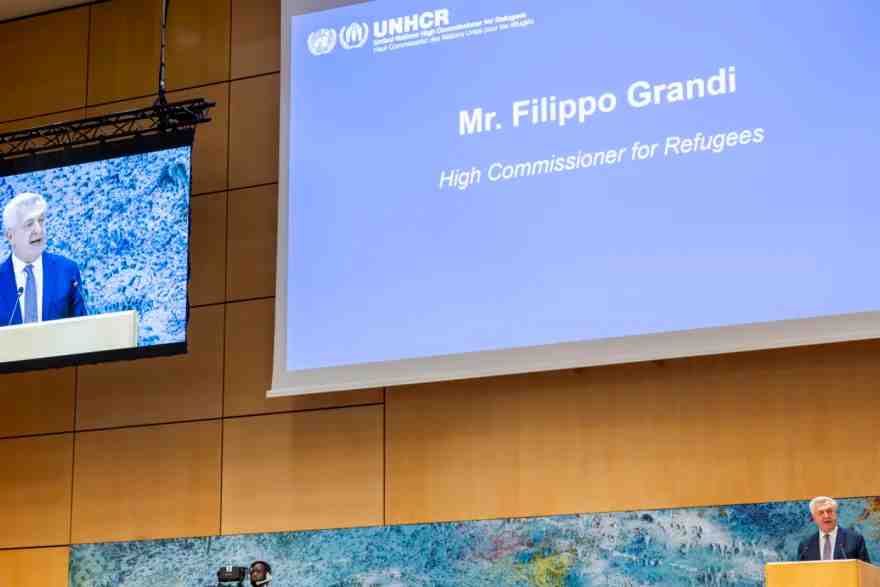
The warning was issued at the Global Refugee Forum Progress Review Meeting, held from 15–17 December in Geneva.
According to UNDP, by the end of 2024, 117 million people had been forced from their homes due to conflict, climate shocks, and economic instability.
Most sought refuge in low- and middle-income countries, which host 2.5 times more refugees than high-income countries, despite facing their own financial pressures.
Among those countries are Lebanon, Türkiye, Iran, Jordan, and Uganda, which continue to bear a disproportionate share of the global refugee burden.
UNDP emphasized that long-term development investments, such as repairing schools, clinics, water networks, and markets, stabilize communities, reduce tensions, and support safe and voluntary returns.
Shoko Noda, Director of UNDP’s Crisis Bureau, said, “The world cannot keep responding to displacement with short-term fixes. Host countries are carrying an impossible burden. Without real development action, global displacement crises will only deepen.”
In 2024, UNDP invested over $618 million in more than 60 countries affected by forced displacement. In Lebanon and Türkiye, job and livelihood programs reached over 1 million people, while in Iran, 373,000 Afghan refugees accessed health services through the national system with UNDP support.
However, these advancements are at risk. Global funding for refugee responses fell in 2024 and is expected to decline further in 2025. Low-income countries, hosting 19% of refugees while holding only 0.6% of global wealth, remain chronically underfunded.
Looking ahead to the 2027 Global Refugee Forum, UNDP plans to strengthen partnerships with governments, the private sector, and UNHCR to enhance national systems, integrate climate adaptation with livelihoods, mobilize finance, and scale programs in host, transit, and return communities.