WORLD (Enmaeya News) – December 16, 2025
SpaceX, the company owned by Elon Musk, announced that its Starlink satellites nearly collided with a satellite launched by a competing Chinese company.
The objects came within just 200 meters of each other—a dangerously close distance that could have caused significant damage if an actual collision had occurred.
This close call followed the launch of the Chinese “Kinetica 1” rocket on Tuesday, December 9, from the Jiuquan Satellite Launch Center in the Gobi Desert. The rocket carried nine satellites, one of which nearly collided with a Starlink satellite at an altitude of 560 kilometers above Earth, according to Michael Nichols, Vice President of Engineering for Starlink at SpaceX.
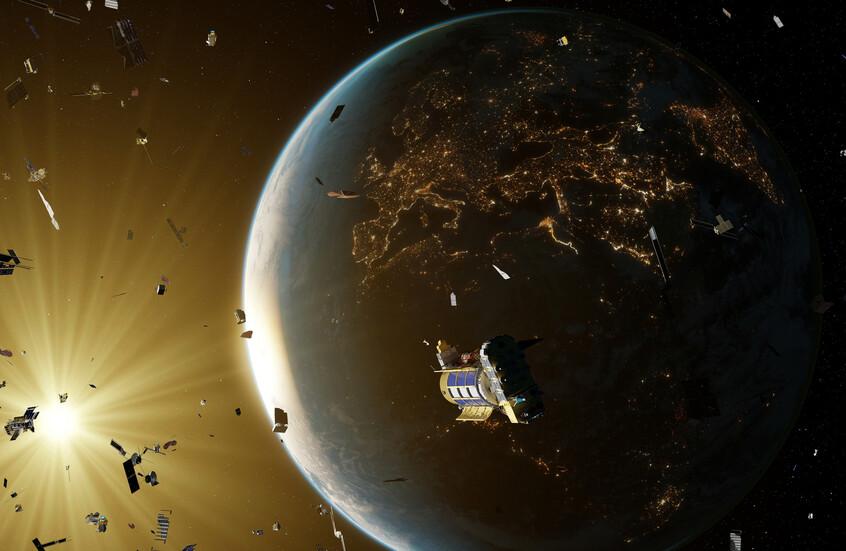
Experts have warned that such near-miss incidents are becoming more frequent due to the rapidly increasing congestion in space, coupled with a lack of coordination between companies and international organizations that launch satellites.
Nichols explained that a recent launch by a Chinese company placed satellites dangerously close to Starlink satellites, noting that the lack of prior coordination prevented SpaceX from maneuvering its satellites away from the risky path.
He wrote on X (formerly Twitter): “When satellite operators do not share orbital path data (ephemeris), close approaches can occur. To our knowledge, no coordination or avoidance was done with existing active satellites in orbit, leading to a 200-meter proximity between a newly launched satellite and a Starlink satellite at 560 km. Most space operation risks arise from a lack of coordination between operators, and this needs to change.”
In response, the Chinese company CAS Space, which launched the satellites, did not take direct responsibility for the incident but supported Nichols’ call for increased cooperation. The company said: “If the incident is confirmed, it occurred roughly 48 hours after payload separation, i.e., after the mission launch period had ended. CAS Space will coordinate with satellite operators moving forward. This calls for rebuilding cooperation between the new space systems.”
Starlink is expected to remain a central node in this emerging network, with its constellation of over 9,300 active satellites comprising the majority of active satellites around Earth, according to Harvard astronomer Jonathan McDowell, who tracks the number of objects in low Earth orbit.