MIDDLE EAST (Enmaeya News) - December 19, 2025
Doctors in Gaza are turning to solar-powered 3D printing to produce critical medical devices as hospitals struggle to operate amid widespread damage to the health infrastructure and persistent electricity shortages, according to medical staff and aid organizations.
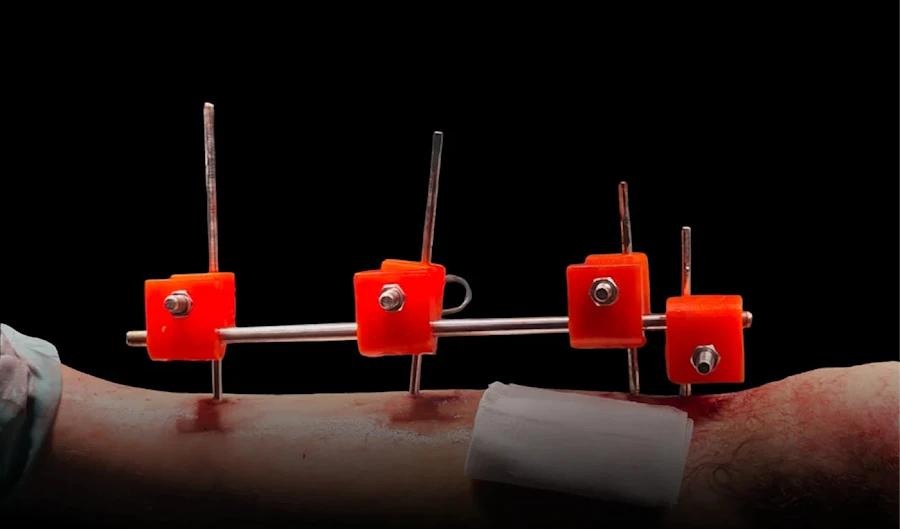
At al-Ahli Arab Hospital in Gaza City, physicians are manufacturing devices used to stabilize complex fractures using low-cost, 3D-printed components made from recycled materials. The initiative aims to reduce amputations at a time when conventional medical supplies are scarce.
Dr. Fadel Naim, a consultant orthopedic surgeon and acting director general of Al-Ahli Arab Hospital, told Al Jazeera that the severity and complexity of injuries seen during the ongoing conflict have made external fixators a preferred treatment option.
He said the devices are assembled from printed plastic parts, metal rods, and basic hardware, allowing doctors to produce them locally at a fraction of their usual cost.
The project was developed in cooperation with Glia, a medical solidarity organization, using solar energy to bypass power outages. Commercial versions of the devices typically cost more than $500 each, according to Glia.
One patient, Zakaria, was among the first to receive a locally produced fixator after his leg was severely injured by shrapnel. Displaced from Jabalia refugee camp to Deir el-Balah, he said he was surprised to learn that the device used in his surgery had been made by Palestinian doctors. Medical staff reported that his recovery has progressed without major complications.
In a statement, Glia said at least 12 additional patients are currently awaiting treatment with the devices, highlighting both the scale of need and the impact of local medical production under siege conditions.
Health workers told Al Jazeera that the initiative reflects broader efforts by Gaza’s medical community to adapt to shortages and continue providing life-saving care despite extreme constraints.