



LEBANON (Enmaeya News) - January 1, 2026
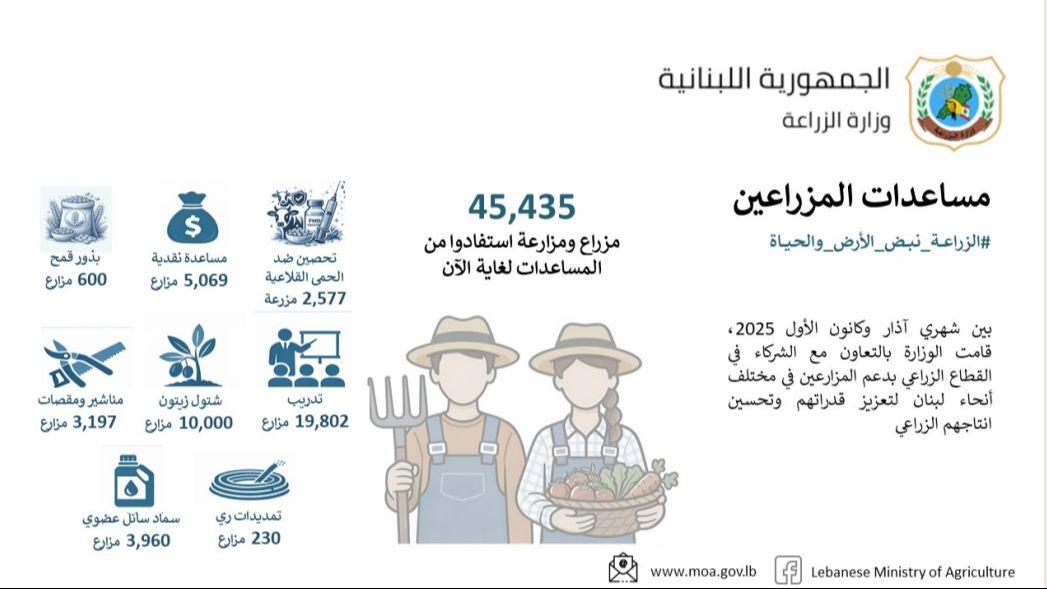
Lebanon’s Ministry of Agriculture announced that 45,435 farmers and farms benefited from various agricultural assistance programs between March and December 2025, as part of efforts to support the sector, strengthen farmers’ resilience, and improve agricultural production.
In a statement, the ministry said the assistance was delivered in cooperation with local and international partners and covered all regions of Lebanon.
The support included direct aid, production inputs, training, and agricultural infrastructure, aimed at boosting productivity, improving crop quality, and enhancing food security.
According to the ministry, 600 farmers received wheat seeds, while 5,069 farmers benefited from cash assistance. Veterinary support included foot-and-mouth disease vaccinations for livestock across 2,577 farms.
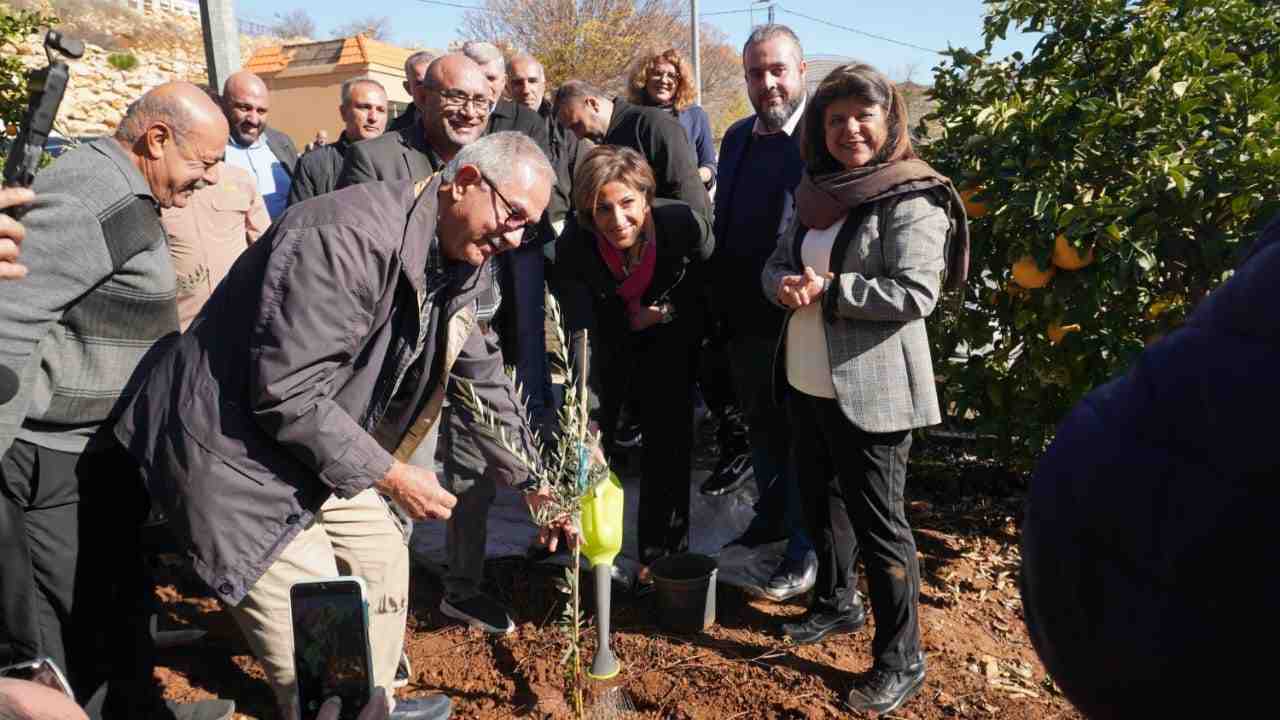
The ministry also distributed agricultural tools, providing pruning saws and shears to 3,197 farmers, and delivered olive seedlings to 10,000 farmers nationwide.
In addition, 19,802 farmers participated in agricultural training and extension programs, while 3,960 farmers received organic liquid fertilizer.
Infrastructure support included the installation of irrigation extensions for 230 farms, aimed at improving water efficiency and crop sustainability.
The Ministry of Agriculture stated that the programs align with its strategy to provide integrated support to farmers by combining direct assistance with capacity building and promoting sustainable agricultural practices, under the slogan “Agriculture: The Pulse of Land and Life.”
The ministry stressed it will continue working with partners to expand support in the coming phase to address economic and climate challenges, help farmers remain on their land, and reinforce agriculture’s role as a key pillar of the national economy.