

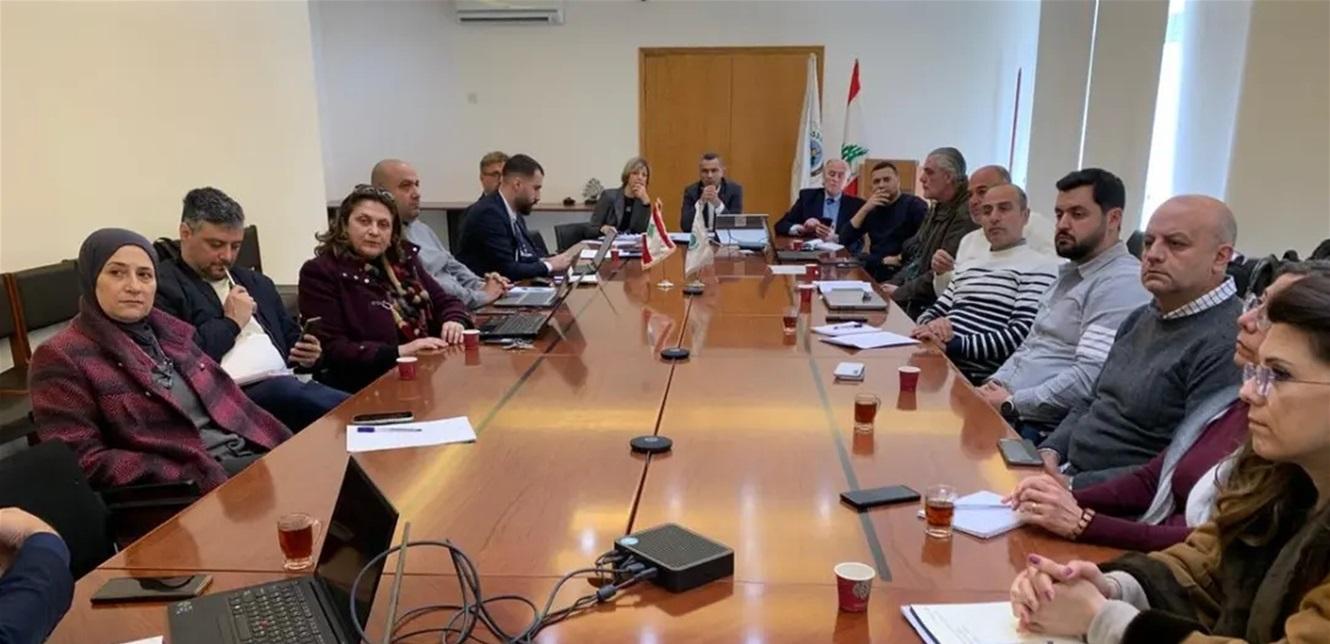
BEIRUT — Agriculture Minister Nizar Hani chaired an expanded meeting at the Ministry of Agriculture to review a proposal submitted by the World Food Programme (WFP) titled “Food Stack,” a component of the GATE program aimed at improving agricultural data systems in Lebanon.
The meeting was attended by representatives from the Council for Development and Reconstruction, the Lebanese Agricultural Research Institute, the National Council for Scientific Research (CNRS), as well as experts and sector stakeholders.
Minister Hani stressed the need to establish a unified and central agricultural database based on existing data. He said the system would help track agricultural products from farms to local markets and export destinations.
According to the minister, the database would support decision-makers in developing action plans and addressing challenges as they arise, using real-time information.
Minister Hani also emphasized the importance of continuing the registration of farmers nationwide. The ministry aims to reach 120,000 registered farmers.
He said the farmer registry is a key step toward giving Lebanese agricultural products a competitive edge. Registration could reduce laboratory testing requirements and speed up the issuance of health certificates.
Registered farmers, Minister Hani added, will be given priority access to projects implemented by the ministry and supported by international organizations.
The proposed “Food Stack” system is a digital platform designed to connect institutions with farmers through modern technology.
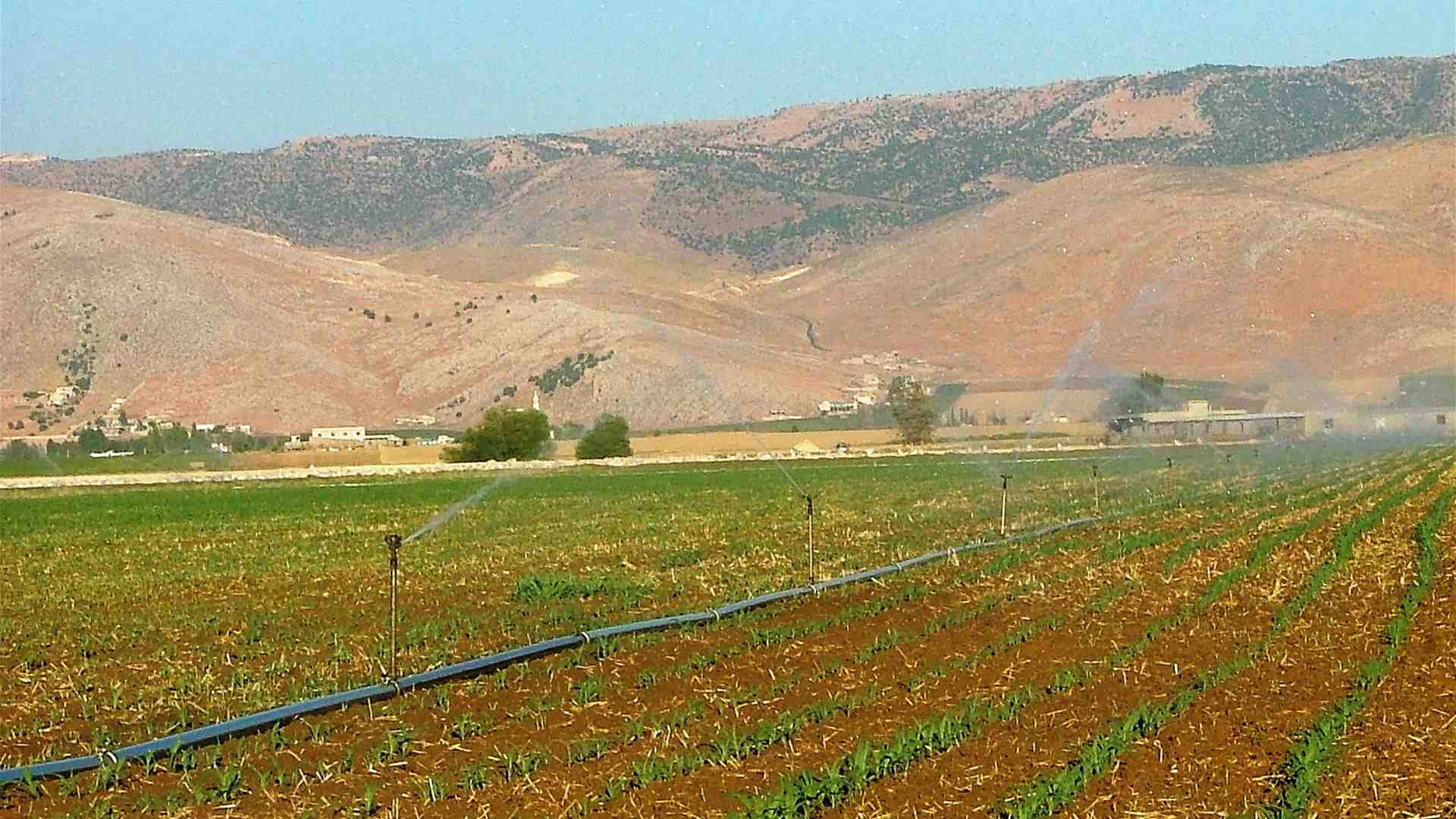
It relies on satellite imagery to identify crop types, monitor growth stages, assess crop health, and estimate production levels.
The system also includes early warning tools to help predict heatwaves, droughts, and floods. Artificial intelligence will be used to assess crop risks and model possible outcomes.
In addition, the platform offers digital advisory services, providing farmers with guidance tailored to their location and crop type.
As part of the initiative, the WFP will support the ministry in developing a digital application linking production data with market information.
The application will record transactions, including sellers, buyers, quantities, and prices, while ensuring compliance with international quality standards.
The project’s first phase was launched in Egypt in 2023, where it enabled accurate crop monitoring using satellite data and improved analysis of national agricultural trends.