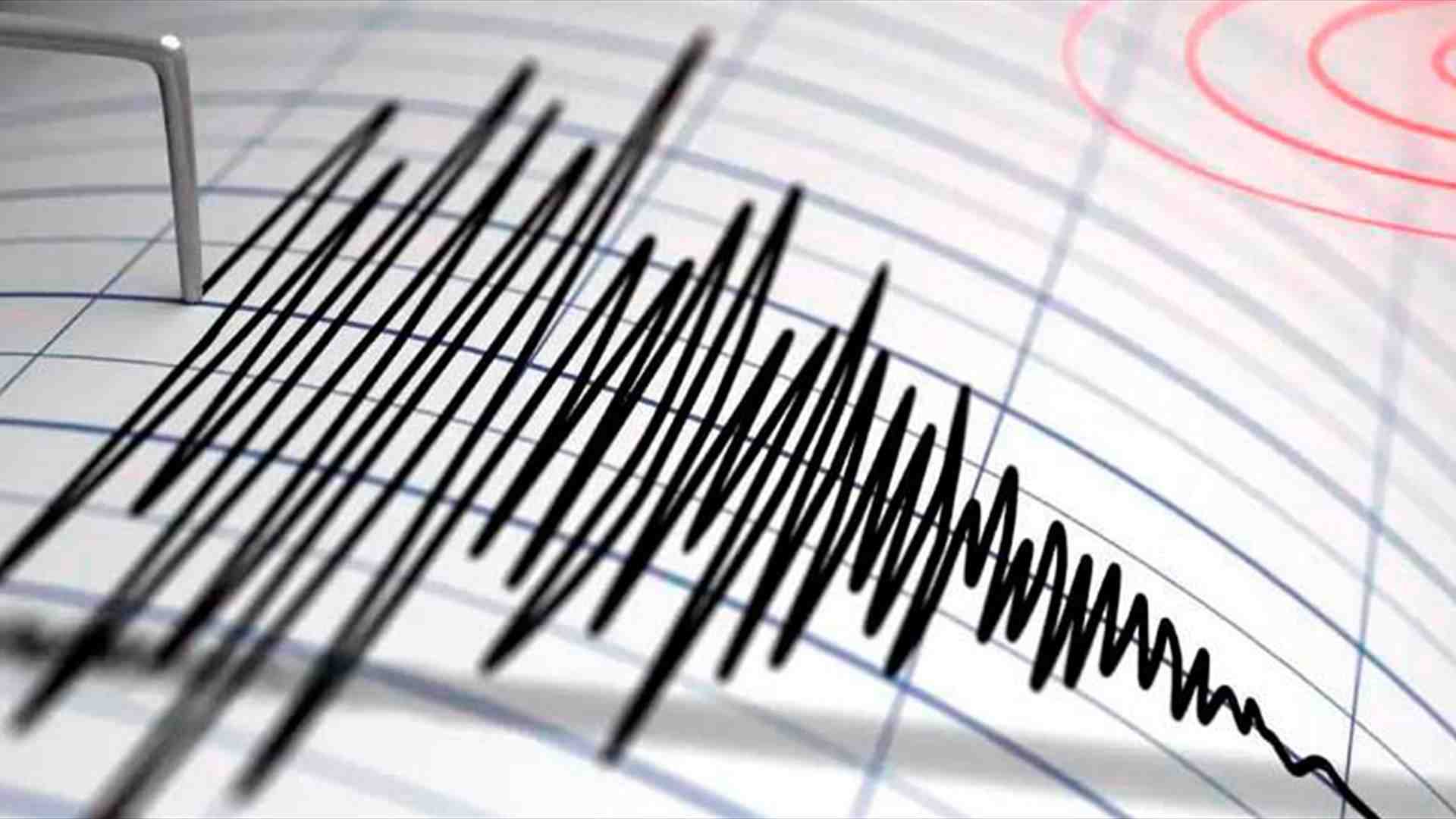


LEBANON – This morning, the National Center for Geophysics recorded a minor earthquake measuring 2.5 in magnitude in the Marj area of Western Beqaa.
Although such minor earthquakes are normal due to the ongoing activity along Lebanon’s seismic or fault lines, the spread of inaccurate reports about major earthquakes often heightens public fear.
This highlights the need to understand the history of Lebanon’s main fault lines and the nature of its seismic activity so that people can develop awareness about how to respond to earthquakes.
In an exclusive interview with Enmaeya, geologist Tony Nemer explained that Lebanon’s seismic activity is primarily caused by fault lines.
The Dead Sea Fault splits into four branches upon entering Lebanon, which results in constant movement along these faults.
Nemer added that most minor earthquakes are small, though occasionally stronger movements occur, as was recently observed. He emphasized, however, that this is entirely normal.
He noted that nearly all Lebanese regions are exposed to seismic activity due to the Yammouneh Fault, which runs from north to south, along with three other faults, Roum, Rashaya, and Serghaya, covering roughly half of southern Lebanon.
He also stressed that buildings on solid rock withstand minor earthquakes better than those constructed on sand and soil, which are more vulnerable to damage.
Regarding minor earthquakes, Nemer clarified that they are not necessarily indicators of a larger earthquake, pointing out that major earthquakes often occur without any preceding minor earthquake.
On preparedness, he stated that citizens should be aware of Lebanon’s geological realities, noting that these faults have been active throughout history.
Although the causes of earthquakes persist, this does not necessarily mean that one will occur in the near future or during our lifetime.
Concerning the role of authorities, Nemer highlighted the importance of comprehensive emergency plans involving all security and civil protection agencies, such as the Red Cross and Civil Defense.
He recommended conducting annual drills simulating potential incidents, including coordination between municipalities, local, and central authorities.
He added that drills should include citizen behavior at home, the role of media, and educational campaigns for students in schools.
Regarding Lebanon’s main faults, Nemer stated that the country has four major faults, Yammouneh, Serghaya, Roum, and Rashaya, all of which have experienced historical earthquakes. For example, the Yammouneh Fault experienced a 7.5-magnitude earthquake in 1202.
The Serghaya and Rashaya Faults each had earthquakes in 1759, one month apart: 6.6 magnitude on Rashaya on October 30, and 7.4 magnitude on Serghaya on November 25. The last strong earthquake on the Roum Fault occurred in 1837, measuring 7.1 magnitude.
Regarding future predictions, Nemer stressed that some forecasts published by international media, such as Dutch scientist Frank Hoogerbeets’ prediction of a new earthquake in the Dead Sea region, lack a scientific basis.
He noted that while the region has experienced many earthquakes historically, such predictions exploit public fear without providing accurate scientific information, and no one can predict earthquakes or their timing.