







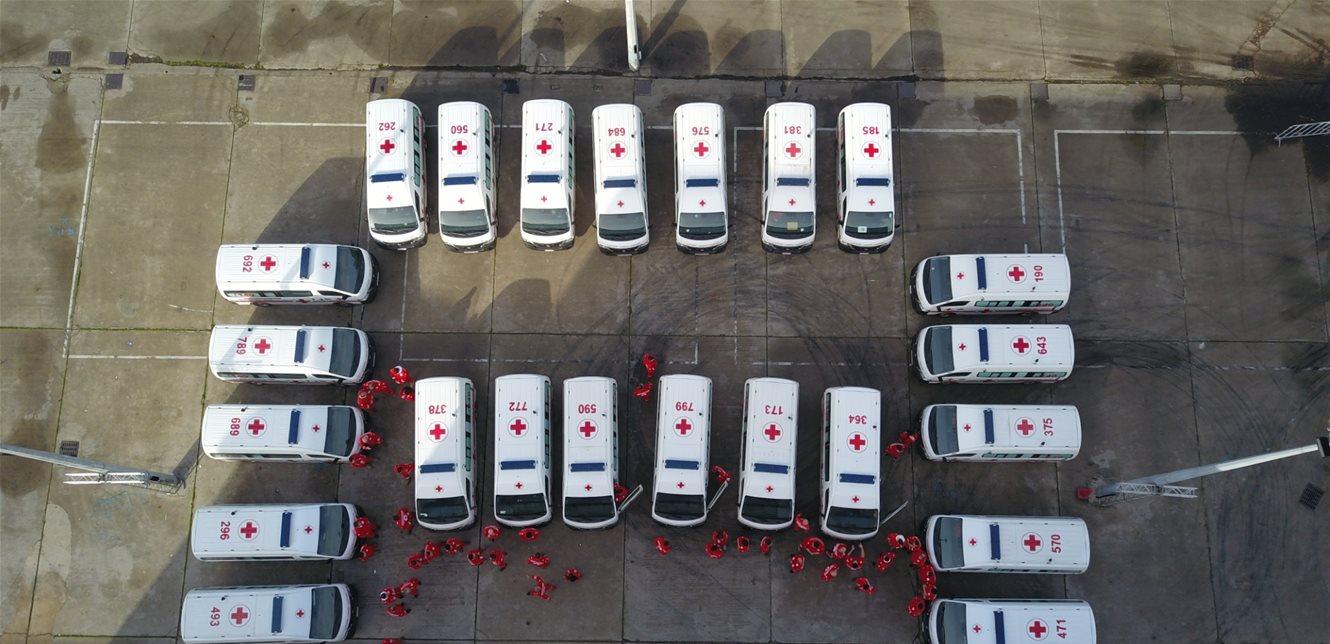
Lebanon – The Lebanese Red Cross announced in a statement that, as part of a project to modernize its ambulance fleet by replacing older vehicles with new ones, it received a donation of 23 fully equipped ambulances from the UNHCR mission in Lebanon. The handover took place at Forum de Beirut.
During the ceremony, Lebanese Red Cross Secretary General George Kettaneh expressed his gratitude to the UNHCR mission for this valuable donation, which contributes to supporting and assisting the Lebanese Red Cross in its humanitarian services, particularly ambulance and emergency services.
He noted that the ambulances will be distributed to centers across all Lebanese governorates in line with the organization’s strategy to modernize its ambulance fleet.
For her part, UNHCR Representative in Lebanon, Carolina Lindholm Billing, emphasized the pivotal role played by the Lebanese Red Cross on the front lines in saving lives and supporting people in moments of extreme vulnerability.
She reaffirmed UNHCR’s pride in standing alongside Lebanon and trusted national partners such as the Lebanese Red Cross to support communities throughout the country, including Lebanese and non-Lebanese residents, refugees among them.
She stressed that strengthening local emergency services remains essential to ensuring that life-saving assistance is delivered in a timely manner and with dignity to all those in need.
It was also noted that the Lebanese Red Cross provides ambulance and emergency services across all Lebanese governorates through 47 centers, four advanced emergency response points, and four regional operations rooms, supported by approximately 5,250 male and female volunteers and 330 ambulances.
In 2025, the number of humanitarian missions carried out reached around 200,000 emergency and non-emergency ambulance missions, as well as first aid services at the centers.
UNHCR continues to support local capacities, recognizing that empowering national associations and institutions is a cornerstone of building sustainable humanitarian and emergency response capacity in Lebanon, and that expanding access to the most vulnerable communities across different regions is essential to ensuring assistance reaches those most in need effectively and in a timely manner.


