


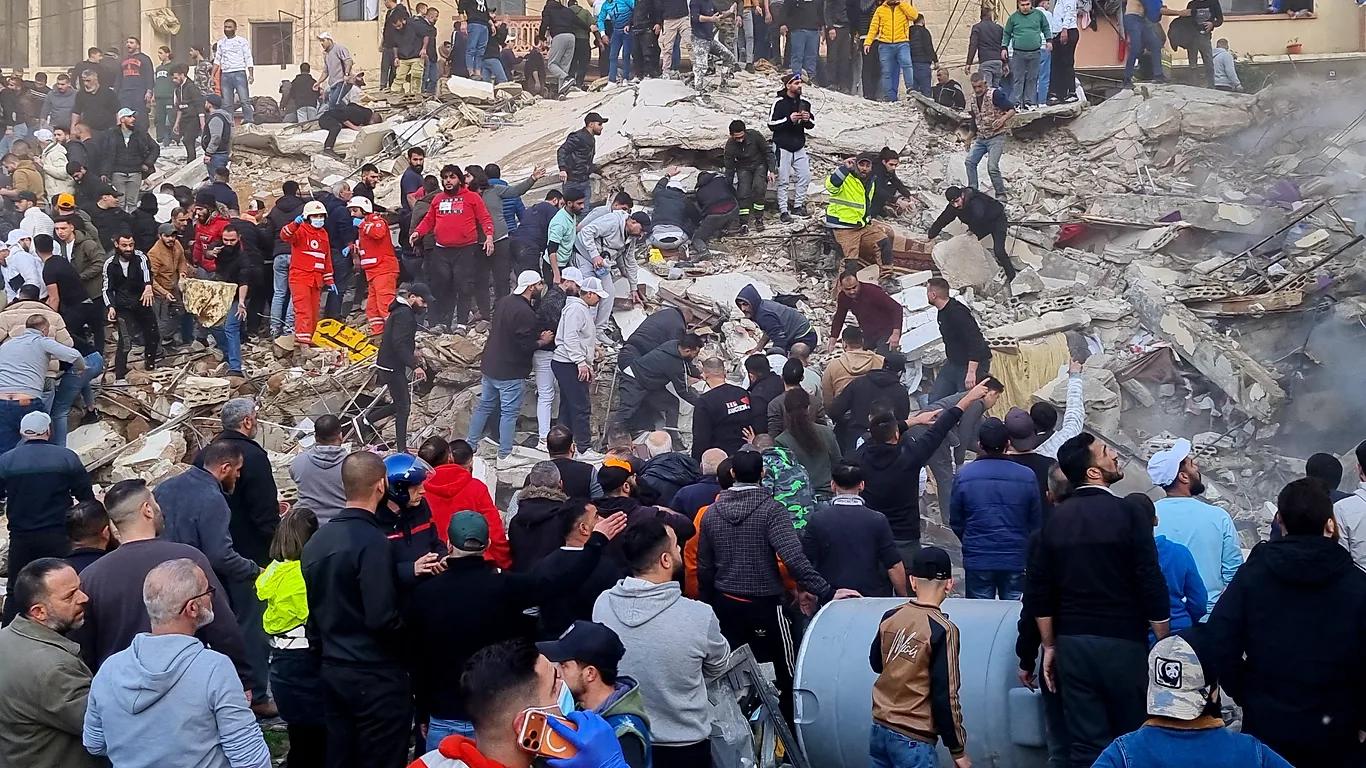
LEBANON - The recent building collapse in the Bab Tebbeneh area of Tripoli was not unexpected. Experts had warned for years about at-risk buildings, especially in poor and marginalized neighborhoods.
Similar incidents occurred just two weeks earlier. If a new building inspection and practical solutions are not implemented, similar collapses could happen again soon.
Professor Khaled Tadmori, an architecture and urban planning professor at the Lebanese University and former Tripoli municipal council member, explained the city’s building crisis.
He noted that the collapsed Bab Tebbeneh building was already on a list of at-risk structures. However, it is unclear whether it was among the 105 buildings needing urgent evacuation.
The building that fell two weeks prior in the Qobbeh area was not on the rapid evacuation list either, but it did require structural reinforcement.
Why Previous Inspections Were Not Enough
Tadmori said Tripoli’s municipality relied on quick inspections conducted after the devastating Turkey earthquake three years ago, in collaboration with the Engineers Association and volunteer engineers.
“These inspections need updates because some buildings that were not initially dangerous have since deteriorated,” he explained. “The previous assessments were fast and limited. They lacked specialized equipment and lab tests needed to measure concrete quality, iron durability, and structural integrity.”
He added that accurate assessments require large budgets, specialized engineers, and equipment. The Lebanese Army is the only entity capable of conducting precise assessments.
Tadmor warned that a new assessment would likely reveal many more at-risk buildings, over 1,000 needing reinforcement and more than 100 needing urgent evacuation.
Causes of the Urban Crisis
Tadmori explained that neighborhoods like Bab Tebbeneh, Qobbeh, Jabal Mohsen, and parts of Bab El-Raml received waves of rural migrants since the 1960s. Buildings were simple, cheap, and poorly maintained. Over time, wars and natural factors caused structural damage.
Many old stone buildings deteriorated further after additional concrete layers were added. Overcrowding, partitioning old apartments, leaking sewage, and heavy use of foundations all contributed to weakening structures. Earthquake aftershocks also affected columns, leaving buildings at high risk of collapse.
Tadmori said residents are aware of the danger but cannot leave without safe alternatives. After recent incidents, some report dangerous buildings or temporarily stay with relatives.
He emphasized that Tripoli is unprepared for any natural or structural disaster. Current rescue teams, including ambulances, are insufficient, making urgent measures necessary to protect residents.