


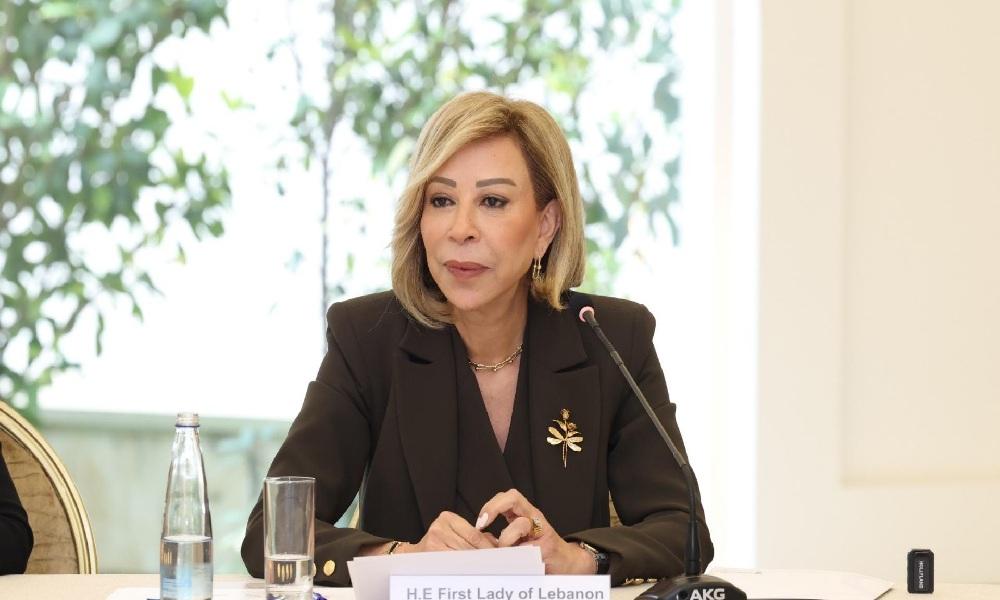
BEIRUT - At a meeting chaired by First Lady Nehmat Aoun at Baabda Palace, Lebanon officially launched the “Citizenship Education Alliance” as part of efforts to expand the “School of Citizenship” initiative nationwide.
The alliance brings together universities, public institutions, and specialized organizations to help turn the idea of citizenship from theory into real practice in schools.
The alliance includes more than 22 partners, among them UN agencies such as UNICEF and UNESCO, as well as academic institutions including American University of Beirut, Saint Joseph University, Lebanese American University and Holy Spirit University of Kaslik, alongside several specialized non-governmental organizations.
The alliance aims to establish a sustainable system that responds to schools’ needs and empowers every student to become an active and responsible citizen.
In her opening remarks, Aoun stressed that citizenship is a shared responsibility that cannot be built through decrees alone, but must be lived and rooted in cooperation and mutual trust.
She explained that partners in the alliance contribute daily to embedding citizenship values in schools while supporting both teachers and students.
Lina Qamati presented the “School of Citizenship” initiative, noting that this year’s program includes 150 schools from across Lebanon in both the public and private sectors.
The initiative features national training for principals and teachers in cooperation with the Educational Center for Research and Development, to improve school performance and measure the tangible impact of training and transformation.
Project Director Zeina Dib outlined the operational mechanism, explaining that schools will submit support requests through a digital platform.
Schools with similar needs within each region will be grouped and connected with alliance partners to receive one advanced training session annually.
Each partner will assume responsibility for delivering training under a memorandum of understanding defining roles and logistical frameworks.
The alliance will also provide follow-up, logistics and evaluation to ensure learning translates into sustainable change on the ground.