LEBANON - Amid the chronic collapse of Lebanon’s electricity sector, community energy projects have emerged as one of the most significant transformations driven by the crisis.
What began as a temporary solution quickly turned into a strategic option, reshaping the country’s electricity landscape.
These projects offer a new model for producing and managing energy.
In an exclusive interview with Enmaiya, Dr. Pierre Khoury, Secretary General of the Lebanon Chapter of the World Energy Council, confirmed that community energy projects represent a structural change in Lebanon’s electricity sector".
He explained that they initially appeared as a temporary solution due to the electricity crisis and the authorities’ inability to provide sustainable solutions, before becoming part of the larger sectoral transformation.
Global Experience
Community energy is not a new concept globally. In several countries, especially in Africa, remote villages located hundreds of kilometers from major cities and capitals have relied on community energy systems to secure electricity. Lebanon’s experience, however, is unique due to the specific timing imposed by its crisis.
A Path That Started Before the Crisis
Khoury emphasized that the expansion of solar energy in Lebanon was not simply a reaction to power outages.
Since 2010, work has been underway on laws, regulations, technical standards, pilot projects, and technological development as part of a plan to transition Lebanon toward cleaner, environmentally friendly energy.
However, this path collided with the inability of Électricité du Liban (EDL) to provide consistent power. As a result, solar energy shifted from a planned transition to a direct alternative to state electricity.
With the crisis intensifying in 2019, solar became an emergency solution to constant power cuts, gradually replacing private generators in some areas.
From Generators to Community Systems
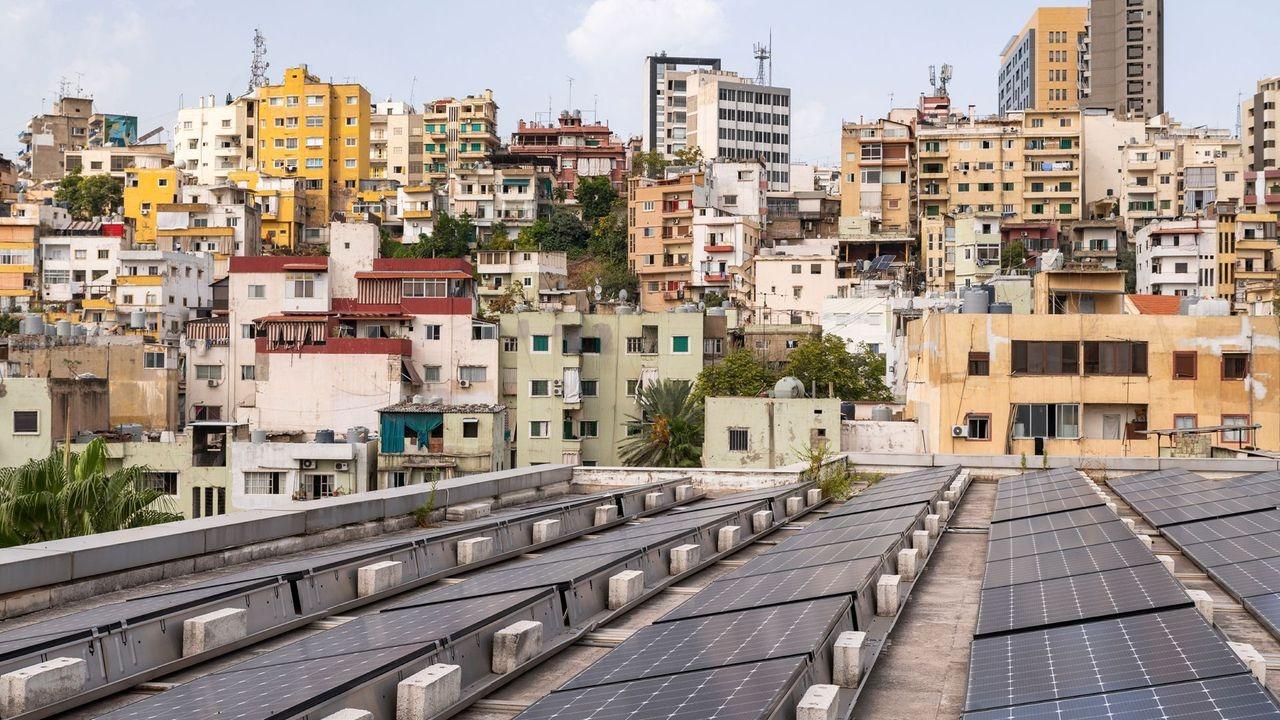
Several companies began implementing collective systems covering multiple rooftops in villages. Larger systems are easier to manage, making community energy a smart option to reduce reliance on generators.
Khoury noted that these systems often remain partial solutions, as generators are still needed during peak demand, low sunlight, or nighttime hours. Adding batteries can further reduce generator use.
By securing a minimum supply from Électricité du Liban, villages can reduce their reliance on generators and use solar energy alongside the national grid..
Technical and Legal Requirements
Khoury said that the technical requirements for a community energy project in a residential building are simple and can be implemented by any specialized company. Key points include:
1. How bills are calculated among residents.
2. Legal frameworks for using rooftops and shared areas to ensure fairness for all residents.
The main challenge is the electricity network and cabling. Laws 462 and 318 require using the existing EDL network. It is not allowed to run cables from one house to another or create an independent network not connected to the national grid.
Law 318/2023 and “Collective Net Metering”
Khoury explained that Law 318/2023 clearly supports community energy projects under the name Collective Net Metering, based on a centralized idea of using EDL’s national network and allowing citizens to combine their efforts to produce electricity collectively.
Costs and Official Support
He confirmed that the initial cost of community energy is not high, and individual solutions are often more expensive if projects are managed properly.
The Lebanese government, through Parliament and the Ministry of Energy and Water, has officially adopted and supported this model.
The main obstacle remains Électricité du Liban’s ability to connect private projects to the national grid. Without these connections, individual initiatives remain limited or illegal.
The success of community energy depends on the active role of Électricité du Liban, enabling the transition from a temporary solution to a sustainable path for Lebanon’s electricity future.