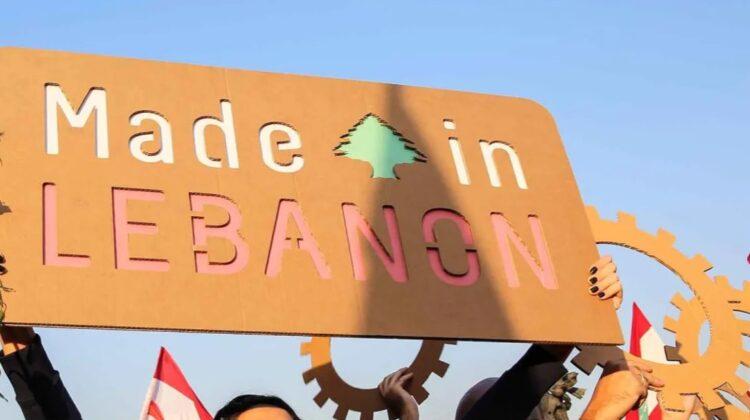
LEBANON – Despite the challenges Lebanon faces on multiple levels, the local industrial sector continues to play a crucial role, demonstrating its ability to endure and grow amid crises.
In an exclusive interview with Enmaeya, Ziad Bekdach, Vice President of the Association of Industrialists, confirmed that the industrial sector is in a better position today compared to previous years.
Local products now make up 55–60% of store shelves, up from 35% in 2018–2019.
Bekdache noted that between 2020 and 2024, new factories were established, and new Lebanese products were launched, including production lines from international companies operating in Lebanon, reflecting the sector’s growth despite challenges.
He added that the opening of Gulf markets promised export opportunities, but exporting remains difficult under the current conditions.
Taxes Affect Competitiveness
Bekdach explained that annual tax increases significantly raise production costs.
And Lebanon does not provide industrial incentives like other countries, and new taxes are a major problem, including:
• A non-refundable VAT on fuel invoices.
• An increase in VAT from 11% to 12%.
• Customs fees on shipping containers and scanner fees on imports and exports.
He noted that these taxes negatively affect industrial competitiveness and productivity and increase inflation, while public sector and military salaries are funded by private sectors.
Bekdach stressed that any discussion of industrial growth is tied to addressing the shadow economy, where some businesses evade taxes, electricity fees, or social security contributions, putting legitimate industrialists at a disadvantage.
Self-Sufficiency Is Not Yet Possible
Bekdach pointed out that Lebanon cannot achieve self-sufficiency today because most raw materials for local industries are imported.
For example, in the food industry, 80% of the ingredients are imported, such as chickpeas with tahini, which is made locally but sourced mostly from Mexico and Canada.
He emphasized the need for a comprehensive plan for agriculture and industry to gradually achieve food self-sufficiency.
Artificial Intelligence in Industry
Bekdach highlighted that some Lebanese factories use artificial intelligence (AI) and robotics in production lines, and some even manufacture robots for global companies, particularly in the automotive sector.
However, he stressed that these technologies alone are not enough without a comprehensive economic plan involving relevant ministries, the Association of Industrialists, Lebanese experts, and economic bodies.
Bekdach concluded that Lebanese industry is healthy and deserves support. It is the primary sector driving growth, and it has proven its resilience during wars and the COVID-19 pandemic, continuing to meet the country’s food and consumer needs without interruption.