




WORLD - As governments, employers, and health institutions invest more heavily in “health and wellness” initiatives, two terms continue to dominate policy papers, corporate strategies, and public discourse: wellness and well-being.
Though often used interchangeably, public health experts stress that they describe distinct, and critically important concepts.
This distinction matters beyond terminology. It shapes how health is measured, how programs are designed, and how responsibility for health is distributed between individuals and society.
Health, According to Global Standards
The starting point for any serious discussion is the definition of health established by the World Health Organization (WHO).
Since 1948, WHO has defined health as “a state of complete physical, mental and social well-being and not merely the absence of disease or infirmity.”
This definition remains foundational in global public health. Crucially, it places well-being at the center of health itself not as an optional add-on, but as a core outcome.
Wellness: An Individual, Action-Driven Concept
In public health and organizational settings, wellness is generally understood as an active process. It refers to the behaviors, habits and lifestyle choices individuals adopt to protect and improve their health.
Wellness initiatives typically focus on:
Physical activity and nutrition
Sleep, stress management and mental fitness
Preventive care and risk reduction
From a policy standpoint, wellness is closely tied to health promotion: encouraging people to make healthier choices before disease occurs. It is proactive, behavior-based and largely individualized.
This framing makes wellness relatively straightforward to operationalize: steps walked, gym memberships, smoking cessation programs or biometric screenings are all commonly used indicators.
Well-Being: A Broader State of Life Quality
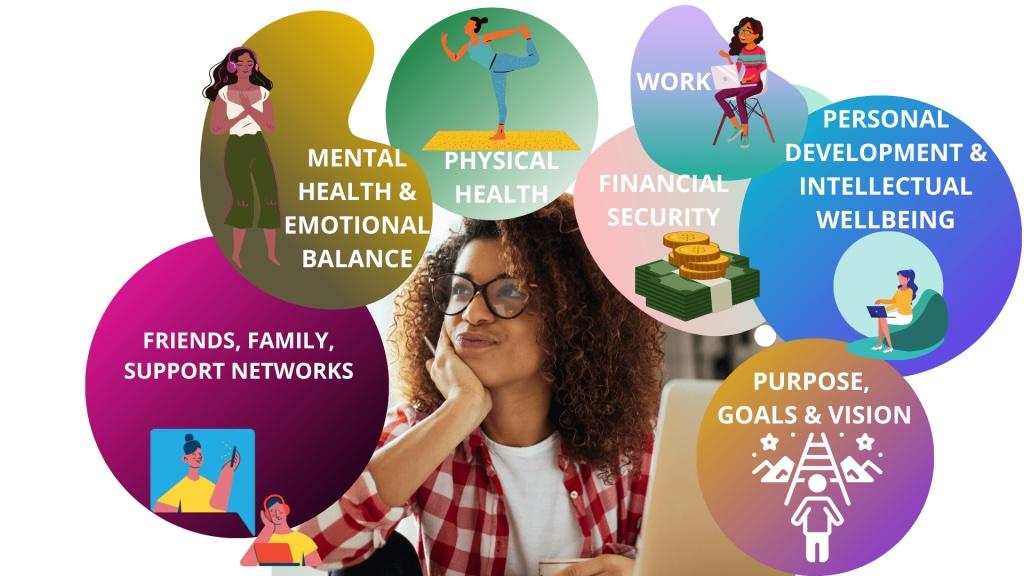
Well-being, by contrast, describes a broader condition. It reflects how people experience their lives as a whole, encompassing physical and mental health, but also social connection, economic security, purpose and environmental safety.
WHO and other global institutions emphasize that well-being is shaped not only by personal behavior, but by social and structural determinants such as:
Income and employment stability
Education and housing
Access to healthcare and social protection
Safety, equity and environmental conditions
In this sense, well-being is not something individuals can achieve through effort alone. It is a population-level outcome influenced by policy, governance and social systems.
Why the Difference Matters
Programs that focus narrowly on wellness activities such as fitness challenges or mindfulness apps, may improve specific health behaviors without meaningfully improving people’s overall well-being.
For example, an employee may exercise regularly and eat well, yet still experience poor well-being due to job insecurity, burnout, low wages or lack of social support.
From a public health perspective, this distinction is critical: wellness interventions alone cannot compensate for adverse social or economic conditions.
Implications for Public Health and Policy
Globally, the distinction is increasingly reflected in health frameworks and development agendas. The United Nations’ Sustainable Development Goal 3 “Good Health and Well-Being” explicitly links medical care with broader social and economic determinants.
For policymakers, this means that wellness strategies should prioritize prevention, healthy behaviors, and individualized support.
Well-being strategies, however, must go beyond the health sector and require coordinated action across labor, education, housing, environment, and social protection.
In short, wellness can be promoted, but well-being must be enabled through broader systemic action.
Public health experts emphasize that wellness and well-being are not competing ideas. Rather, they operate at different levels of the health ecosystem. Wellness represents the means: the actions people take. Well-being represents the outcome: the quality-of-life people can achieve.
As health systems worldwide confront rising chronic disease, mental health challenges and social inequality, clarity around these terms is no longer optional. It is essential for building policies that improve not only how long people live, but how well they live.