



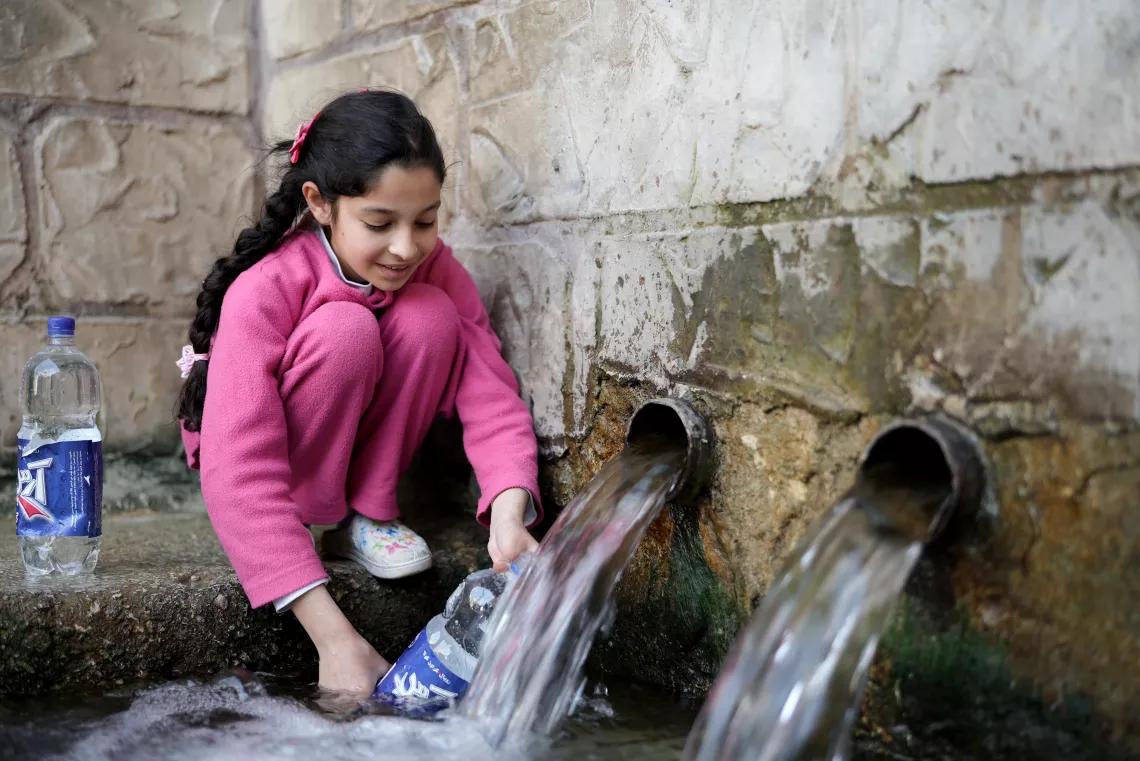
LEBANON - In Lebanon today, even turning on the tap comes with a question: will water flow, or will it be another day of waiting and finding other ways to get it?
As the world marks World Water Day, this simple uncertainty has become part of daily life for millions across the country.
Lebanon’s water crisis did not begin with war. For years, it has been shaped by mismanagement, pollution, and overuse. But the past few years, marked by economic collapse, regional tensions, and the most recent wave of conflict, have pushed an already fragile system to the brink.
Water infrastructure has not been spared. By March 2025, an estimated 64% of community reservoirs, 58% of pumping stations, and nearly a quarter of treatment plants had been damaged or destroyed.
The cost of these losses is staggering, around 171 million dollars in the water sector alone, according to the World Bank. But beyond the numbers lies a deeper, quieter crisis: the slow erosion of access to something essential for life.
Today, more than 2.7 million people in Lebanon face serious challenges in accessing safe, sufficient, and affordable water. For many households, the solution has been to turn to private water tankers, an option that can cost up to ten times more than public supply. What used to flow through pipes is now delivered at a price many can barely afford.
Behind this reality is a system under immense pressure. Public water establishments are operating with severe budget deficits, struggling to cover basic operational costs. Electricity shortages mean pumps cannot run consistently, and reliance on expensive fuel only deepens the financial strain. At the same time, damaged infrastructure reduces service coverage, while falling revenues make it harder to repair what’s broken.
This is where water finance becomes critical. Water does not simply “exist” at the tap. It requires investment, maintenance, energy, and functioning institutions. Without sustainable funding, even the best systems fail.
In Lebanon today, the gap between what is needed and what is available continues to widen, leaving communities increasingly dependent on temporary and costly alternatives.
The consequences go beyond inconvenience. In areas affected by conflict and displacement, limited access to safe water raises the risk of disease outbreaks, including the potential return of cholera. Informal settlements and vulnerable communities are often the hardest hit, caught between rising costs and shrinking access.
And yet, this crisis is not inevitable.
Lebanon stands at a critical moment, between continued decline and the possibility of recovery. Investing in water infrastructure, strengthening public institutions, and ensuring reliable financing are not just technical solutions; they are essential steps toward stability, dignity, and public health.
On this World Water Day, water in Lebanon is more than a resource. It is a reminder, of resilience, of inequality, and of the urgent need to act.