

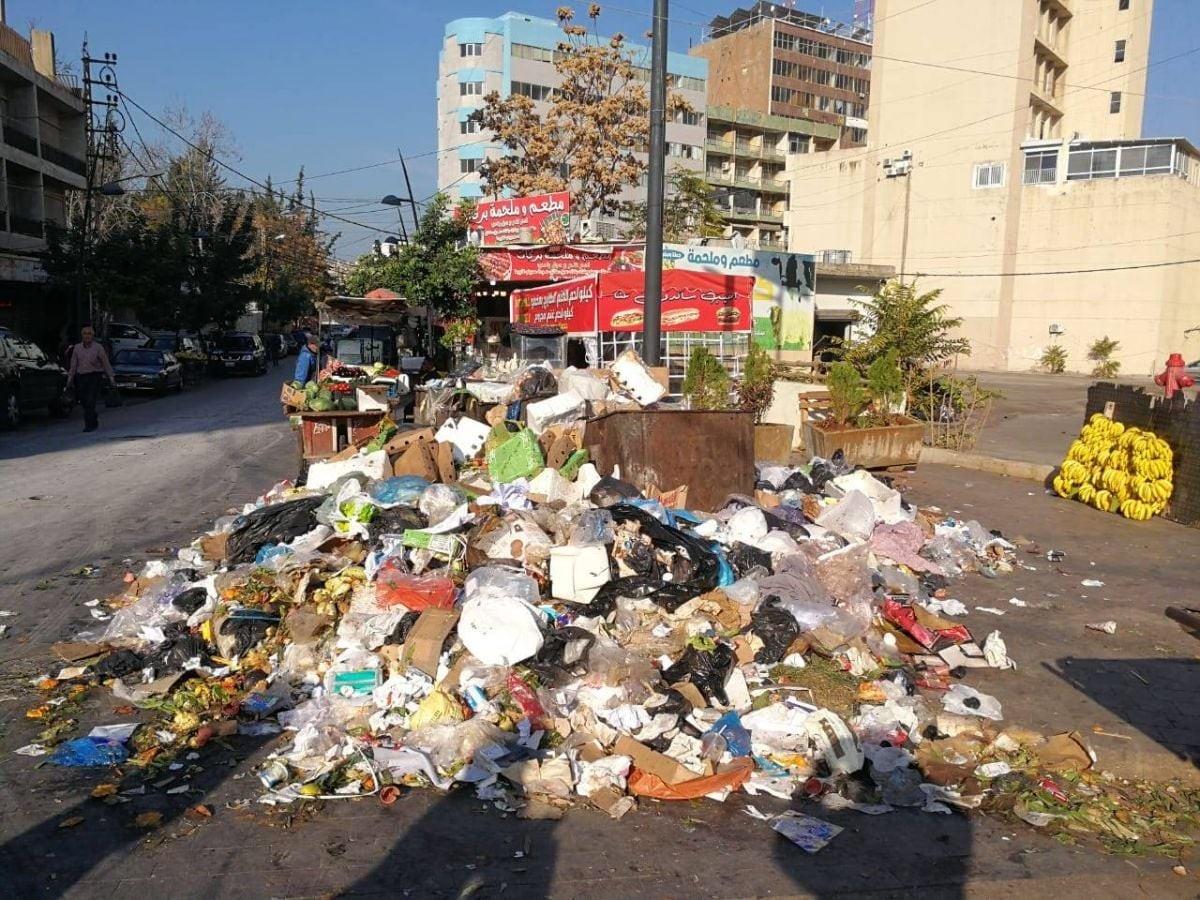
LEBANON - Lebanon’s conflict is no longer limited to front-line humanitarian services. It is placing growing strain on basic urban systems, with waste emerging as one of the clearest signs.
With more than one million people displaced across the country, 136,262 of them hosted in 663 collective shelters, municipalities are being asked to serve rapidly shifting populations with systems that were already overstretched before the latest escalation.
In that context, solid waste is not a secondary issue. It is a daily indicator of how crisis is reshaping public health, municipal capacity, and environmental risk across Lebanon.
A System Already Strained
Lebanon’s waste system was already fragile before the latest escalation. The country’s draft national solid waste strategy estimates that Lebanon generated around 5,600 tons of municipal waste per day in 2022, down from about 7,300 tons in 2018 as the economic crisis reduced consumption. Yet this decrease in volume did not necessarily make the system any healthier.
World Bank assessments show that only about 8 percent of waste was being treated in functioning facilities, while open dumping rose from 22 percent in 2018 to 42–43 percent in 2023.
At least 104 new open dumpsites have appeared since 2016, and roughly a quarter of them are subject to open burning, with direct consequences for air quality, soil, water, and public health.
The recent Jdeideh landfill disruption offered a warning of how quickly pressure can turn into visible breakdown. In February 2026, waste collection was suspended in Metn and Keserwan after the landfill closed, leaving around 1,100 tons of daily waste without its usual disposal route until the site reopened the following day.
Although the episode was brief, it illustrated a deeper reality: much of Lebanon’s waste system still depends on overloaded sites, emergency extensions, and short-term fixes rather than resilient planning.
Why Displacement Changes the Equation
The current crisis is exposing what happens when such a system loses whatever limited reserve it had left. The World Bank’s latest environmental assessment uses a planning estimate of 0.75 kilograms of waste per displaced person per day.
Applied to the current displacement figures, that suggests the conflict is generating hundreds of additional tons of waste every day that must somehow be managed.
In collective shelters, the pressure is even more immediate: schools and public buildings were never designed to function as continuous residential spaces.
In light of the current displacement crisis, these facilities now have to absorb daily waste generation, sanitation needs, and irregular service coverage all at once.
Saida offers a clear example of how displacement is translating into added pressure on local waste systems. As of 25 March 2026, municipal figures recorded 13,214 displaced people hosted across 26 collective centers in the city.
At an average waste generation rate of 0.8 kilograms per person per day, this sheltered population alone would generate more than 10 tons of additional waste daily.
Local operational estimates based on NTCC waste monitoring suggest that municipal solid waste in Saida city has increased from around 80 to 100 tons per day.
At the Saida Al Zahrani Union level, it may have risen from approximately 160 to 225 tons per day compared with the usual baseline.
Based on standard waste-generation assumptions, this increase corresponds to roughly 25,000 additional people in Saida city and 81,250 at the Saida Al Zahrani Union level.
This points to a wider service burden caused not only by collective shelters but also by displaced families staying in rented homes, with relatives, or in other informal arrangements.
In January, a municipal committee warned that the city’s treatment center was severely congested due to accumulated waste from Saida, its union, and incoming waste from outside the area.
Path Forward
What is needed now is not just recognition, but action. Lebanon’s waste sector requires immediate and targeted support to maintain basic services in cities and communities under exceptional pressure.
Municipalities and operators need fuel, equipment, spare parts, maintenance, and operational funding to sustain collection and treatment and prevent breakdowns that could cause wider health and environmental hazards.
Waste management in shelters and host communities must be treated as an essential part of the humanitarian response, because when these systems fail, the consequences extend far beyond the streets.
Supporting this sector is therefore not a secondary investment, but a critical step to protect public health, preserve local service capacity, and reduce the risk of a deeper and prolonged urban crisis.