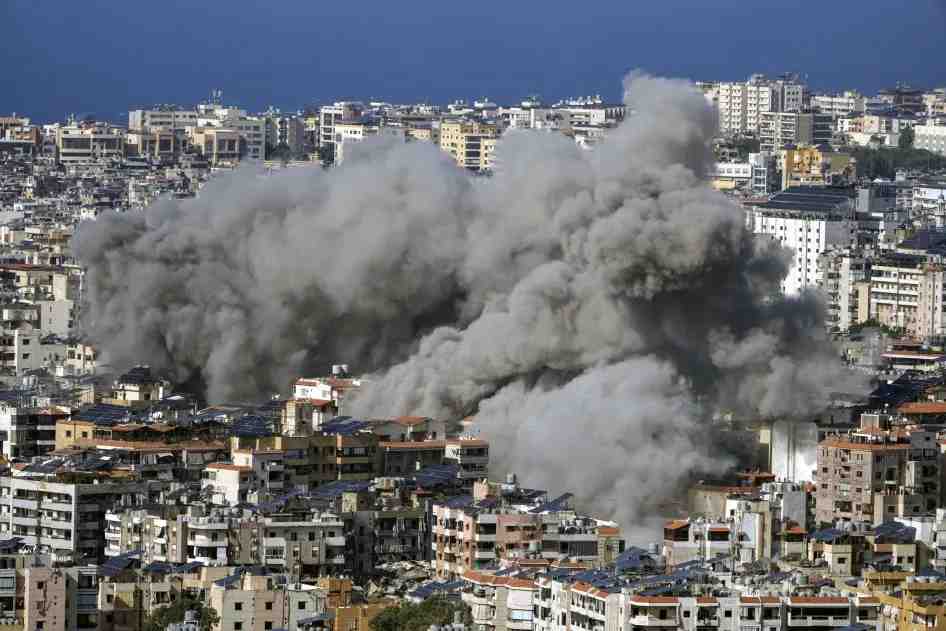


LEBANON - During periods of political tension and conflict, public discourse often becomes more hardened. Language grows more polarized, emotional, and divisive. In Lebanon, where communities are closely interconnected, these shifts can quickly affect social cohesion and stability.
The United Nations defines hate speech as “any kind of communication in speech, writing or behaviour, that attacks or uses pejorative or discriminatory language with reference to a person or a group based on who they are.” This includes identity markers such as religion, ethnicity, nationality, gender, or other defining characteristics.
Yet in practice, the harm of hate speech is not only in the words themselves, but in what they produce, especially when they contribute to discrimination, hostility, or violence against a group.
Licensed consultant psychologist and psychotherapist Dr. Christina Riachi told Enmaeya that the origins of hate speech often begin with how people perceive “the other.”
“In seeing the other person or the other team, other country as an enemy, once we see them as different than us, we tend to generalize and categorize them in a hateful way,” she said.
This psychological shift is particularly common in moments of instability and fear. “It’s normal during a crisis and war to react negatively and label the other negatively,” she added.
“It’s normal, but it does not make it right. It all starts with an ‘us versus them’ mindset, and this leads to hate speech and antagonizing the other," she added.
Patterns of Escalation
In conflict settings, language often moves along predictable patterns that intensify division.
Groups may be dehumanized, framed as threats, or reduced to stereotypes. This weakens empathy and makes hostility easier to justify. Individual actions are also frequently generalized to entire communities, reinforcing collective blame and deepening sectarian narratives.
During such periods, disinformation can further accelerate tension. False or misleading claims about communities often spread quickly, amplifying fear and anger before facts are verified.
Over time, when such language is repeated by influential figures or widely circulated online, it risks becoming normalized, gradually increasing public tolerance for extreme rhetoric.
The Cycle of Harm
Dr. Riachi highlights that exposure to hate speech does not remain isolated—it often reproduces itself.
“When we’re subjected to hatred or hate speech, we are more likely to project it onto others or our children or our peers,” she noted.
This dynamic helps explain how hostile environments can become self-reinforcing, especially when emotional responses replace critical reflection.
Long-Term Consequences
Beyond immediate tensions, Dr. Roach emphasizes the importance of perspective over time. “If we partake in hate speech especially in times of crisis, we need to remember that one day that crisis will end and life will resume normally,” she said.
“It’s important to think about whether or not we are okay keeping such views then, and if we will assume the consequences of our hate speech.”
In Lebanon, where stability relies heavily on communal balance, these dynamics carry particular weight. Lebanese law also prohibits incitement of sectarian strife, especially when speech threatens public order.