

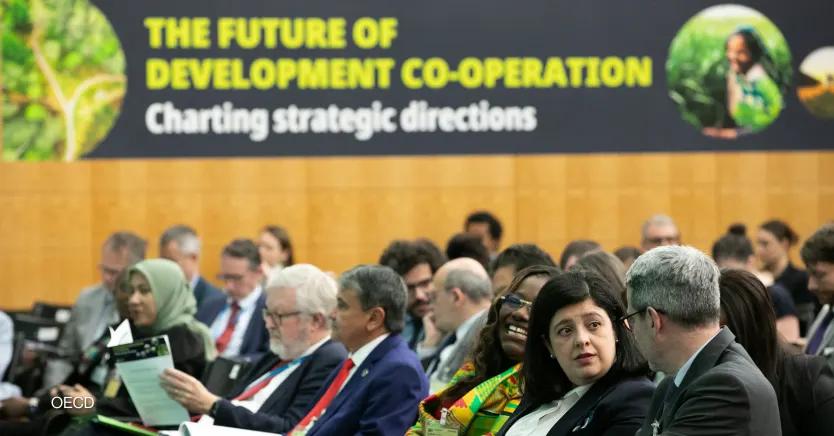
WORLD - The Organization for Economic Co-operation and Development (OECD) hosted a high-level conference in Paris this week to examine the future of international development amid a sharp decline in global aid.
The conference opened with a central concern: official development assistance (ODA) has fallen by more than 23% last year—over $50 billion—signaling a major shift away from traditional aid models.
Participants debated how development cooperation should adapt, with a strong focus on reforming funding systems and improving effectiveness in a changing global landscape.
A keynote from Ghana’s deputy chief of staff, Nana Oye Bampoe Addo, highlighted the “Accra Reset,” an African-led initiative aiming to reshape development cooperation.
The proposal emphasizes strategic investment over traditional aid, alongside new mechanisms such as health reform panels and broader ambitions including skills development and regional cooperation.
South-South Cooperation
Speakers stressed the growing importance of South-South and triangular cooperation, where developing countries collaborate directly, sometimes with Northern support. While this approach is gaining momentum, some delegates warned that not all countries are equally prepared to transition away from aid dependence.
Merge Everything
More radical reform ideas also emerged, including proposals to consolidate global development funding through institutions like the World Bank’s International Development Association and the African Development Bank, and even to merge major philanthropic organizations into a single global fund. The ideas sparked debate about feasibility and political will.
Nothing Extreme About Cooperating
OECD officials emphasized that development cooperation remains essential, arguing for stronger accountability, transparency, and inclusiveness—particularly involving the Global South. They warned that questioning aid entirely risks undermining global stability and long-term development goals.
Risky Business
A recurring theme was the link between development, security, and geopolitical competition. Experts warned that while aid is increasingly viewed through a transactional lens, fragile and conflict-affected states still depend heavily on it, raising concerns about elite capture and political interests.
Locally Led Development is Back in Town
The conference previewed new OECD guidance on locally led development, expected to launch later this month. The framework promotes local ownership, equitable risk-sharing, and improved accountability, but concerns remain about whether real power will shift from donors to local actors.
What Happens Next?
Participants agreed that the global development system must be both reformed and reimagined. With the Sustainable Development Goals approaching their 2030 deadline, leaders called for a new framework for cooperation that balances innovation, inclusion, and the realities of ongoing global inequality and conflict.