



LEBANON – At a time when academic research is often viewed as inaccessible to the public, Beirut Arab University challenged that perception through the internationally recognized “Three Minute Thesis” (3MT) competition, an event that asked graduate students to do the seemingly impossible: explain years of research in just three minutes.
The competition transformed complex academic work into concise, engaging presentations designed for non-specialist audiences.
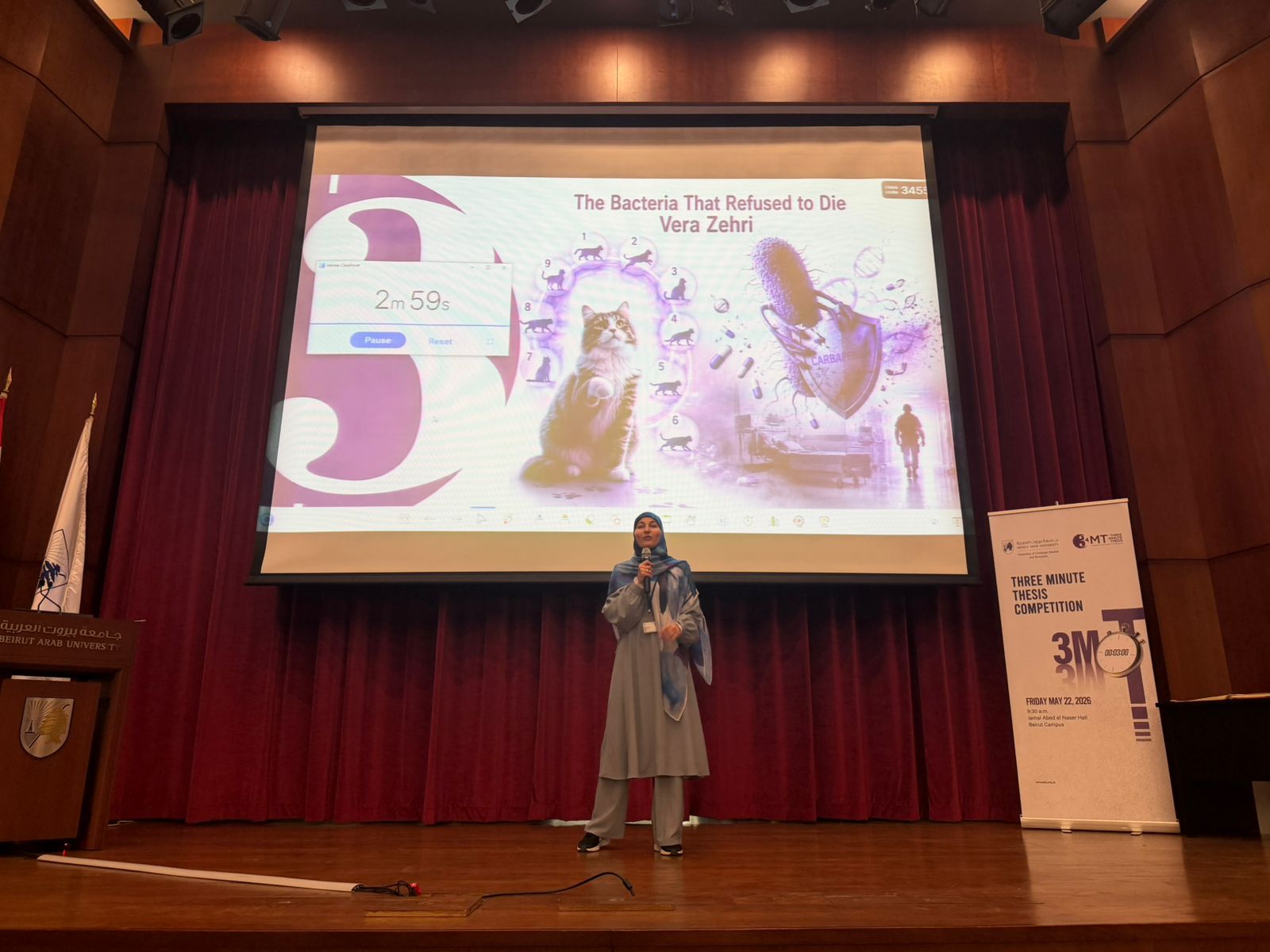
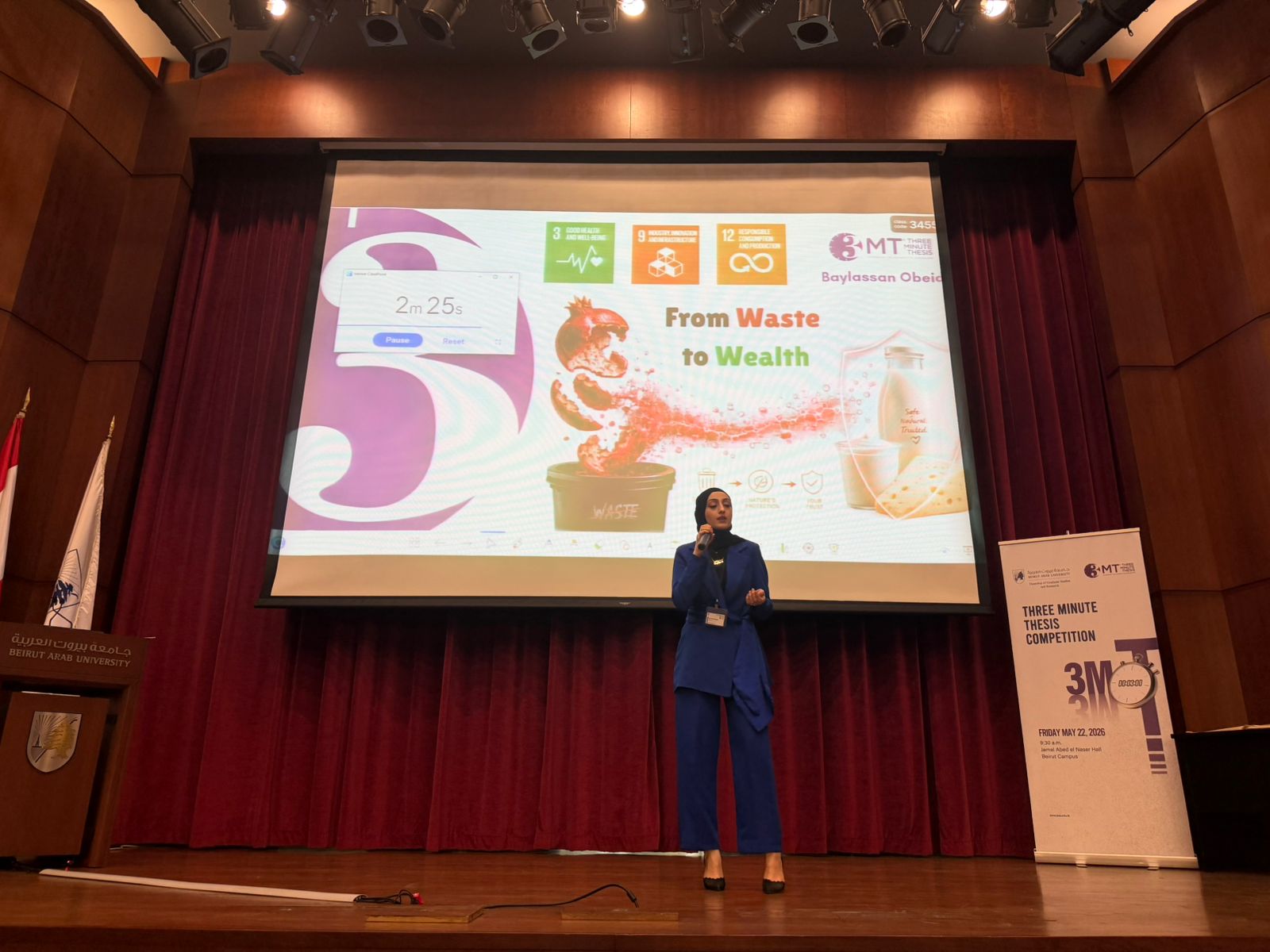
Participants were given only one static slide and 180 seconds to communicate the significance of their research clearly and compellingly.
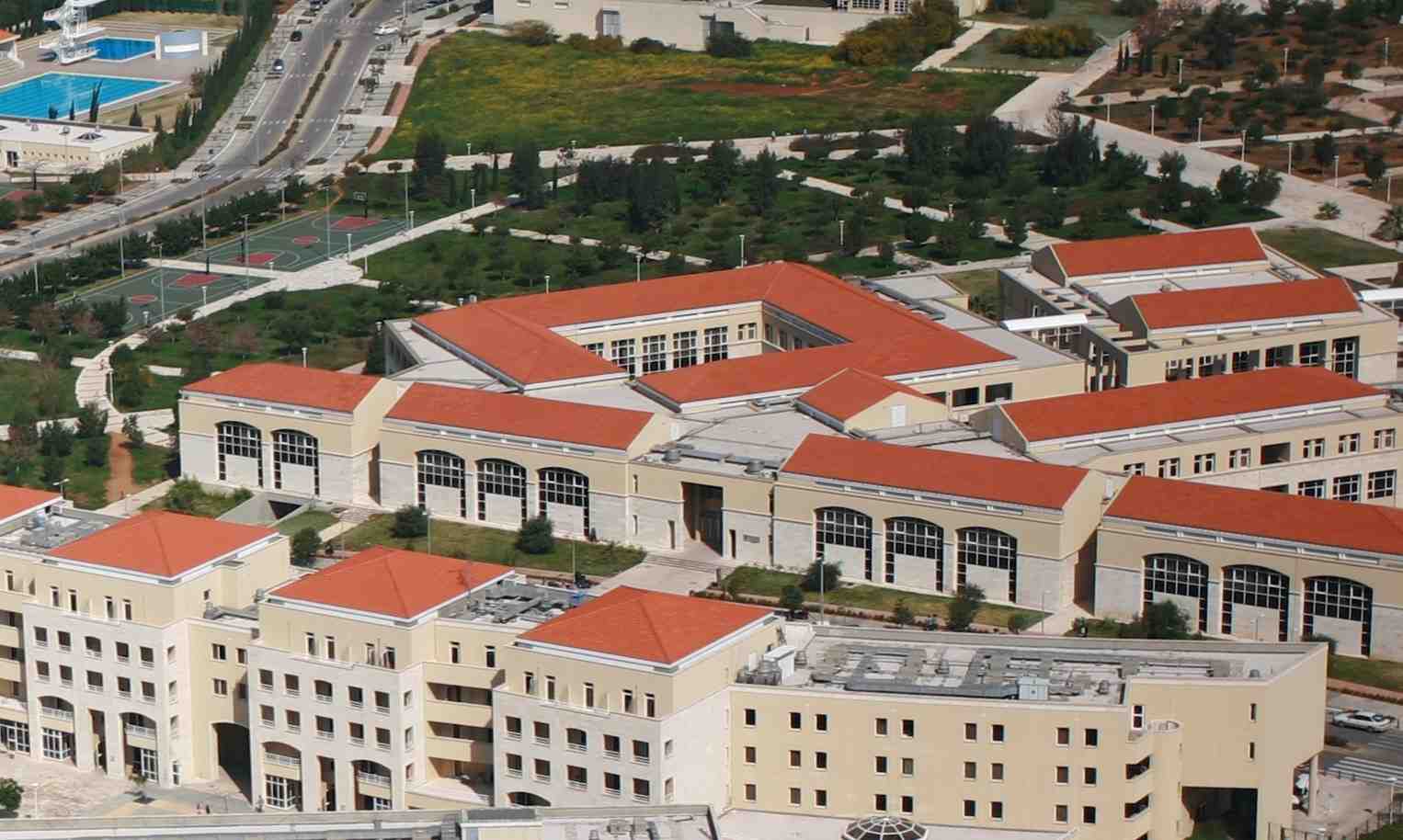
The event, which was held at Jamal Abdel Naser Hall on the university’s Beirut campus, was more than a public speaking challenge. It was part of a worldwide academic movement that promotes research communication, critical thinking, and public engagement with science and scholarship.
It brought together 30 participants from different faculties, highlighting the diversity of research across disciplines.
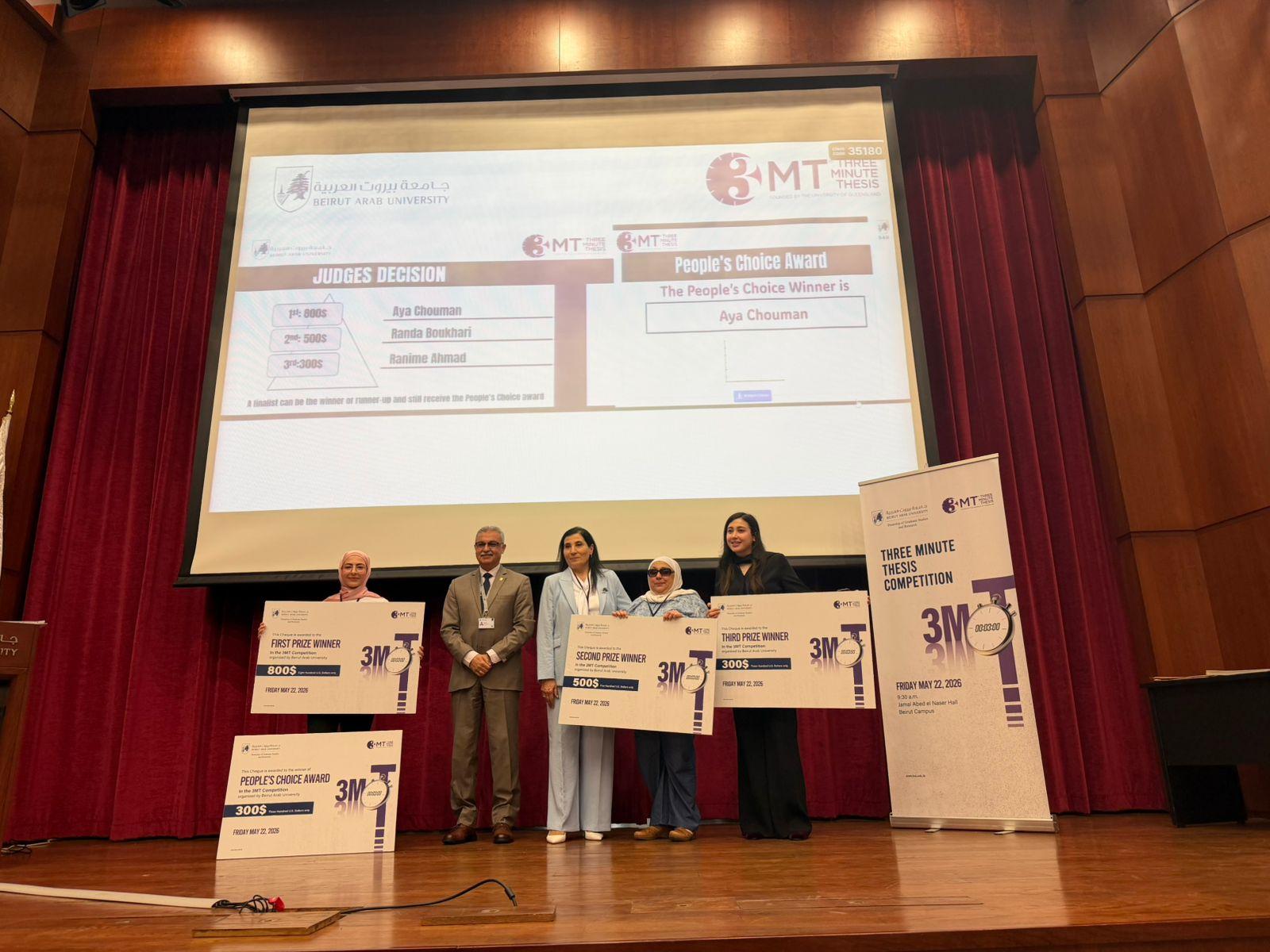
The competition concluded with the selection of winners: first place went to Aya Chouman, second place to Randa Boukhari, and third place to Ranime Ahmad.
A Competition Born in Australia
The Three Minute Thesis competition was first developed in 2008 at the University of Queensland in Australia.
The idea emerged during a period of severe drought in Queensland, when residents were encouraged to keep showers under three minutes using egg timers fixed to bathroom walls. Inspired by that concept, the university transformed “three minutes” into an academic challenge: could researchers explain an entire thesis within the time of a short shower?
What began with 160 doctoral students at the University of Queensland quickly evolved into an international phenomenon. Today, the competition is held in more than 900 universities across over 85 countries worldwide.
Universities across North America, Europe, Asia, and Australia now organize annual 3MT competitions as part of graduate education and research communication initiatives.
The Rules: One Slide, Three Minutes
The format of the competition was intentionally strict. Contestants were allowed:
• One static PowerPoint slide
• No animations or video
• No props or additional media
• A maximum of three minutes speaking time
The challenge was not simply speed, but clarity. Competitors had to communicate highly specialized research to an audience with no academic background in the subject.
Judges typically evaluated presentations based on two core criteria:
• Comprehension and content• Audience engagement
The ability to simplify without oversimplifying was considered one of the competition’s most valuable skills.
Why the Competition Mattered
In many ways, 3MT reflected a larger shift in academia toward public communication and accessibility. Research increasingly depended not only on scientific rigor, but also on the ability to communicate ideas beyond universities and laboratories.
Supporters of the competition argued that researchers must be able to explain their work to policymakers, funders, media audiences, and the general public. Discussions among academics frequently described 3MT as an important exercise in developing “elevator pitch” communication skills for real-world contexts.
Others viewed the competition as part of a broader effort to bridge the gap between academic institutions and society by making research more understandable and relatable.
BAU’s Participation in a Global Academic Culture
By organizing the competition, Beirut Arab University joined a growing international network of universities using 3MT to encourage interdisciplinary dialogue and public-facing research.
The event also created a rare space where graduate students from different fields, from medicine and engineering to social sciences and humanities, presented their ideas side by side before a general audience.
In addition to cash prizes awarded to winners, the competition included a “People’s Choice Award,” allowing audience members themselves to participate in selecting the strongest presentation.
For students, the challenge lasted only three minutes. But behind those 180 seconds were often years of research, experimentation, writing, and intellectual work, compressed into a single moment of connection between academia and the public.