



LEBANON - Every year, the ocean generates more economic value than the world's seventh largest national economy, sustaining the livelihoods of over three billion people and underpinning industries from shipping to pharmaceuticals. Yet for most countries, including Lebanon, this economy remains largely invisible in policy discussions, underinvested, and increasingly at risk. On World Oceans Day, it is worth asking what is at stake, and what Lebanon stands to lose if it continues to treat its coastline as a backdrop rather than an asset.
What is the ocean economy
The ocean economy includes economic activities such as offshore oil and gas, marine equipment and construction, container shipping, shipbuilding and repair, cruise tourism, port activities and marine energy. It also includes the ocean’s natural assets and the ecosystem services it provides, from fisheries to carbon sequestration.
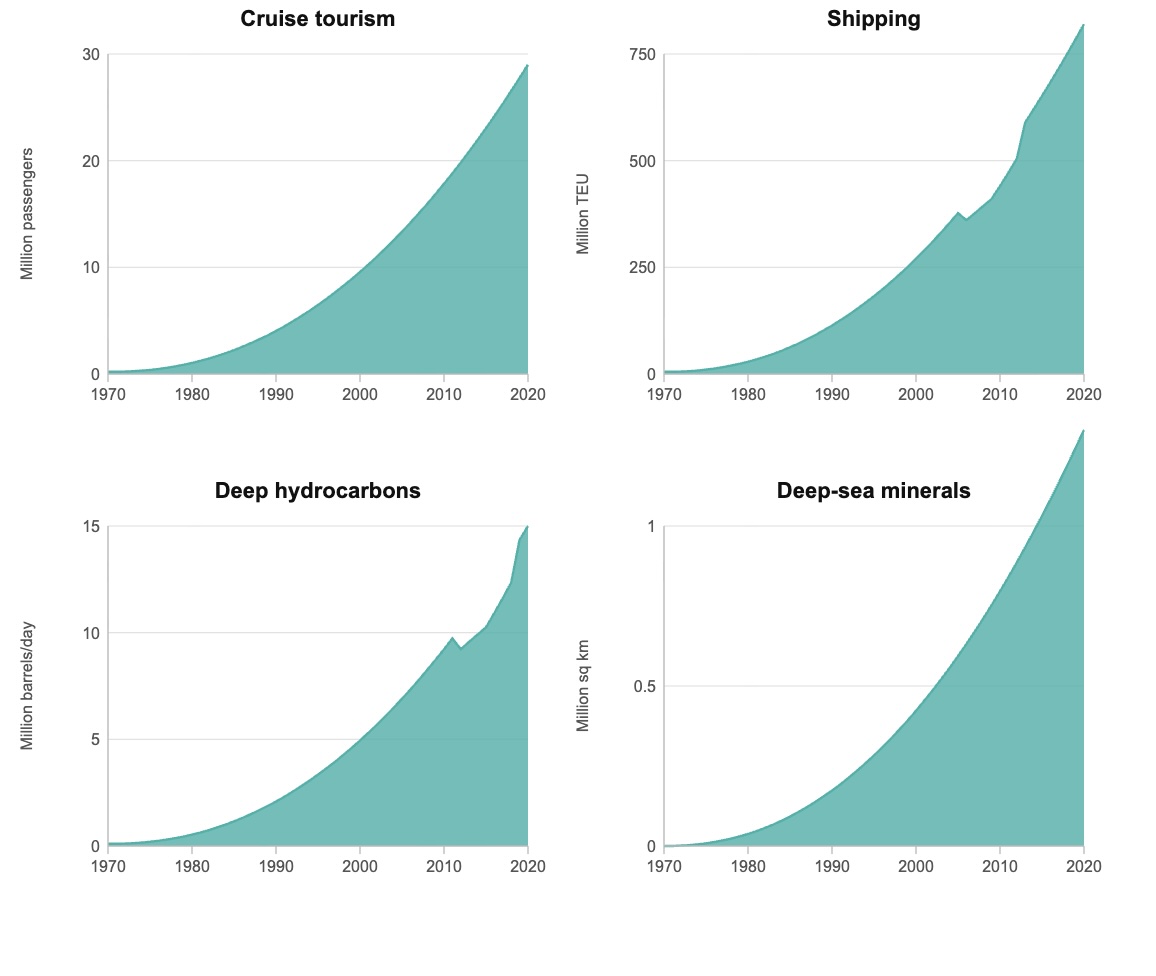
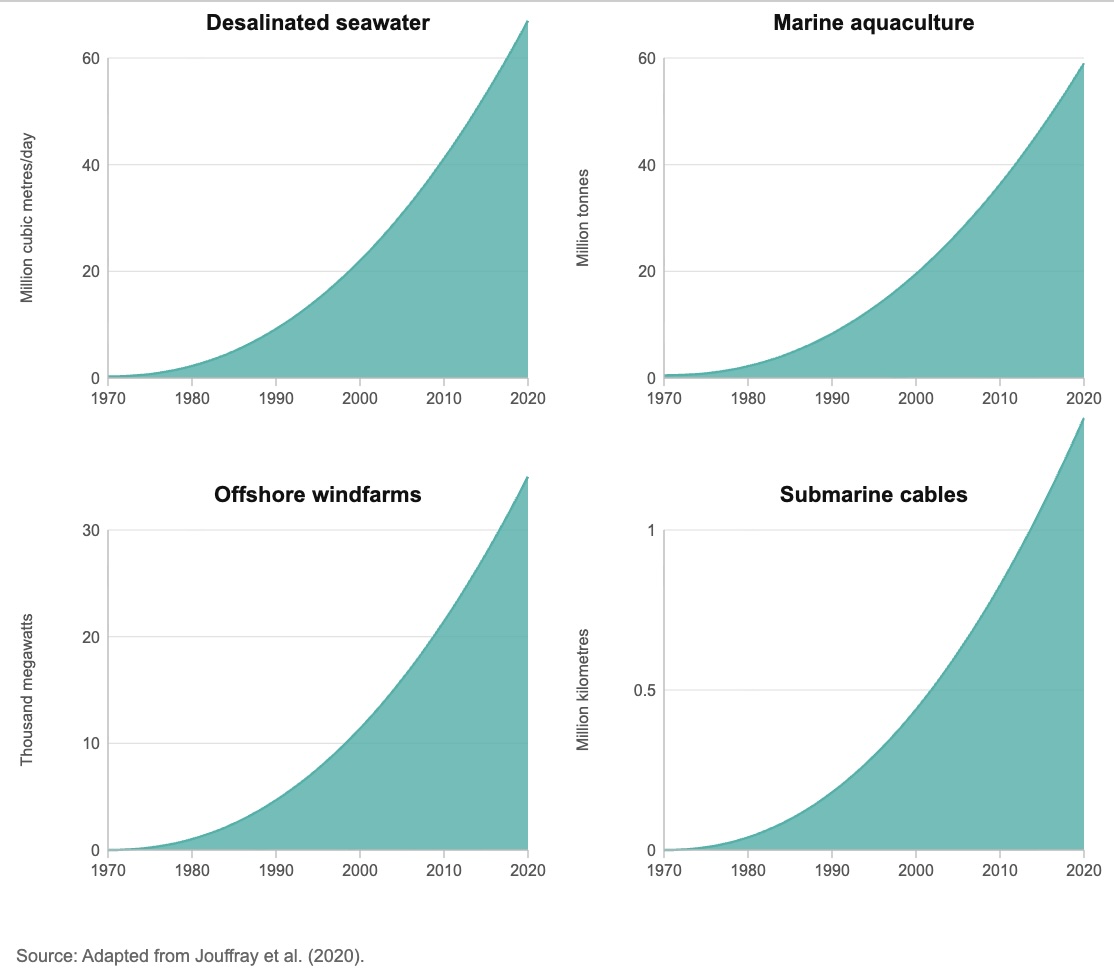
The growth of ocean-based economic activities has rapidly increased over the past 50 years and the ocean economy is now estimated to be worth approximately US$1.5 trillion. According to the OECD's "The Ocean Economy 2030" report, this could increase to US$3 trillion by 2030, with significant further growth expected particularly in renewable energy generated by wind, the farming of aquatic plants and animals in saltwater, and fish processing.
The primary focus of the ocean economy is on maximizing economic benefits. This often leads to ecological degradation and resource depletion at the expense of marine ecosystems and the communities that depend on them.
From Ocean Economy to Blue Economy
The blue economy is an approach to economic development that promotes the sustainable use of marine and coastal resources while balancing economic growth with ocean conservation.
The term was first introduced by Belgian economist Gunter Pauli in the 1990s. Since then, it has evolved into the widely accepted concept of using ocean resources to drive growth, improve livelihoods, and protect marine ecosystems, a definition that gained global prominence following the 2012 Rio+20 UN Conference on Sustainable Development.
Today, the blue economy spans a broad range of sectors, including maritime shipping, fisheries and aquaculture, coastal tourism, offshore renewable energy, marine biotechnology, and seabed resources. Together, these industries generate trillions of dollars in economic activity and support hundreds of millions of jobs worldwide.
Beyond traditional maritime sectors, the ocean is also an important source of innovation. Its biodiversity provides the foundation for advances in pharmaceuticals, cosmetics, sustainable aquaculture, biomaterials, and biofuels, highlighting the growing economic value of healthy marine ecosystems.
Lebanon's Blue Economy: A National Assessment
The global blue economy is valued at $2.5 trillion annually, contributing 5% to global GDP. In Lebanon, the blue economy, which includes coastal tourism, maritime transport, and artisanal fisheries, contributes roughly 18% to 19% to Lebanon's GDP. This valuation relies overwhelmingly on coastal tourism, while direct industries like traditional fisheries generate only 3,000–3,500 tonnes of catch.
In 2024, the Hariri Foundation for Sustainable Human Development, in partnership with UNEP and with support from the European Union under the SwitchMed II programme, produced the first national dialogue and assessment of Lebanon's blue economy, a comprehensive, multi-stakeholder analysis that maps the country's 225-kilometer coastline across three core sectors: port activities and maritime trade, marine living resources and fisheries, and coastal tourism.
The assessment, which engaged government bodies, private sector players, fishermen's unions, environmental NGOs, universities, and international organizations, represents the most structured stocktaking of Lebanon's maritime economy to date.
The Port of Beirut, despite the devastating 2020 explosion, remains a critical regional trade hub, handling 82% of Lebanon's imports and exports before the blast, and recovering to 5.41 million tons of goods in 2023, up 5% year on year. The Port of Tripoli, Lebanon's second major port, has seen activity rise by over 80% since 2019 and holds significant untapped capacity. Meanwhile, emerging sectors such as marine biotechnology, offshore renewable energy, and eco-tourism, remain almost entirely undeveloped, representing what the assessment describes as a frontier for Lebanon's economic diversification.
On the other hand, fisheries, one of the most visible dimensions of Lebanon's coastal economy, generate only 3,000 to 3,500 tonnes of annual catch, a figure constrained by overfishing, illegal nets, untreated wastewater discharging directly into the Mediterranean, and solid waste landfills bordering the coast. The assessment identifies governance fragmentation as the central structural problem: overlapping laws, absent enforcement, no national fisheries authority, and no integrated coastal zone management framework.
Untapped Potential
Lebanon is not alone in recognizing the economic value of the sea. Across the Arab Mediterranean, countries with comparable coastal geographies have built significant blue economy foundations: Morocco's ocean and coastal-related activities account for 59% of its GDP, Tunisia's fisheries and tourism sectors alone support approximately 450,000 jobs, and Egypt has leveraged its Mediterranean and Red Sea coastlines into one of the region's largest maritime trade and tourism corridors.
Lebanon possesses many of the same advantages: a 225-kilometer Mediterranean coastline, a strategically located port network, and a long-standing reputation as a regional tourism destination. Yet much of this potential remains largely untapped.
One opportunity lies in offshore energy. Lebanon’s Mediterranean blocks are believed to contain significant natural gas reserves, with international energy companies already conducting exploration. Beyond hydrocarbons, the country’s coastline also offers promising conditions for offshore wind development—a rapidly expanding industry across the Mediterranean that remains absent in Lebanon. If developed transparently and alongside strong environmental safeguards, these resources could strengthen energy security, generate public revenues, and support broader maritime economic activity.
A second opportunity is port modernization. The Ports of Beirut and Tripoli continue to operate below their potential and require upgraded infrastructure, digitalization, and greener operations to compete with regional ports. Strategic investment and governance reform could restore Lebanon’s role as a key logistics and trade gateway in the Eastern Mediterranean.
A third opportunity is sustainable fisheries. Fishing activity remains concentrated in shallow coastal waters, while deeper offshore resources are largely undeveloped. Expanding regulated deep-water fisheries could increase production and create new livelihoods, provided that science-based quotas and ecosystem protection prevent over-exploitation.
The Road Ahead
Across all of these sectors, sustainability must remain the guiding principle. Offshore energy, port expansion, and fisheries development all depend on healthy marine ecosystems. Protecting coastal and marine biodiversity is therefore not a constraint on growth, but the foundation on which a resilient and competitive blue economy must be built.
For Lebanon, the question is no longer whether the blue economy matters. It is whether reconstruction and recovery frameworks will treat it as the strategic asset it is, before the window to do so closes.