

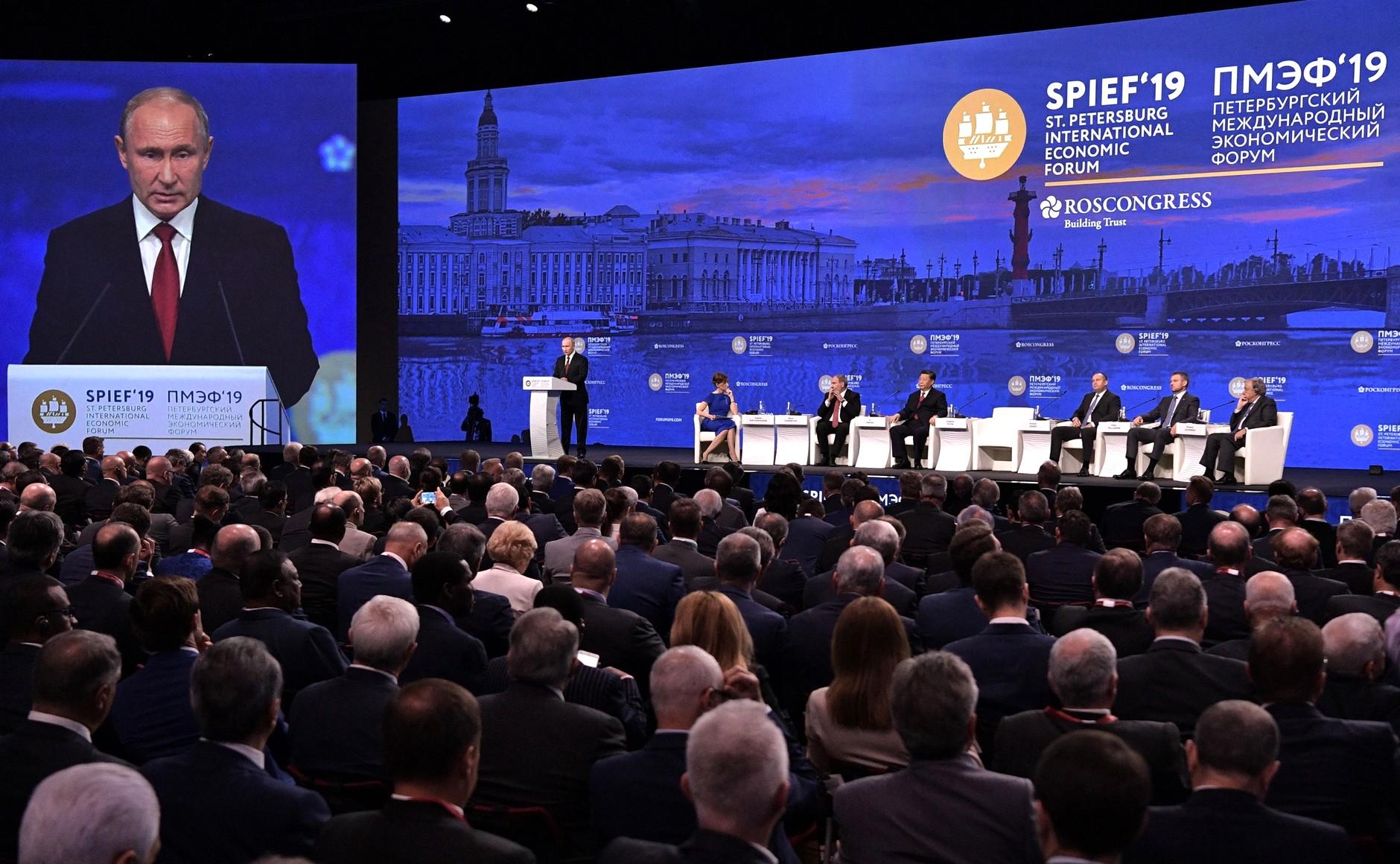
WORLD - More than 20,000 participants from over 140 countries attended the St Petersburg International Economic Forum (SPIEF), Russia’s flagship investment gathering often referred to as the “Russian Davos."
The four-day event took place amid continued tensions between Russia and the West, more than four years into the Russian-Ukrainian war.
For the Kremlin, the forum has become a key platform for demonstrating Moscow’s expanding ties with countries outside the Western sphere.
Russian officials presented the gathering as evidence that the country remains integrated into significant parts of the global economy despite restrictions imposed by the United States, the European Union, and their allies. Here is a closer look at the event.
What is SPIEF?
Established in 1997, SPIEF was originally created to attract foreign investors and support Russia’s integration into the global economy following the collapse of the Soviet Union.
Over time, it developed into one of the country’s most prominent annual events, drawing political leaders, business executives and policymakers from around the world.
While investment and trade remain central themes, the forum has increasingly become a venue for Russia to promote its vision of a multipolar world order and strengthen ties with non-Western partners.
This year’s programme featured discussions on energy security, artificial intelligence, technological sovereignty, logistics, finance and international trade, alongside debates on geopolitical developments and global governance.
Who Attended?
Russian President Vladimir Putin headlined the forum and delivered the event’s keynote address, traditionally the most closely watched session of the gathering.
Among the foreign leaders in attendance were Uzbekistan President Shavkat Mirziyoyev, Tanzania President Samia Suluhu Hassan and Chinese Vice President Han Zheng. Saudi Arabia, designated as this year’s guest country, sent a high-level delegation led by Energy Minister Prince Abdulaziz bin Salman.
The forum also attracted business representatives from across Asia, the Middle East and Africa, reflecting Russia’s efforts to deepen economic cooperation beyond its traditional European markets.
In addition to government officials and corporate executives, SPIEF hosted academics, economists, media figures and former political leaders participating in discussions on global economic and political trends.
Why Does the Forum Matter?
SPIEF remains one of the most significant events on Russia’s political and economic calendar. Putin regularly uses the forum to outline the country’s economic priorities, assess global developments and signal Moscow’s foreign policy direction.
The event also serves a practical economic function. Western sanctions have forced Russia to redirect trade routes, investment flows and supply chains toward new markets, making partnerships with countries in Asia, Africa and the Middle East increasingly important.
By bringing foreign officials and business leaders to St Petersburg, the Kremlin seeks to demonstrate that Russia continues to play an active role in the global economy despite ongoing tensions with Western governments.
The agreements announced and meetings held during the forum are closely watched as indicators of Moscow’s ability to expand economic cooperation and attract investment under sanctions.