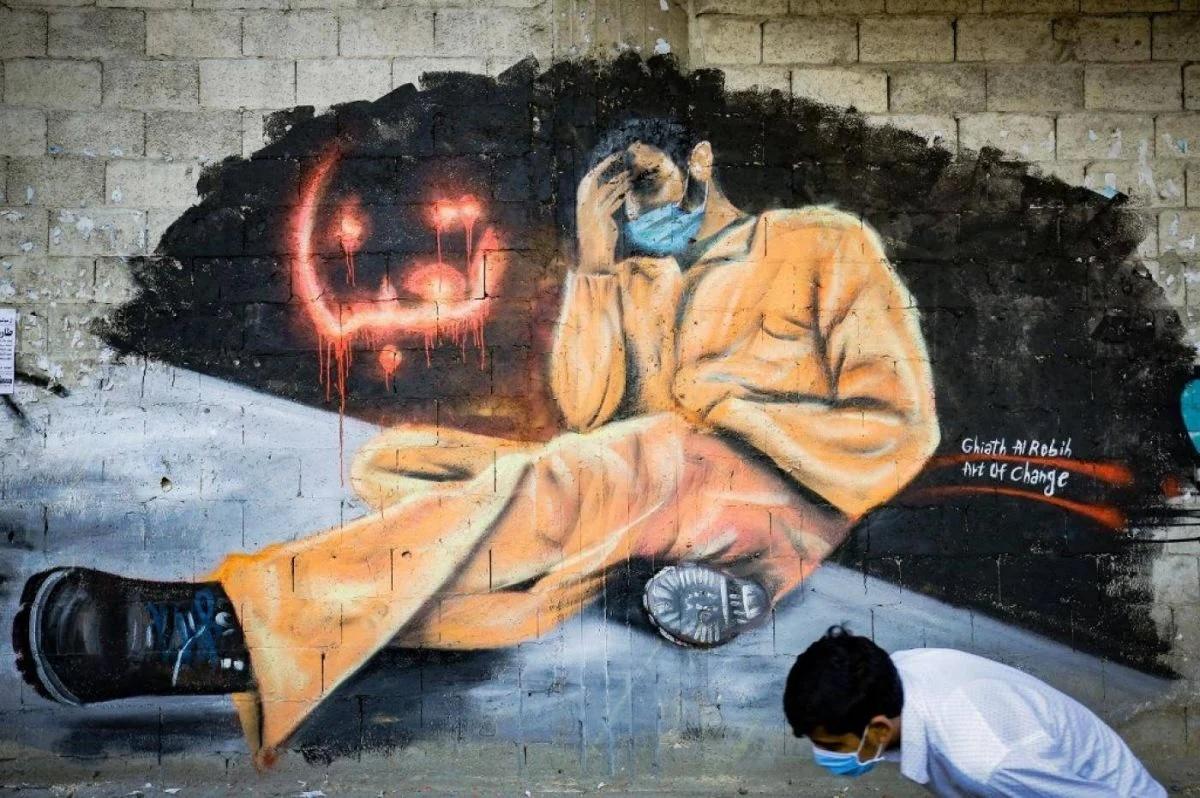
WORLD - June is Men’s Mental Health Month, a time to look at the stigma that still surrounds men’s emotional well-being. This is not about who has it harder.
Mental health challenges cut across every gender, age, and background. But the way distress is recognized, expressed, and treated is not the same for everyone. For men in particular, the gap between what is felt and what is said can have serious consequences.
What the Numbers Show
According to the World Health Organization, more than 720,000 people die by suicide every year. Globally, men are often overrepresented in suicide deaths. In Lebanon, Embrace’s 2023 data recorded 168 suicide deaths, with 81% of them being male.
These numbers should not be used to simplify a complex issue. Suicide is never caused by one factor alone. It is shaped by mental health conditions, family stress, isolation, financial pressure, trauma, access to care, stigma, and many other social realities.
But the numbers do raise an urgent question: why are so many men reaching a crisis point before support reaches them?
The Pressure to Appear Fine
Part of the answer lies in how boys and men are taught to understand strength. Traditional ideas of masculinity often value independence, control, endurance and the ability to provide.
These values are not negative in themselves. Responsibility, protection, and self-control can be meaningful and even protective. The problem arises when these values transform into rigid rules: never cry, never ask for help, never be vulnerable, never be a burden.
For young adolescent boys, their perception of manhood and mental health is rooted in the media they consume on social media, familial influences, and peer pressure.
The conversation has become harder to have because masculinity is now a deeply polarized topic. Some online spaces respond to men's pain by pushing for harder, more rigid versions of manhood: more toughness, less feeling. Others dismiss men's struggles as exaggerated or undeserving attention.
Both responses, though opposite, share the same flaw: they make men's suffering into a debate rather than a reality to be addressed.
For many men, admitting emotional pain can feel like failing at the role they were expected to perform. This can create self-stigma: the private belief that struggling means being weak, lazy, or not “man enough.” It can also be reinforced by families, workplaces and peer groups where men are praised for pushing through but are rarely given permission to be anything other than fine.
This is especially true in Lebanon and the Arab region, where family structures place men as heads of household, making them responsible not only for their own well-being but also for that of the women and children in the family.
What men's mental health needs is simpler and harder than either position: an honest language for pressure, loneliness and fear, one that does not require men to prove their pain before it is taken seriously.
When Distress Does Not Look Like Sadness
Another challenge is that distress does not always appear in the way people expect it. Many people imagine depression as crying, sadness, or withdrawal. These can be real signs.
But in some men, distress may also show up as irritability, anger, risk-taking, substance use, overworking, emotional numbness, sleep problems, or sudden isolation.
This is not to suggest that all men experience or express distress in the same way, nor that harmful coping behaviors such as anger or substance use should go unaddressed. Rather, it points to the importance of recognizing that distress can manifest differently across individuals and contexts.
When mental health systems are designed around a narrow set of indicators, those whose symptoms look different risk going unidentified and unsupported.
What Can Change
Directing men toward therapy addresses one part of the problem, but it does not address the conditions that make seeking help feel difficult in the first place.
Research on men’s mental health promotion suggests that the setting in which support is offered matters as much as the support itself. Familiar, trusted environments, such as workplaces, community groups, sports clubs, universities, and peer-led initiatives, can lower the threshold for engagement.
In the MENA region, these spaces exist in an unofficial manner. The cafe next door, the local shop where men gather to drink tea and play card, and the weekly football matches among young men. It is important to invest in these spaces and utilize them as an opportunity to discuss wellbeing.
So can the format: conversation that unfolds gradually, and sometimes side by side rather than face to face, tends to feel less exposing. Language plays a role too. Terms like stress, pressure, burnout, and responsibility may resonate more readily with some men than clinical or diagnostic framing and can serve as a more accessible entry point into deeper conversations about wellbeing.
Evidence suggests that reframing help-seeking around values such as responsibility, reliability, and care for others, rather than vulnerability alone, can improve engagement. Similarly, social support between men tends to be more effective when it is normalized as part of everyday relationships rather than positioned as a response to crisis.
At the same time, mental health professionals need more training on how gender norms may shape symptoms, language, and help-seeking. More funding should be allocated to overall mental health services, including prevention and early detection tailored for men, especially in the MENA region.
Outside of private clinical practice, there is a dire need for mental health policies in the workplace.
In Lebanon, the National Mental Health Program launched the "National Initiative for Mental Health in the Workplace,” which includes a national charter for mental health in the workplace to help employers commit themselves to the protection and promotion of mental health in their workplace by signing the charter.
Qatar and the UAE have recently adopted such legislation to help decrease discrimination and promote dignity, inclusivity, and confidentiality in the workplace. Such legislation benefits employees of all genders, pushing for the de-stigmatization of mental illnesses and distress.
Men’s mental health needs to be recognized across clinical practice, workplaces, and public policy. Symptoms such as anger, exhaustion, emotional numbness, or sleep difficulties may reflect depression, anxiety, or severe stress.
Support systems should be designed to identify these signs early, respond without stigma, and ensure that men can access care in ways that reflect how they may express distress.
A Wider Idea of Strength
What is needed is not a new definition of masculinity, but a wider space in which men are permitted to be fully human. A man can be dependable and still need support, resilient and still afraid, a caregiver and still in need of care.
Local governments can help by creating safe public spaces, community activities, and sports or cultural programs that reduce isolation and normalize conversations around wellbeing. Civil society organizations can also play a key role through volunteering, peer support, and community engagement initiatives that help men feel connected and less alone.
At the service level, mental health support should be easier to access before distress reaches a crisis point. Integrating trained mental health focal points or units within primary healthcare centers can help identify distress earlier and connect people to appropriate care.
Men's Mental Health Month is most useful not as a slogan, but as an occasion to pay closer attention: to the brother who has grown quieter, the father who never complains, the friend who jokes through every difficulty, the colleague who is always fine. These patterns are not always visible, and they are not always recognized as distress. But they often are.
If you are in Lebanon and experiencing emotional distress or suicidal thoughts, support is available. The National Lifeline for Emotional Support and Suicide Prevention can be reached at 1564, 24 hours a day, seven days a week.