



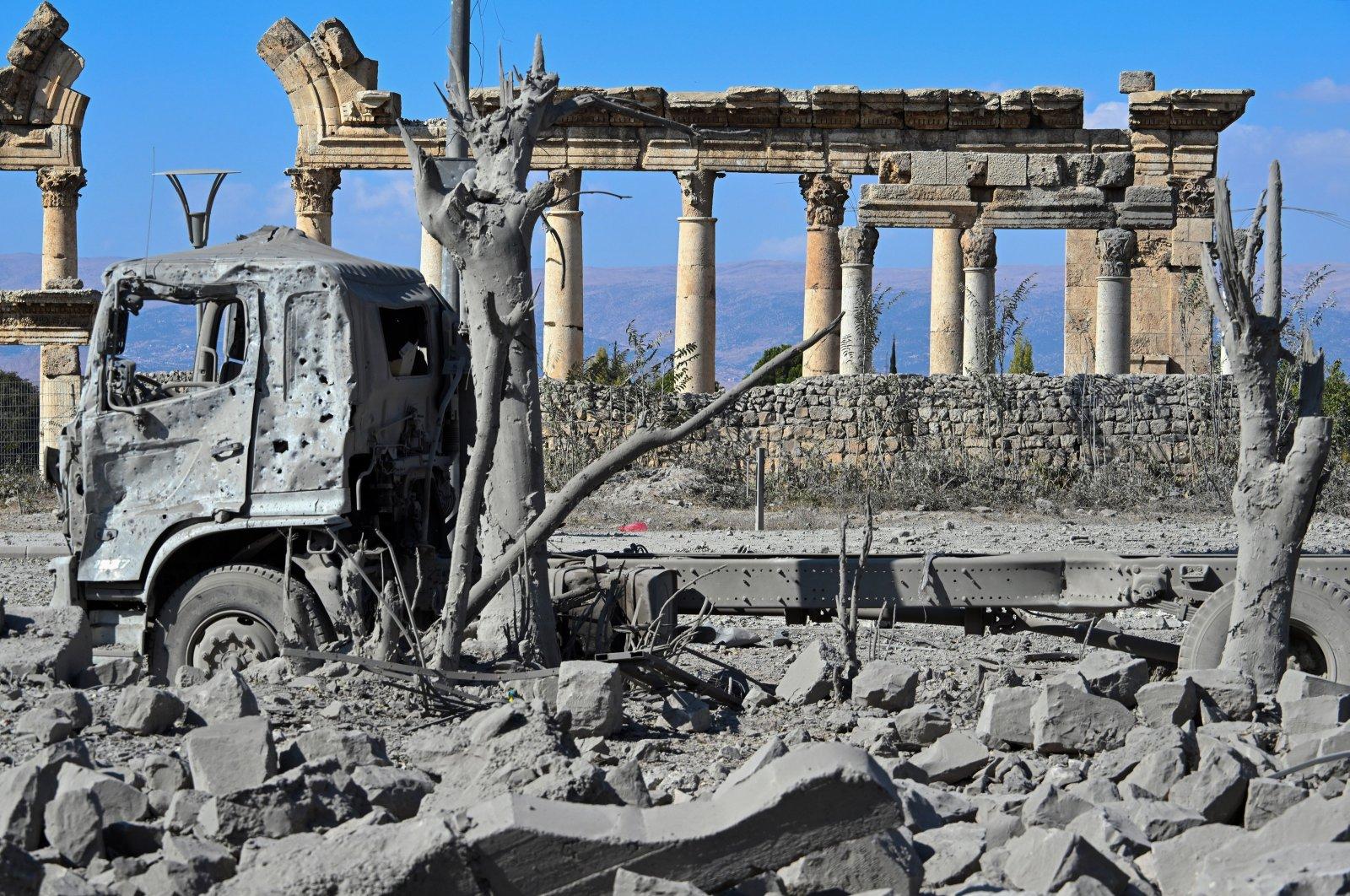
LEBANON - Across South Lebanon, cultural landmarks that once anchored community life are increasingly being reduced to ruins, raising urgent questions about what is lost when heritage itself becomes a casualty of conflict.
This systematic destruction of religious and archaeological sites has intensified debate over whether post-conflict recovery can ever truly restore both physical spaces and the identities tied to them.
Reports from border villages describe damage to churches, mosques, sanctuaries, archaeological sites, and entire traditional settlements.
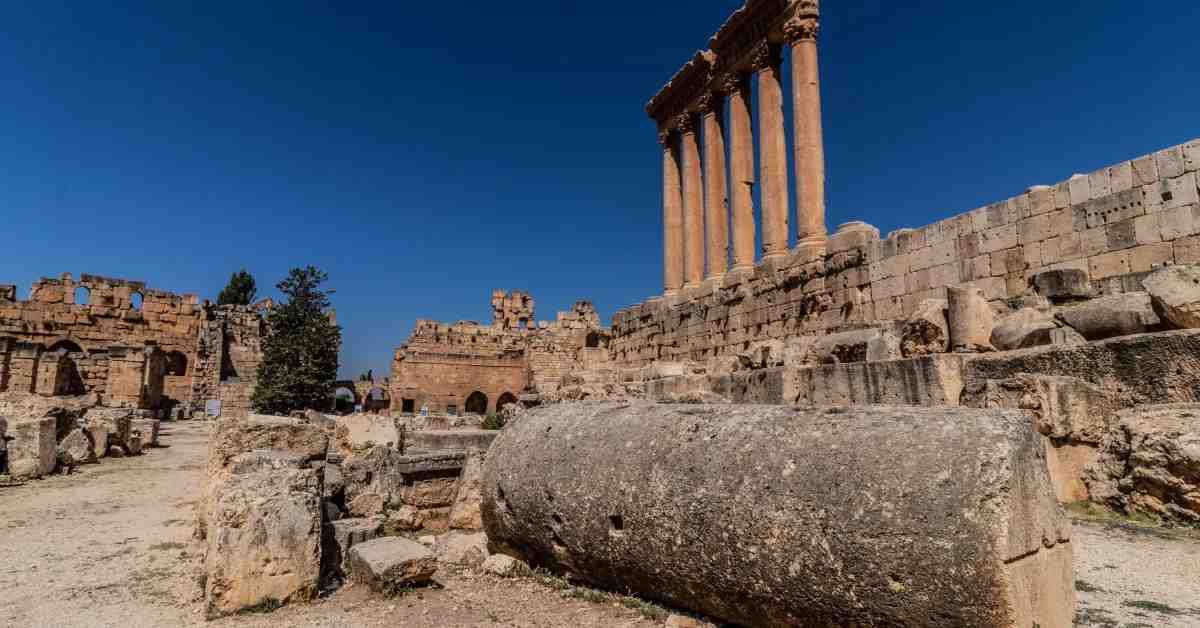
Al-Monitor's report on damaged churches, mosques and archaeological sites details damage to the historic souq in Nabatieh, Melkite Greek Catholic churches in Yaroun and Derdghaya, and areas around the Baalbek Citadel, including Ottoman-era buildings.
Also among the most notable losses is the 12th-century Beaufort Castle, a landmark that has withstood centuries of conflict but was struck in late May 2026 and later came under Israeli military control.
In Chamaa, the medieval citadel was heavily damaged by explosives and bulldozers between April and May 2026, leaving much of its structure, including several domes, severely affected.
Heritage Loss and Collective Identity
Speaking about the broader meaning of these losses, Hisham Younes, head of the ecological association Green Southerners, describes cultural and religious sites as “repositories of memory, identity, and belonging.” Their destruction, he argues, extends far beyond physical damage.
“It is not simply damage to physical structures; it is an assault on the historical and cultural foundations of entire communities,” he says. “By erasing landmarks that connect people to their history, traditions, and sense of place, these attacks undermine collective memory and weaken social cohesion.”
In his view, the consequences are deeply psychological as well as social. When churches, mosques, shrines, and historic centres are damaged or erased, they disrupt the continuity that allows communities to imagine return and recovery.
“People do not return only to houses,” he adds. “They return to communities shaped by shared memories, cultural landmarks, and a sense of continuity.”
The loss of these markers, he suggests, deepens displacement and erodes the symbolic foundations of belonging. It also reshapes how communities relate to their own geography, severing the link between place and identity that has been built over centuries.
Cultural Heritage as an Economic Lifeline
Beyond identity, cultural heritage in southern Lebanon is also closely tied to local economies. Historic cities such as Tyre, along with archaeological sites, traditional villages, and religious landmarks, sustain a diverse ecosystem of livelihoods.
Tyre, one of the world’s oldest continuously inhabited coastal cities, now sits at the edge of escalating military pressures in southern Lebanon.
With a history stretching back nearly 5,000 years, the ancient maritime city has long been a centre of trade, culture, and archaeological heritage.
Today, however, it is 11km from a restricted buffer zone established under Israel’s “Yellow Line” policy, which is raising concerns about the vulnerability of its surrounding cultural landscape and heritage assets.
These include small restaurants and cafés, guesthouses, transport providers, artisans, and family-run enterprises that depend on seasonal and domestic tourism.
“Cultural heritage is far more than a cultural asset; it is also an economic asset,” Younes explains. Damage to heritagesites, he says, not only affects monuments themselves but disrupts entire local value chains.
It undermines livelihoods and deprives communities of opportunities for employment, investment, and recovery.
The Limits and Potential of Cultural Tourism
Cultural tourism is often proposed as a pathway toward post-crisis recovery and job creation. Lebanon’s southern regions contain a dense concentration of archaeological sites, historic towns, and cultural landscapes that could, under different conditions, form the basis of a strong tourism economy.
However, Younes cautions against viewing tourism as an immediate solution.
“There is potential for cultural tourism to contribute significantly to recovery and job creation, but it is important to remain realistic,” he says. In southern Lebanon, cultural tourism has never been fully developed, and recent destruction has further delayed any short-term prospects.
Before tourism can be meaningfully revived, he argues, the priority must be recovery itself: documentation, protection, restoration, and rehabilitation.
Only once damaged sites and surrounding communities begin to stabilise can cultural tourism become a sustainable driver of development rather than a premature expectation.
Challenges of Restoration and Recovery
Younes explains that several challenges hinder restoration and recovery in Lebanon. One of the most pressing issues is the lack of documentation, which in some cases makes accurate restoration difficult or impossible. Without detailed records, surveys, or archives, rebuilding risks losing authenticity or historical accuracy.
The scale of destruction is another barrier. Heavily damaged sites may require the recovery and reassembly of thousands of architectural elements before reconstruction can even begin. This process is slow, technical, and resource-intensive, according to Younes.
A third challenge is capacity. Heritage rehabilitation requires specialised expertise, significant funding, and long-term institutional commitment. “It is a complex process that often takes years, not months,” Younes notes.
Funding Gaps and Institutional Strain
Even where funding exists, questions remain about sufficiency and sustainability. The scale of damage is still being assessed, but early indications suggest that available resources will fall short of needs.
Previous phases of destruction in southern Lebanon already exposed these gaps, where sites requiring urgent intervention remained partially or entirely unrestored due to limited resources.
Today, the challenge is even greater, with local municipalities and institutions themselves weakened by prolonged crisis conditions.
“The challenge is not only funding, but capacity,” Younes explains. Without sustained investment and coordinated long-term support, many heritage sites risk remaining in limbo for years.
Community Role and the Future of Cultural Tourism
Local communities remain the first line of defence for heritage preservation, often documenting damage and safeguarding memory when formal systems are absent.
Civil society organisations, like Green Southerners, support this work through advocacy, training, and coordination, while also connecting local actors with national and international partners.
Younes explains that the private sector, meanwhile, has a potential role in investing in restoration, hospitality, and cultural industries. However, such development must remain rooted in local benefit rather than external commercialisation.
Toward a Sustainable Recovery Model
Looking ahead, the central question is how to build a recovery model that integrates cultural heritage into long-term development.
For Younes, the answer begins with protection and documentation, followed by a broader national strategy that links conservation with community recovery and economic recovery.
This requires sustained investment, specialised training, and partnerships between public institutions, civil society, academia, and international actors.
A comprehensive national preservation and recovery plan, aligned with international frameworks such as the 1954 Hague Convention for the Protection of Cultural Property in Armed Conflict, UNESCO heritage protection conventions, and the UN Sustainable Development Goal (SDG) 11 on sustainable cities and communities, is essential to ensure the safeguarding and continuity of Lebanon’s cultural transmission across generations.
Ultimately, Younes argues, cultural heritage should not be valued only for its tourism potential. “It should be preserved because it carries the memory, identity, and history of communities,” he says.
In South Lebanon, where destruction has reshaped both landscapes and lives, the challenge is no longer only about rebuilding what was lost, but about ensuring that what remains continues to hold meaning for generations to come.