LEBANON - The Ministry of Economy and Trade (MoET) has introduced a strategy to restructure Lebanon’s insurance sector, with the stated objective of modernizing and restoring confidence in the industry.
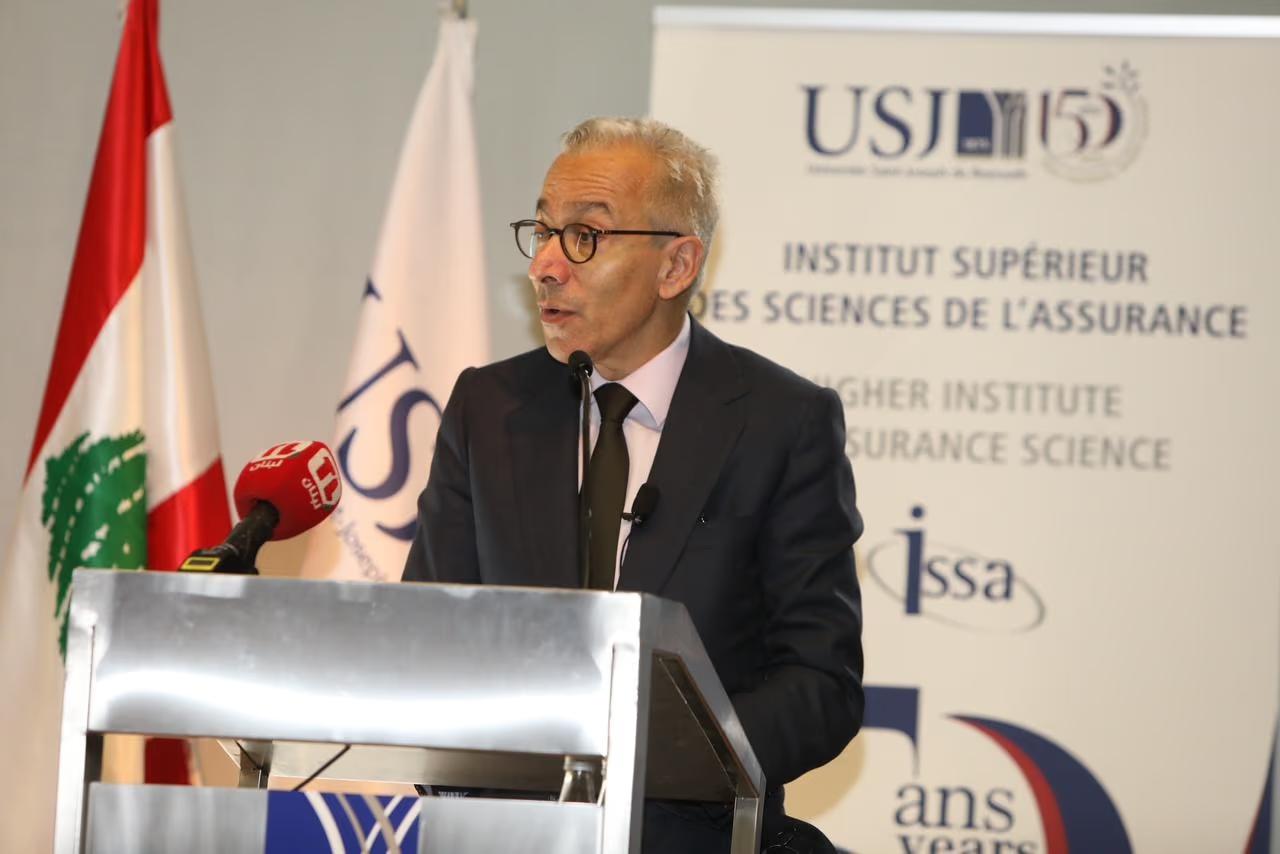
The plan was presented by Minister Amer Bisat at the Higher Institute of Insurance Science (ISSA) at Université Saint Joseph.
The reform framework is built around three main pillars: improving market organization, reinforcing supervision, and addressing healthcare cost pressures.
Pillar 1: Reshaping Market Structure
The first pillar focuses on improving how the insurance market operates, with measures targeting both insurers and brokers.
For insurance companies, the ministry plans to strengthen capital requirements and introduce risk-based capital rules to better reflect levels of exposure and financial stability.
The strategy also encourages voluntary mergers to support the formation of more resilient firms, alongside updated rules on premium management and the development of new insurance products.
An external advisory firm has been appointed to assist with implementation, with the process expected to be completed by mid-2027.
Insurance brokers will be subject to new regulatory measures aimed at increasing transparency in the sector. These include higher capital requirements, a formal professional code, and clearer rules on commissions.
The reforms also introduce safeguards for client funds and aim to limit unauthorized intermediaries. A draft decree is currently being reviewed with the Lebanon Insurance Brokers Syndicate (LIBS), with completion planned by the end of summer 2026.
Pillar 2: Legacy Issues and Broader Supervision
The second pillar deals with unresolved historical challenges while extending the reach of regulation.
The ministry is working on legal measures to settle outstanding claims related to the Port of Beirut explosion, as well as addressing the collapse of the pre-crisis life insurance market.
Before the crisis, life insurance premiums were estimated at between $550 million and $600 million annually, but have now dropped to less than five percent of that level, leaving many policyholders unable to recover their funds.
At the same time, the regulatory perimeter is being expanded to include previously unregulated entities. These include Third Party Administrators (TPAs), mutual insurance groups, local reinsurance entities, vehicle assistance providers, and actuarial service firms.
The objective is to improve monitoring of claims processes, financial flows, and technical standards across the sector.
Strengthening Regulation and Institutions
The Insurance Control Commission (ICC) is being reinforced as part of the reforms. The National Insurance Board, which had been inactive since 2017, has been reactivated.
Leadership within the ICC has also been updated, with the appointment of Nadim Haddad as permanent head, supported by two observers.
Authorities are also preparing to activate the Insurance Arbitration Council to handle disputes outside the court system, while expanding the role of consumer protection mechanisms.
Updating the Legal Framework
A key component of the strategy is the replacement of Lebanon’s 1968 Insurance Code with a modern legal framework.
The new code will introduce clearer consumer protections, stronger supervision across insurance groups, stricter governance requirements for company leadership, and formal procedures for dealing with insurers facing financial difficulty.
Pillar 3: Managing Healthcare Costs
The third pillar focuses on controlling rising healthcare costs, which continue to affect both insurers and consumers.
The Ministry of Economy and Trade is working alongside the Ministry of Public Health on measures covering pricing transparency, clinical oversight, and regulatory organization.
While some improvements may be achieved in the short term, officials described the approach as a longer-term effort aimed at stabilizing costs and improving sustainability across the healthcare and insurance system.