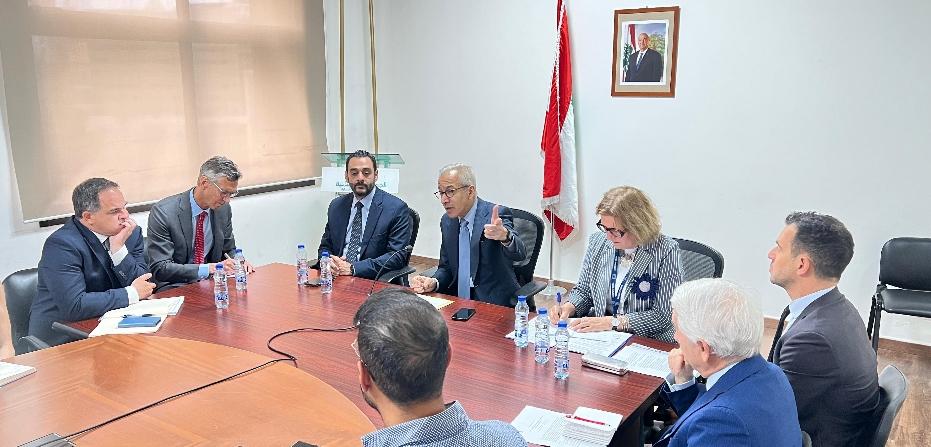
LEBANON - The Ministry of Economy and Trade held a high-level coordination meeting to discuss urgent support mechanisms for Micro, Small and Medium-sized Enterprises (MSMEs), bringing together ambassadors, international donors, financial institutions, microfinance bodies, and development partners.
The meeting comes as Lebanon continues to face mounting economic challenges and prolonged structural pressures, further intensified by the ongoing crisis.
Minister of Economy and Trade Dr. Amer Bisat said Lebanon is going through a “profound economic crisis accumulated over seven years,” which has been exacerbated by current conditions.
He emphasized that the ministry initiated the gathering with key partners, including the European Union and the World Bank, alongside public and private sector institutions, to better coordinate support and accelerate assistance to productive enterprises.
Bisat underscored that MSMEs remain the backbone of the Lebanese economy, noting that prior to the crisis they accounted for around 95% of registered businesses, contributed nearly 40% of GDP, and provided more than half of formal employment.
“We are meeting today to focus on the most vulnerable segment, yet also the most important for employment, household income, and economic recovery,” he said, adding that liquidity remains the primary challenge facing many enterprises, which requires operational grants and flexible financing solutions.
He also noted that the ministry has conducted a survey covering 200 companies and is working with the United Nations on a broader assessment to better define the needs of affected businesses.
According to participants, donors expressed strong commitment to supporting MSMEs and increasing available funding, with several agreeing to redirect previously allocated resources toward urgent priorities.
The meeting also highlighted the presence of institutions capable of rapidly absorbing and disbursing donor support.
Discussions further included potential cooperation between the Ministry of Economy and Trade and the Ministry of Social Affairs, particularly through the "Aman" mechanism to implement more targeted “Cash for Work” programs.
Bisat confirmed that available support is estimated at around $130 million, combining grants and concessional loans from the World Bank and donor countries including Norway and Canada.
He concluded by stressing the importance of transparency and good governance in managing the funds, warning that Lebanon "cannot afford to lose viable institutions because of slow support, fragmented aid, or limited access to financing".