




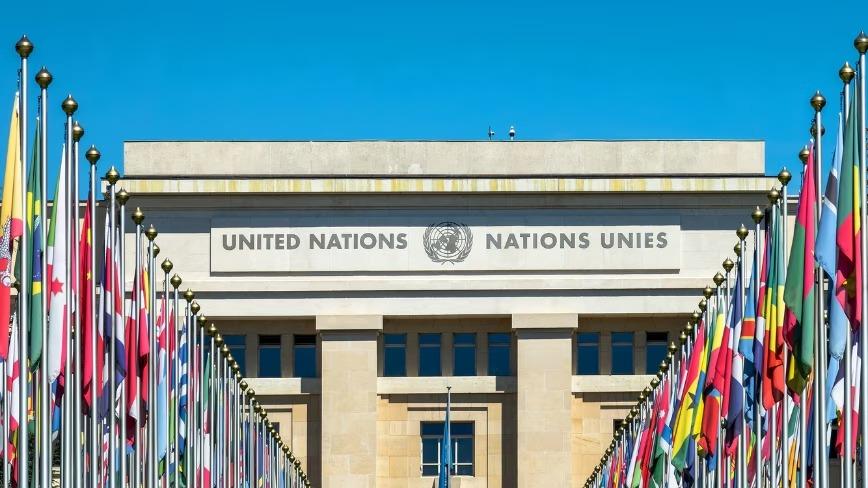
GENEVA – The United Nations on Monday launched the first Global Dialogue on Artificial Intelligence Governance, bringing together governments, technology companies, academics, civil society organizations, and technical experts to discuss how AI should be governed to ensure it is safe, inclusive, and benefits everyone.
A Global Platform for AI Governance
Opening the two-day event, UN Secretary-General António Guterres said AI is advancing at an unprecedented pace, stressing that the international community must act together to ensure the technology serves humanity rather than outpaces its ability to regulate it.
"AI is advancing at runaway speed. The question is whether we will govern it together – or let it govern us," Guterres said, describing the dialogue as the first UN platform where every country has an equal voice in shaping global AI governance.
The dialogue, mandated by the UN General Assembly, aims to ensure that AI governance reflects the priorities of all countries—not only those leading AI development—and that the benefits of the technology are shared more equitably.
Key Issues on the Agenda
Discussions will focus on AI safety, accountability, transparency, meaningful human oversight, narrowing the global AI divide, and strengthening international cooperation, while ensuring that AI systems operate in line with international law.
President of the UN General Assembly, Annalena Baerbock, said the initiative is about more than regulating a rapidly evolving technology.
"This Global Dialogue is not merely about regulating a technology. It is about defining a shared vision in which technological progress goes hand in hand with human dignity, equity, and sustainable development," she said.
Six Months of Global Consultations
The meeting follows six months of global consultations involving governments, the private sector, academia, civil society, and technical experts. More than 1,500 written submissions were received from organizations and individuals worldwide.
According to the consultation findings, governments identified capacity-building as their top priority, while most other stakeholders ranked AI safety first. Transparency, accountability, human oversight, and the social and economic impacts of AI also emerged among the leading concerns.
Scientific Panel Highlights Governance Gaps
The dialogue comes just one week after the Independent International Scientific Panel on Artificial Intelligence released its preliminary report warning that current governance and safety measures are struggling to keep pace with the rapid development of AI technologies.
The 40-member panel, co-chaired by Canadian AI researcher Yoshua Bengio and Filipino journalist and Nobel Peace Prize laureate Maria Ressa, was established to provide governments with independent scientific evidence to support policymaking on artificial intelligence.
Part of the UN's Digital Week
The dialogue forms part of the UN's broader Digital Week in Geneva and is being organized by a joint secretariat comprising the International Telecommunication Union (ITU), UNESCO, the UN Office for Digital and Emerging Technologies (ODET), and the Executive Office of the Secretary-General.
The UN says the forum is expected to become a recurring platform where member states exchange best practices, share national experiences, and work toward common approaches to AI governance as the technology continues to reshape economies and societies worldwide.